
Marcus sits across from the job counselor, fidgeting with his phone. At 22, he’s been on Germany’s Bürgergeld welfare system for eight months. When asked about the apprenticeship opportunity at a local bakery, he shrugs. “Why would I get up at 4 AM to knead dough when I can get money for staying home?” His counselor sighs – she’s heard this exact conversation dozens of times this month.
This scene plays out daily in job centers across Germany, but in one small district, a bold experiment is challenging everything we think we know about welfare and work motivation. What happened next surprised everyone – including the politician who started it.
The story unfolding in Nordhausen, a district in eastern Germany’s Thuringia state, has become a lightning rod for the country’s heated welfare debate. A Social Democrat district chief decided to test a radical idea: make welfare recipients work for their benefits. The results have left policy experts scrambling to understand what really motivates people to find employment.
When Local Politics Clash with Party Lines
District administrator Matthias Jendricke never expected to become the face of welfare reform. As a member of Germany’s center-left SPD party, he believed in social safety nets. But local businesses were desperately seeking apprentices while youth unemployment climbed steadily higher.
- While the world splurges on luxury consumption, Germany quietly embraces a shocking new trend
- German working time reality shocks researcher: “What politicians don’t want you to know
- Pest controllers sound alarm as rat poison ban leaves homeowners defenseless against infestations
- AI promised to save time, but workers are doing more tasks than ever before
- Couple caught wheeling baby stroller packed with coins after Berlin slot machine raids
- JavaScript roadblock leaves millions locked out of X.com with no warning or workaround
The breaking point came during a staff meeting at the local job center. Counselors shared stories that left Jendricke stunned. Young welfare recipients were openly refusing work opportunities, stating they preferred collecting Bürgergeld payments to finding employment.
“I don’t want to do anything, I just want the money,” became a common refrain, according to job center staff. Even more troubling was the response when threatened with benefit cuts: “Go ahead and cut it, my gran will top it up.”
Traditional sanctions weren’t working. Under existing rules, benefits can be reduced by up to 30 percent for those refusing reasonable job offers. But family support networks and the relatively comfortable benefit levels meant these cuts had little impact on behavior.
Jendricke realized his district had become a testing ground for a fundamental question: Does requiring welfare recipients work actually help them find permanent employment, or does it simply punish poverty?
The Controversial Work-for-Welfare Experiment
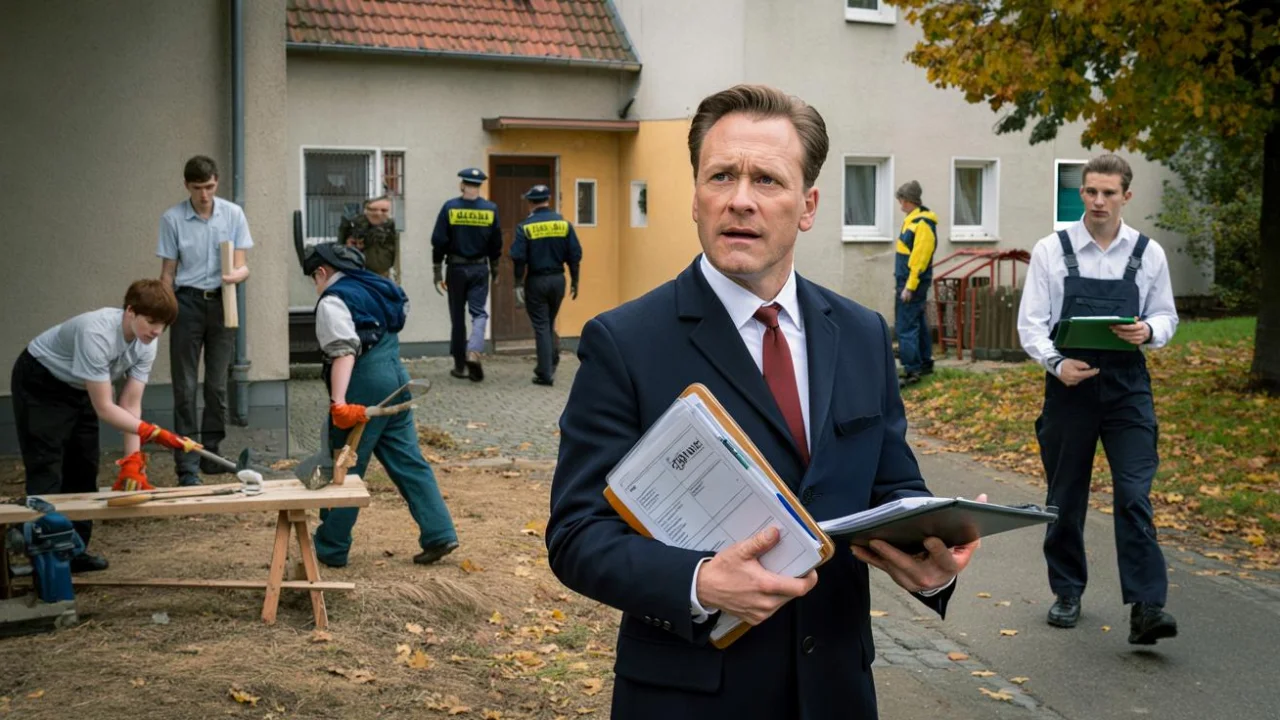
Against his own party’s recommendations, Jendricke implemented a strict work requirement program. Welfare recipients under 25 had to accept community service positions or lose their benefits entirely. No exceptions, no appeals to family circumstances.
The program matched young people with local organizations needing help:
- Municipal maintenance crews clearing parks and painting public buildings
- Elder care facilities needing assistance with daily activities
- Local businesses offering structured work experience
- Environmental projects focused on forest management and recycling
- Administrative support roles in government offices
Critics immediately labeled the program as “forced labor” and argued it violated Germany’s constitutional protections. SPD colleagues in Berlin distanced themselves from Jendricke’s approach, calling it “punitive” and “counterproductive.”
“We’re not trying to punish anyone,” Jendricke explained to local media. “We’re trying to break the cycle where young people lose hope and motivation entirely.”
The program launched with 340 participants. Initial resistance was fierce – nearly half refused to show up for their first assigned work day. Benefit payments stopped immediately for non-compliance.
| Month | Participants | Found Regular Jobs | Dropped from Program | Still Participating |
|---|---|---|---|---|
| Month 1 | 340 | 23 | 156 | 161 |
| Month 3 | 285 | 87 | 198 | 142 |
| Month 6 | 240 | 134 | 234 | 89 |
| Month 12 | 180 | 201 | 267 | 45 |
The Surprise That Changed Everything
Six months into the program, something unexpected happened. Instead of creating a generation of resentful forced workers, many participants began thriving in their assigned roles. Local employers started requesting specific individuals for permanent positions.
Sarah, 24, had been collecting benefits for two years before joining the program. Assigned to assist at a senior care facility, she initially showed up angry and uncooperative. “I hated every minute of the first week,” she admits. “But the elderly residents were so grateful for help, and I started feeling useful again.”
Within four months, Sarah was offered a full-time position with the facility, complete with training opportunities and a clear career path. She’s now studying to become a certified care assistant.
Dr. Klaus Weber, a labor economist at the University of Jena, has been tracking the program’s outcomes. “The results challenge our assumptions about work motivation,” he says. “Many participants report that having a structured day and feeling productive was more valuable than the actual work experience.”
The psychological impact proved as significant as the practical skills gained. Participants reported improved self-esteem, better sleep patterns, and stronger social connections. Mental health counselors noted reduced depression rates among program participants compared to traditional welfare recipients.
Local businesses began partnering with the program, offering apprenticeships specifically designed for participants. The original problem – lack of available apprentices – started resolving itself as young people gained confidence and work experience.
What the Numbers Really Tell Us
After 18 months, the results speak for themselves. Of the 512 people who participated in the program:
- 68% found permanent employment or entered apprenticeship programs
- 23% returned to education or vocational training
- 7% moved to other districts or left the welfare system for family reasons
- Only 2% returned to long-term unemployment benefits
These numbers far exceed national averages for youth employment programs. Traditional job training initiatives typically see 30-40% success rates, while Nordhausen’s work requirement program achieved nearly 70% positive outcomes.
The program also generated unexpected economic benefits for the district. Community service projects completed by participants saved the local government an estimated €2.3 million in contracted services. Parks were maintained more frequently, public buildings received needed repairs, and elderly care facilities could expand their services.
“The program pays for itself through reduced benefit payments and increased tax revenue from newly employed participants,” explains district finance director Andrea Mueller. “We’re actually saving money while helping people build better lives.”
Critics and Supporters Square Off
The program’s success hasn’t silenced its critics. National welfare advocacy groups continue arguing that work requirements criminalize poverty and fail to address underlying causes of unemployment.
“This approach treats symptoms, not causes,” argues Dr. Petra Hoffmann from the German Institute for Social Research. “Young people aren’t unemployed because they’re lazy – they’re unemployed because of structural economic problems and inadequate education systems.”
Supporters counter that the program addresses motivation and skills gaps that traditional approaches miss. “We can provide all the job training in the world, but if someone hasn’t developed basic work habits, they won’t succeed,” says local business owner Thomas Klein, who has hired three program participants.
The debate reflects broader tensions in German society about work, welfare, and personal responsibility. Conservative politicians have seized on Nordhausen’s results to argue for nationwide work requirements, while left-leaning parties worry about creating punitive systems that harm vulnerable populations.
Jendricke finds himself caught between political pressures and practical results. “I didn’t start this program to prove any ideological point,” he says. “I started it because young people in my district were losing hope. Now they’re finding jobs and building careers. That’s what matters.”
FAQs
What exactly does the Nordhausen work requirement program involve?
Welfare recipients under 25 must accept community service positions for 20-30 hours per week while continuing to receive benefits and job search support.
Can participants refuse their assigned work placements?
No, refusal to participate results in immediate loss of welfare benefits, though participants can request transfers between different work sites if needed.
How long do people stay in the program?
Most participants find permanent employment within 6-8 months, though some continue for up to a year while completing apprenticeships or further training.
Are other German districts copying this approach?
Several districts in eastern Germany are piloting similar programs, though most maintain more flexibility in work requirements and sanctions.
What happens to people who drop out of the program entirely?
They lose welfare benefits but can reapply after demonstrating willingness to participate, though many find alternative support through family or move to different districts.
Does the program violate German labor laws?
Legal challenges continue, but courts have generally upheld the program as long as participants receive proper benefits and the work serves legitimate public purposes.