
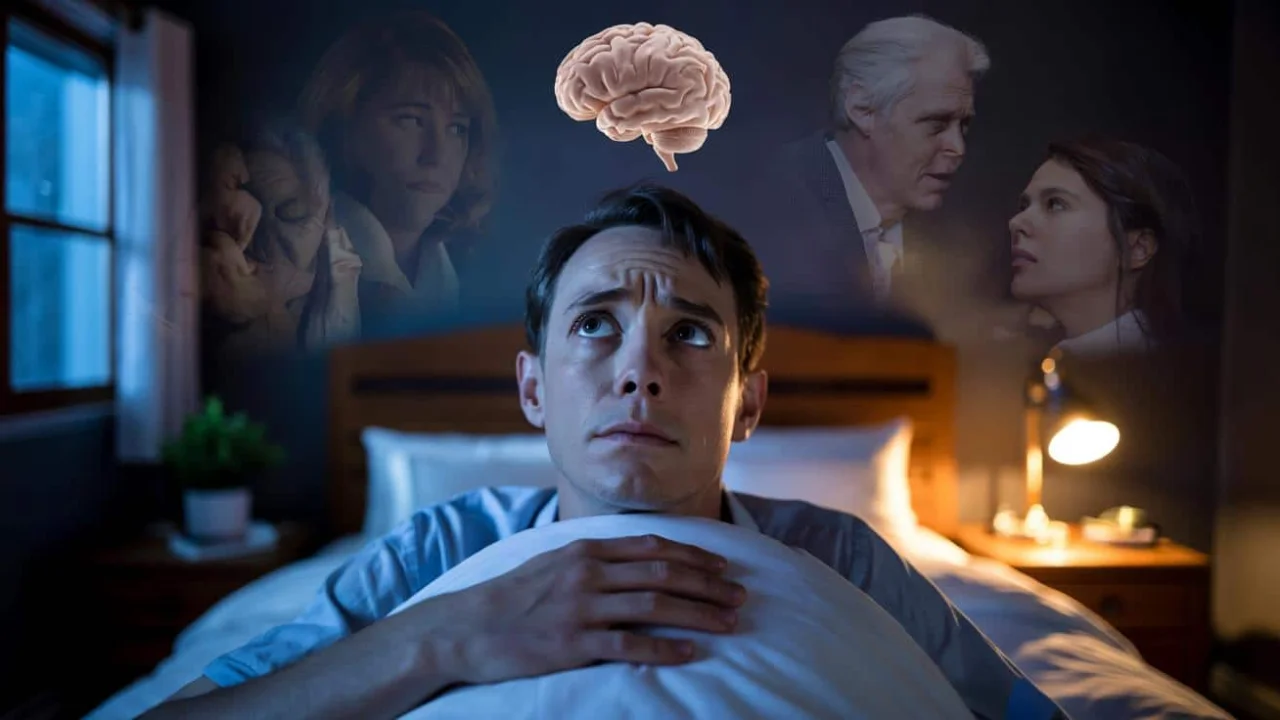
Sarah stared at the ceiling for the third straight hour, her mind spinning like a broken record. The day had been fine—normal, even. She’d handled her meetings, grabbed lunch with colleagues, picked up groceries on the way home. But now, lying in the darkness, her brain wouldn’t stop replaying that awkward moment when she’d stumbled over her words during the presentation. Then came the flood: every embarrassing thing she’d said in the past month, worries about her job performance, that text from her mom she still hadn’t answered.
Her body felt exhausted, but her mind had apparently decided 2 AM was the perfect time for a complete life review. Sound familiar? You’re not alone in this midnight mental marathon.
What Sarah was experiencing is one of the most common yet misunderstood aspects of human psychology: overthinking at night. Recent research reveals this isn’t just bad luck or poor sleep hygiene—it’s actually your brain’s attempt to process unresolved emotions that got pushed aside during the busy daylight hours.
Why Your Brain Becomes a Night Shift Worker
When the sun sets and distractions fade away, something fascinating happens in your brain. The prefrontal cortex—your rational, logical control center—starts to wind down for the day. Meanwhile, your emotional processing centers, including the amygdala, get their chance to take center stage.
Dr. Jennifer Walsh, a sleep psychologist at Stanford University, explains it simply: “During the day, we’re constantly in reactive mode. We don’t have time to fully process what we’re feeling, so the brain files these emotions away for later processing. Night time becomes that ‘later.'”
Think of your brain like an overworked office worker. All day long, emotional “emails” keep piling up in the inbox—that uncomfortable conversation with your partner, the stress from a looming deadline, the weird look your friend gave you at lunch. During busy daytime hours, these emotions get a quick “I’ll deal with this later” stamp and get filed away.
But when night falls and external stimulation decreases, your brain finally has the bandwidth to open those emotional files. The problem is, without the rational oversight of your prefrontal cortex, these processing sessions can quickly spiral into overthinking marathons.
The Science Behind Midnight Mental Chaos
Understanding exactly what happens in your brain during these nighttime thought spirals can help you make sense of why they feel so intense. Here’s what researchers have discovered:
| Brain Area | Day Activity | Night Activity | Impact on Thinking |
|---|---|---|---|
| Prefrontal Cortex | High activity (logical thinking) | Reduced activity | Less rational control over thoughts |
| Amygdala | Moderate (filtered by logic) | More active | Emotions feel more intense |
| Default Mode Network | Background processing | Increased activity | More self-focused, introspective thoughts |
| Hippocampus | Memory formation | Memory consolidation | Past experiences resurface randomly |
The key factors that contribute to overthinking at night include:
- Emotional suppression during the day – Pushing feelings aside creates a backlog
- Reduced cognitive control – Less ability to redirect thoughts
- Heightened emotional sensitivity – Problems feel bigger in the dark
- Memory consolidation process – Brain randomly accesses stored experiences
- Lack of external distractions – Nothing to interrupt the mental loops
Dr. Michael Chen, a neuropsychologist at UCLA, notes: “The brain doesn’t distinguish between a real threat and an imagined one, especially when your logical filters are down. That embarrassing moment from three years ago can trigger the same stress response as a current crisis.”
Who Gets Caught in the Nighttime Thought Trap
While anyone can experience overthinking at night, certain personality types and life circumstances make some people more vulnerable. People who tend to suppress emotions during the day often experience the most intense nighttime mental activity.
High achievers and perfectionists frequently find themselves trapped in these cycles. They spend their days pushing through stress, maintaining composure, and solving problems. But when they finally lie down, all those suppressed concerns come rushing back with compound interest.
Life transitions also trigger increased nighttime overthinking. Starting a new job, ending a relationship, moving to a new city, or facing major decisions all create unresolved emotional material that your brain wants to process.
Anxiety and depression can amplify this process significantly. When you’re already dealing with heightened stress or low mood, the brain’s nighttime processing becomes more intense and less productive.
Dr. Lisa Rodriguez, a clinical psychologist specializing in sleep disorders, observes: “I see this pattern constantly in my practice. People who pride themselves on being strong and handling everything during the day often struggle the most with nighttime rumination.”
Breaking Free from the Mental Hamster Wheel
The good news is that understanding why overthinking at night happens gives you power to change the pattern. The solution isn’t to stop your brain from processing emotions—that’s actually healthy and necessary. Instead, it’s about giving your brain better opportunities to do this processing during daylight hours.
Creating “emotional processing time” during your day can dramatically reduce nighttime mental activity. This might mean taking five minutes after work to actually feel frustrated about that meeting, or having a brief conversation with yourself about what’s really bothering you.
Journaling before bed can be particularly effective. By writing down your thoughts and concerns, you’re essentially telling your brain “I’ve got this handled” and giving it permission to rest.
Some people find success with the “worry window” technique—setting aside 15 minutes during the day specifically for worrying and problem-solving. When nighttime thoughts arise, you can remind yourself that you have a designated time for those concerns.
Physical relaxation techniques like progressive muscle relaxation or deep breathing can help shift your nervous system out of processing mode and into rest mode.
FAQs
Why do my thoughts feel so much worse at night?
Without your logical brain fully engaged, emotions feel more intense and problems seem bigger than they actually are.
Is overthinking at night a sign of a mental health problem?
Not necessarily, but chronic, distressing nighttime rumination could indicate anxiety or depression worth discussing with a professional.
How long does it take to change nighttime overthinking patterns?
Most people see improvement within 2-4 weeks of consistently practicing emotional processing during the day and good sleep hygiene.
Should I get up if I can’t stop overthinking?
If you’ve been lying awake for more than 20 minutes, getting up and doing a quiet, non-stimulating activity can help break the cycle.
Can medication help with nighttime overthinking?
Some people benefit from anti-anxiety medications or sleep aids, but addressing the underlying emotional processing patterns is usually more effective long-term.
Why do I overthink more during stressful periods?
Stress creates more unresolved emotions during the day, giving your brain more material to process at night when your defenses are down.