
Captain Marie Dubois has sailed the Mediterranean dozens of times aboard French naval vessels, but she still remembers her first glimpse of the North Atlantic’s gray, churning waters. “It’s like stepping into a different world,” she recalls. “The Med feels familiar, almost cozy. But the Atlantic? That’s where you truly understand what the ocean can do.”
Her words carry extra weight today. For the first time in nearly a decade, France is sending its most powerful warship into those very waters that have humbled sailors for centuries.
The nuclear-powered Charles de Gaulle aircraft carrier is making headlines not just for its destination, but for how unusual this journey really is. When French naval officers describe something as “extremely rare,” you know they’re not exaggerating.
France’s Floating Fortress Heads West
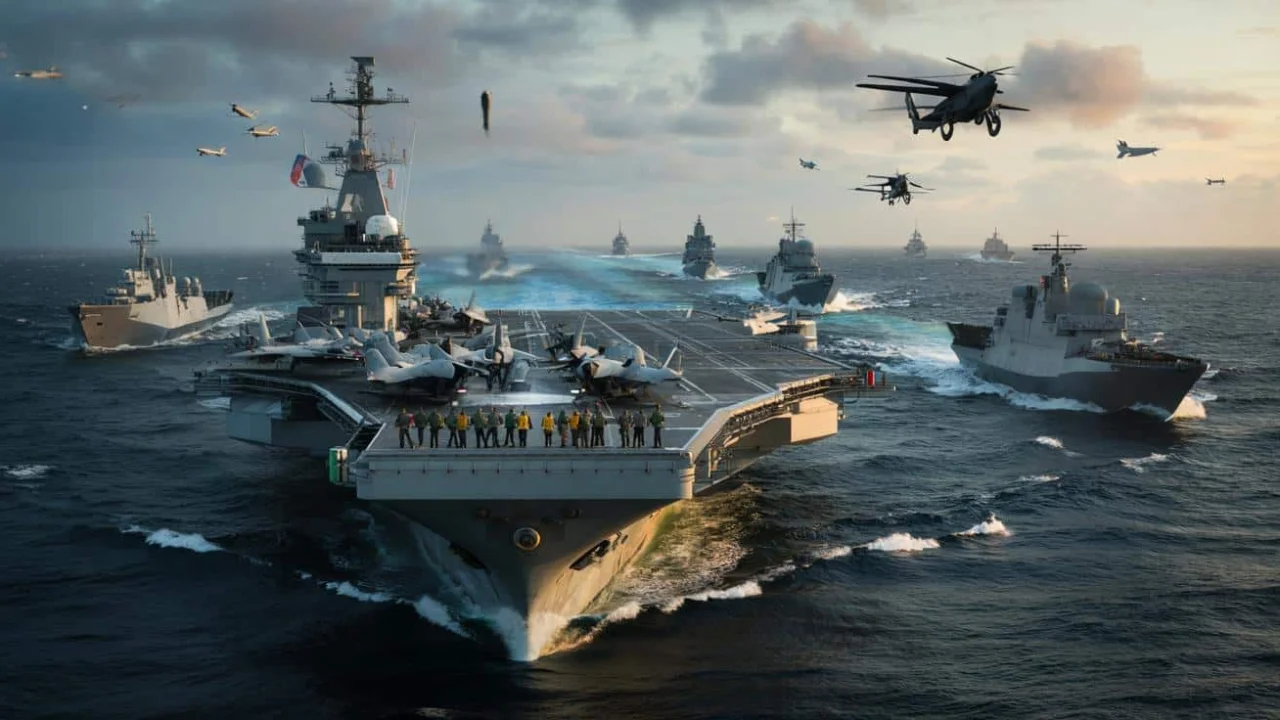
The Charles de Gaulle aircraft carrier isn’t making this Atlantic crossing alone. It’s leading what the French call Groupe Aéronaval (GAN) – essentially a floating city of military might dubbed Operation ORION 2026.
Think of it as France’s biggest show of naval force in years. This isn’t just one ship sailing across the ocean. It’s an entire battle fleet that would make any nation take notice.
“We haven’t seen French naval power projected into the North Atlantic like this since the early 2010s,” explains maritime analyst Jean-Pierre Laurent. “This represents a fundamental shift in French strategic thinking.”
The last time France attempted a major North Atlantic deployment was 2020, but COVID-19 infections forced the mission to turn back early. Before that, you’d have to go back roughly a decade to find a similar operation.
Why has France avoided the North Atlantic for so long? Simple geography and strategy. French naval resources have been stretched thin between the Indo-Pacific region and Middle Eastern operations, leaving Atlantic patrols mostly to American and British forces.
The Massive Scale of Operation ORION 2026
The numbers behind this deployment are staggering. When military experts talk about “force projection,” this is exactly what they mean:
| Component | Quantity |
|---|---|
| Warships (total) | 25+ |
| Amphibious helicopter carriers | 2 |
| Combat and support aircraft | ~50 |
| Various drones | 1,200 |
| Military personnel | 12,000 |
The Charles de Gaulle aircraft carrier serves as the crown jewel of this armada. At 858 feet long, it’s France’s only nuclear-powered aircraft carrier and one of the few outside the United States capable of launching fighter jets from its deck.
But it’s not traveling light. The supporting fleet includes:
- Destroyers equipped with advanced radar and missile systems
- Support vessels carrying fuel, food, and ammunition
- Submarine hunters designed to track underwater threats
- Supply ships that can refuel other vessels at sea
- Electronic warfare platforms
“The scale of this operation demonstrates France’s commitment to becoming a true Atlantic power again,” notes defense specialist Claire Moreau. “They’re not just dipping their toes in the water.”
Why the North Atlantic Matters More Than Ever
You might wonder why France is suddenly so interested in cold Atlantic waters when it has plenty of warm Mediterranean coastline to patrol. The answer lies in global politics and growing security concerns.
Russian submarine activity in the North Atlantic has increased dramatically since the war in Ukraine began. These aren’t pleasure cruises – Western intelligence agencies track every movement, concerned about potential threats to underwater internet cables, shipping routes, and the sea lanes that would carry American reinforcements to Europe in any major conflict.
“Putin’s submarines aren’t just practicing maneuvers,” explains former NATO admiral Thomas Richardson. “They’re mapping our weaknesses and testing our responses.”
The North Atlantic has become a strategic chokepoint. If tensions escalate into actual conflict, control of these waters could determine whether American troops and supplies can reach European allies quickly enough to matter.
France’s decision to send the Charles de Gaulle aircraft carrier into this region sends a clear message: Paris intends to shoulder more responsibility for Atlantic security, rather than leaving everything to Washington and London.
The timing isn’t coincidental either. NATO has been pushing European members to take on greater defense responsibilities, especially as American attention shifts toward the Pacific and potential confrontation with China.
What This Means for You
Military deployments might seem distant from daily life, but this operation affects ordinary people in several important ways.
First, internet connectivity could be at stake. Those underwater cables that Russian submarines are reportedly scouting carry the majority of international internet traffic. Damage to these cables could disrupt everything from social media to online banking.
Second, shipping costs matter. The North Atlantic carries massive amounts of trade between Europe and North America. Any disruption to these routes would quickly show up in prices for imported goods – everything from electronics to coffee.
Third, energy security is involved. Underwater pipelines and shipping routes for liquefied natural gas cross these same waters. With Europe still adjusting to reduced Russian energy supplies, protecting these alternative routes has become crucial.
“Modern life depends on secure sea lanes more than most people realize,” points out maritime economist Dr. Sarah Chen. “When naval tensions rise, civilian consequences follow quickly.”
The Charles de Gaulle aircraft carrier deployment also represents European efforts to reduce dependence on American military protection. While the US remains the dominant Western naval power, European nations are working to demonstrate they can handle regional security challenges independently when necessary.
For French citizens specifically, this mission showcases their country’s continued status as a major military power. France maintains one of the world’s most capable navies, and operations like ORION 2026 prove that capability remains relevant in an increasingly dangerous world.
FAQs
How often does the Charles de Gaulle aircraft carrier operate in the Atlantic?
Very rarely – this is the first major North Atlantic deployment in nearly a decade, with the last significant operation dating back to the early 2010s.
Why is this deployment considered so unusual?
France typically focuses its naval operations in the Mediterranean, Indian Ocean, and Indo-Pacific regions, leaving Atlantic patrols primarily to US and UK forces.
How long will Operation ORION 2026 last?
While exact timelines aren’t publicly disclosed for security reasons, major carrier deployments typically last several months.
What makes the Charles de Gaulle aircraft carrier special?
It’s France’s only nuclear-powered aircraft carrier and one of the few non-American carriers capable of launching modern fighter jets from its deck.
Could this mission lead to confrontation with Russian forces?
The operation is designed for deterrence and training rather than confrontation, though naval forces always maintain readiness for unexpected encounters.
How does this affect NATO cooperation?
The deployment demonstrates France’s commitment to sharing Atlantic security responsibilities with NATO allies, potentially strengthening overall alliance capabilities in the region.