
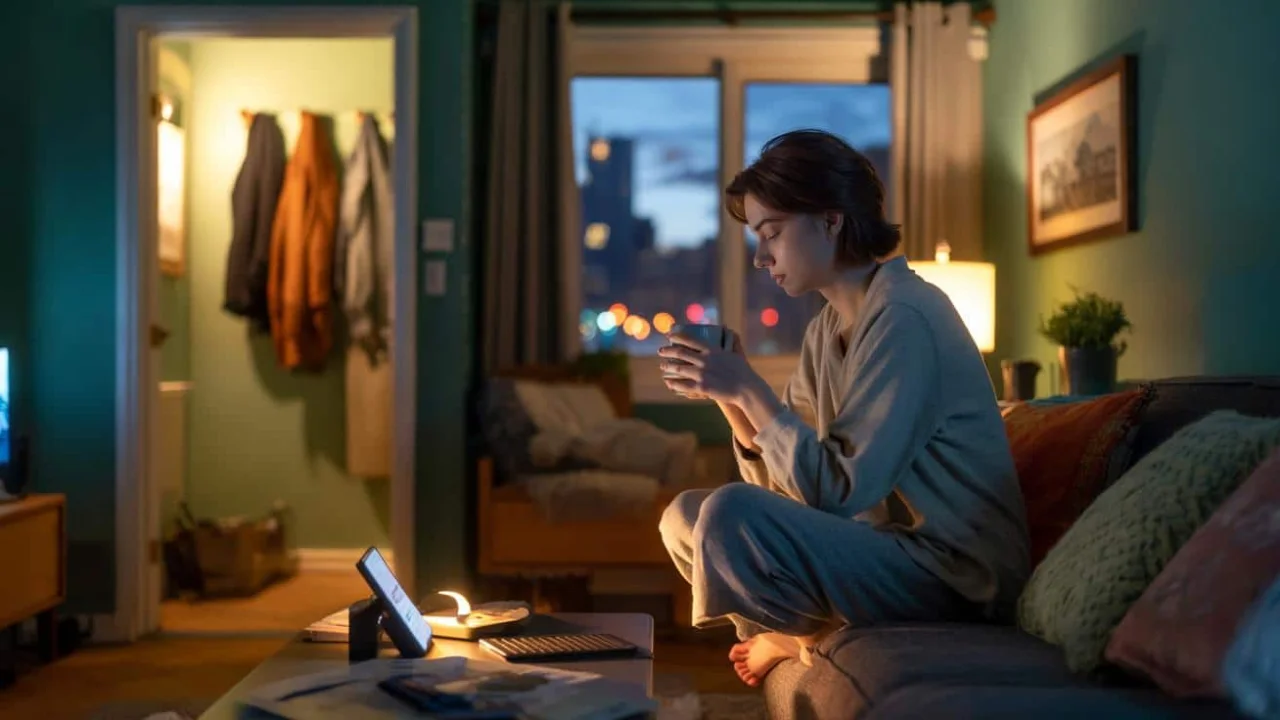
Maya had always been the friend who said yes to everything. Birthday parties, group dinners, weekend trips—she showed up with a smile and genuine enthusiasm. But somewhere around her 28th birthday, she started noticing something odd. The moment she walked through her apartment door after social events, her entire body would exhale in a way that felt almost desperate.
It wasn’t that she didn’t enjoy her friends’ company. She loved them deeply and cherished their conversations. Yet there was this undeniable pattern: the bigger the group, the more drained she felt afterward. When she finally canceled a dinner party last month and spent the evening reading alone instead, the relief was so intense it startled her.
“Am I becoming antisocial?” she wondered. “Or is something else happening here that I don’t understand?”
The Science Behind Feeling Calmer Alone
Maya’s experience touches on a fundamental aspect of how our nervous systems operate around other people. What she was experiencing has a name in psychology: the difference between internal regulation and external regulation of emotions.
When you’re alone, your emotional state is primarily governed by internal regulation. Your brain doesn’t need to constantly monitor social cues, adjust responses, or calculate appropriate reactions. There’s no scanning for approval, no micro-adjustments to match someone else’s energy, no vigilant watching for signs of conflict or disapproval.
Dr. Sarah Chen, a clinical psychologist specializing in social anxiety, explains: “For many people, being around others automatically triggers external regulation mode. Their nervous system starts looking outside themselves for cues about safety, acceptance, and appropriate behavior. This creates a low-level stress response that can be exhausting.”
This shift from internal to external regulation happens so subtly that most people don’t even notice it. Your heart rate might increase slightly. Your muscles may tense just enough to stay “ready.” Your brain begins that familiar dance of social monitoring that feels normal but requires enormous energy.
Signs You Rely on External Regulation in Social Settings
Recognizing when you’re operating in external regulation mode can help you understand your own social energy patterns better. Here are the key indicators:
- Physical tension: Shoulders creeping toward your ears, jaw clenching, or holding your breath during conversations
- Mental scanning: Constantly monitoring facial expressions, tone changes, or group dynamics
- Energy depletion: Feeling genuinely exhausted after social interactions, even enjoyable ones
- Emotional mirroring: Finding your mood automatically shifting to match the group’s energy
- Hypervigilance: Noticing every pause, gesture, or subtle shift in conversation
- Relief upon leaving: That unmistakable “ahh” feeling when you’re finally alone again
The following table shows the key differences between internal and external emotional regulation:
| Internal Regulation (Alone) | External Regulation (With Others) |
|---|---|
| Emotions flow naturally | Emotions are monitored and adjusted |
| Energy comes from within | Energy is influenced by others |
| Nervous system at baseline | Nervous system on alert |
| Authentic responses | Socially appropriate responses |
| Restorative and calming | Stimulating and sometimes draining |
Dr. Marcus Rodriguez, a neuroscientist studying social cognition, notes: “The brain’s social monitoring system is incredibly sophisticated but also energy-intensive. For some individuals, this system runs at high intensity even in safe, familiar social situations.”
Why Some People Need More Alone Time Than Others
Not everyone experiences this dramatic shift between internal and external regulation. Some people genuinely feel energized by social interaction and rarely feel the need to “decompress” afterward. Others, like Maya, find that even positive social experiences require significant recovery time.
Several factors influence how intensely someone experiences external regulation:
- Sensitivity level: Highly sensitive individuals often pick up on subtle social cues that others miss entirely
- Past experiences: People who grew up in unpredictable environments may have nervous systems that stay on high alert during social interactions
- Introversion vs. extraversion: While not absolute, introverts tend to find social stimulation more overwhelming than extraverts
- Anxiety tendencies: Those prone to anxiety may experience stronger external regulation responses
The good news is that understanding your regulation style isn’t about labeling yourself as broken or antisocial. It’s about recognizing how your nervous system works so you can make choices that support your wellbeing.
“There’s nothing wrong with needing more alone time to feel regulated,” says Dr. Chen. “It’s simply how some nervous systems are wired. The problems start when people judge themselves for having these needs instead of honoring them.”
Practical Strategies for Managing Social Energy
Once you understand your regulation patterns, you can start making small adjustments that preserve your social relationships while protecting your energy. Here are strategies that work:
- Plan recovery time: Schedule alone time after social events, even brief ones
- Choose smaller groups: One-on-one conversations often require less external regulation than group settings
- Set time limits: Give yourself permission to leave gatherings when you feel your energy declining
- Create safe spaces: Identify which people and environments allow for more internal regulation
- Practice saying no: Declining some invitations preserves energy for the social connections that matter most
Dr. Rodriguez adds: “Learning to recognize when you’re shifting into external regulation mode is like developing a new sense. Once people can identify it happening, they can make conscious choices about how to respond.”
Maya eventually learned to honor her regulation style without guilt. She started hosting smaller dinner parties instead of attending large gatherings. She scheduled solo activities the day after big social events. Most importantly, she stopped interpreting her need for alone time as a character flaw.
Understanding internal regulation isn’t about avoiding people or becoming isolated. It’s about creating a sustainable balance that allows you to show up authentically in your relationships while maintaining your emotional equilibrium. Your nervous system’s preferences aren’t something to overcome—they’re something to understand and work with.
FAQs
Is it normal to feel more anxious around people I care about?
Yes, this is completely normal. Sometimes we feel more pressure to “perform” appropriately with people whose opinions matter to us, which can trigger external regulation responses.
Does preferring alone time mean I’m antisocial or depressed?
Not necessarily. Many emotionally healthy people simply have nervous systems that require more alone time to regulate. However, if you’re avoiding all social contact or feeling persistently sad, it’s worth speaking with a mental health professional.
Can you train yourself to need less alone time?
While you can develop better coping strategies for social situations, your basic regulation style tends to be fairly stable. It’s usually more effective to work with your natural patterns than against them.
Why do I feel guilty for canceling social plans even when I need alone time?
Many people are taught that being social is always positive and that needing alone time is selfish. Learning to reframe alone time as necessary self-care rather than antisocial behavior can help reduce this guilt.
How do I explain to friends that I need more alone time without hurting their feelings?
Focus on your own needs rather than anything about them. Try phrases like “I’m feeling overstimulated lately and need some quiet time to recharge” rather than “hanging out is exhausting.”
Are there any benefits to external regulation, or is it just draining?
External regulation helps us navigate complex social situations, build relationships, and function in groups. The key is balance—problems arise when external regulation becomes your only mode or when you never get time to internally regulate.