
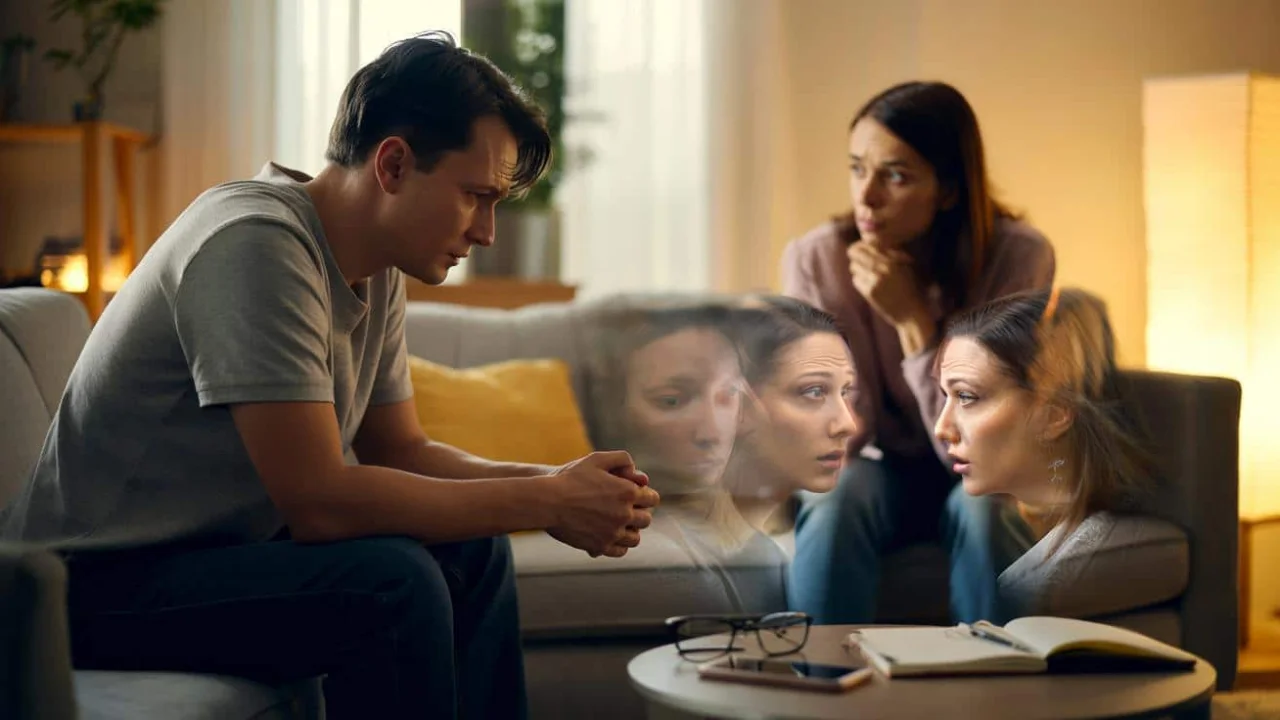
Sarah had been dating Mark for eight months when she finally worked up the courage to tell him about her anxiety. She picked a quiet Sunday morning, made coffee, and sat across from him at their kitchen table. “I’ve been struggling with some anxiety lately,” she began, her voice careful and measured.
Mark’s response was immediate: “Oh, everyone gets stressed sometimes. You just need to relax more.” He smiled, meant it kindly, and went back to scrolling his phone. Sarah felt something inside her collapse. In that moment, she realized he hadn’t heard her at all.
What happened in that kitchen represents something millions of people experience daily. When we feel emotionally misunderstood, it’s not just about poor communication. Psychology shows us that perception creates invisible barriers between what we say and what others hear, often leaving us feeling more isolated than before we spoke.
Why emotional messages get lost in translation
When you feel emotionally misunderstood, your brain is responding to a complex web of perceptual filters that both you and the other person carry. These aren’t conscious choices—they’re automatic processes that happen faster than thought.
Dr. Maria Chen, a clinical psychologist specializing in communication patterns, explains it this way: “We don’t just hear words. We hear them through the lens of our own experiences, fears, and assumptions about what the other person means.”
Consider what happens when someone says, “I feel overwhelmed at work.” The speaker might mean they need emotional support and understanding. But the listener’s perception could interpret this as:
- A request for practical solutions
- A complaint they need to fix
- A criticism of their own work habits
- Drama they don’t have energy for
Neither person is wrong, but they’re operating from completely different emotional frameworks. The speaker feels unheard because their need for empathy gets buried under advice or dismissal. The listener feels frustrated because their genuine attempt to help gets rejected.
“The gap isn’t usually about caring,” notes Dr. James Rodriguez, who studies interpersonal communication. “It’s about the invisible scripts we’re all running that tell us what emotions mean and how we should respond to them.”
The psychology behind feeling emotionally invisible
Several psychological mechanisms work together to create the experience of being emotionally misunderstood. Understanding these can help explain why even loving relationships sometimes feel emotionally disconnected.
| Psychological Process | What It Does | How It Affects Understanding |
|---|---|---|
| Fundamental Attribution Error | We explain our behavior by circumstances, others’ by personality | When someone doesn’t respond with empathy, we think “they don’t care” instead of “they might not understand” |
| Confirmation Bias | We notice information that confirms what we already believe | If we expect to be misunderstood, we focus on signs of dismissal and miss signs of caring |
| Emotional Contagion | We unconsciously mirror others’ emotional states | If the listener feels overwhelmed by our emotions, they may shut down or become defensive |
| Projection | We assume others think and feel like we do | We expect empathy to look the way we would give it, missing other forms of caring |
These processes happen automatically, which means feeling emotionally misunderstood often has little to do with the actual intentions of the people around us. Instead, it’s about how human brains process emotional information under pressure.
Dr. Lisa Thompson, who researches emotional communication, points out: “When someone feels emotionally misunderstood repeatedly, they often start pre-editing their emotions before sharing them. This creates a cycle where authentic connection becomes even harder to achieve.”
What happens when emotional understanding breaks down
The impact of feeling emotionally misunderstood extends far beyond individual conversations. It shapes how we see ourselves, our relationships, and our place in the world.
People who frequently feel emotionally misunderstood often develop what psychologists call “emotional camouflaging”—they learn to present only the emotions they think others can handle. A person might say “I’m fine” when they mean “I’m struggling,” or “I’m just tired” when they mean “I feel emotionally exhausted.”
This protective strategy makes sense in the moment, but it creates long-term problems:
- Relationships stay surface-level because authentic emotions remain hidden
- The person starts believing their “real” emotions are too much for others
- Resentment builds toward people who “never really listen”
- Self-trust erodes as the person questions whether their feelings are valid
In romantic relationships, this dynamic is particularly painful. Partners who feel emotionally misunderstood often report feeling lonely even when they’re together. They may stop sharing concerns, stop asking for support, and eventually stop expecting emotional intimacy altogether.
“The tragedy is that often both people care deeply,” explains Dr. Rodriguez. “But they’re speaking different emotional languages, and neither realizes there’s a translation problem.”
Breaking through the perception barrier
While feeling emotionally misunderstood is common, it’s not inevitable. Small shifts in how we communicate and interpret others’ responses can create dramatic improvements in emotional connection.
One key insight from psychology is that perception works both ways. Just as others might misperceive our emotional needs, we might misperceive their responses. Someone who offers practical advice might actually be showing care—just not in the way we expected.
The goal isn’t to stop having emotional needs or to accept poor treatment. Instead, it’s to recognize when perception gaps are creating unnecessary distance and to bridge those gaps with clearer communication.
Research shows that people who feel emotionally understood share certain communication patterns. They’re more specific about their emotions, more direct about their needs, and more curious about others’ perspectives instead of assuming negative intent.
Dr. Chen suggests: “Instead of saying ‘You never listen,’ try ‘I need you to know this hurt me.’ Instead of assuming someone doesn’t care, ask what their silence means to them.”
The experience of feeling emotionally misunderstood touches something fundamental about human connection. We all want to be seen, heard, and accepted for who we really are. When perception gaps interfere with that basic need, both people in the relationship suffer.
But understanding how perception shapes emotional communication gives us tools to build the connections we crave. Sometimes the problem isn’t that people don’t care—it’s that we’re all trying to connect across invisible barriers we didn’t know existed.
FAQs
Why do I always feel like people don’t understand my emotions?
This often happens because of perceptual differences—you and others are interpreting emotional cues through different filters based on your experiences and expectations.
Is it normal to feel emotionally misunderstood in close relationships?
Yes, it’s very common even in loving relationships because people express and interpret emotions differently, creating natural communication gaps.
How can I tell if someone actually doesn’t care about my feelings?
Look at patterns over time rather than single interactions, and consider whether they show care in ways you might not immediately recognize.
What should I do when someone dismisses my emotions?
Try being more specific about what you need (“I need you to listen, not fix this”) and ask what their response means to them before assuming negative intent.
Can therapy help with feeling emotionally misunderstood?
Yes, therapy can help you identify communication patterns and develop skills for expressing emotions more clearly and interpreting others’ responses more accurately.
Why do some people seem naturally better at emotional communication?
Usually because they learned these skills through practice or were raised in environments where emotional expression was modeled effectively—but these skills can be developed at any age.