
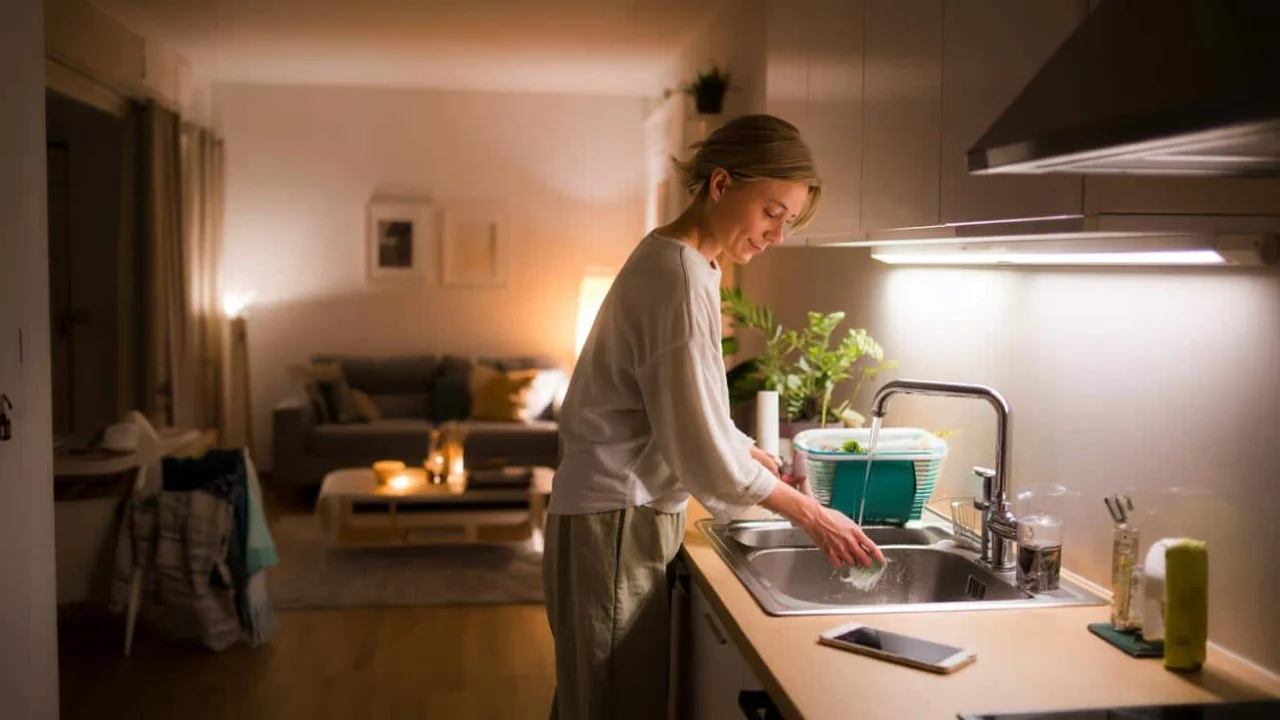
It was 7 PM on a Thursday when I finally understood what had been happening to my nervous system. I was folding towels in my bedroom, moving slowly and deliberately, when I realized something startling: my shoulders weren’t hunched up near my ears. My breathing was deep and steady. The familiar knot in my stomach that usually appeared around dinner time was nowhere to be found.
For months, I’d been treating my home like a battlefield where I was perpetually losing. Every evening became a frantic race against dirty dishes, scattered mail, and that growing pile of laundry that seemed to multiply when I wasn’t looking. But something had shifted in how I approached cleaning, and my stress levels had followed suit in ways I never expected.
What started as a simple change in my cleaning routine had become an accidental experiment in anxiety management. And the results were undeniable.
The Hidden Connection Between Cleaning Chaos and Mental Stress
Most of us don’t realize how deeply our cleaning habits affect our mental state. There’s actual science behind why a chaotic home environment can send our stress hormones into overdrive, and why certain approaches to tidying can either calm or inflame our anxiety levels.
Dr. Sarah Chen, a behavioral psychologist who studies environmental stress, explains it simply: “When we’re surrounded by visual chaos, our brains work overtime trying to process all that information. It’s like having twenty browser tabs open at once – everything slows down and nothing feels manageable.”
But here’s where it gets interesting: the way we clean matters just as much as what we’re cleaning. A frantic, perfectionist approach to tidying can actually increase stress levels, even when the end result looks spotless.
The breaking point for many people comes when cleaning stops feeling like self-care and starts feeling like punishment. We’ve all been there – standing in the kitchen at 9 PM, exhausted from work, staring at a sink full of dishes and feeling like a failure before we even start.
What Actually Changes When You Shift Your Cleaning Approach
The transformation isn’t about having a perfect house. It’s about creating a cleaning routine that works with your nervous system instead of against it. Here are the key changes that can reduce cleaning routine stress:
- Time boundaries: Setting 15-minute cleaning sessions instead of marathon weekend cleanings
- Task prioritization: Focusing on spaces that impact daily function over aesthetic perfection
- Mindful movement: Treating cleaning as meditation rather than a race against time
- Progress over perfection: Celebrating small improvements instead of demanding spotless results
- Routine flexibility: Adjusting expectations based on energy levels and life circumstances
| Stress-Inducing Cleaning Habits | Stress-Reducing Alternatives |
|---|---|
| Weekend cleaning marathons | Daily 10-15 minute maintenance |
| All-or-nothing approach | One room or task at a time |
| Comparison to social media | Focus on personal comfort levels |
| Multitasking while cleaning | Single-task focus with music |
| Cleaning when exhausted | Cleaning when energized |
Mental health counselor Dr. James Rodriguez notes: “When clients change their relationship with household tasks, they often report feeling more in control of other life areas too. It’s like they’ve proven to themselves that overwhelm is manageable.”
Why Small Changes Create Big Stress Relief
The magic happens in the micro-moments. Instead of viewing your home as one giant problem to solve, you start seeing it as a series of small, manageable actions. This shift changes everything about how your brain processes the task ahead.
Consider the difference between walking into your kitchen thinking “I have to clean this entire disaster” versus “I’m going to clear this one counter.” The second approach activates your brain’s reward system when you complete it, rather than triggering the overwhelm response before you even begin.
Neuroscientist Dr. Lisa Park explains: “When we break large tasks into smaller components, we’re literally changing our brain chemistry. Each small completion releases a hit of dopamine, which motivates us to continue rather than avoid.”
This is why people often find that once they start with one small cleaning task, momentum naturally carries them forward. But the key is starting small enough that the initial step feels effortless.
The ripple effects extend beyond just feeling less stressed about housework. Many people report sleeping better when their evening cleaning routine becomes calming rather than frantic. Others find they have more mental energy for work and relationships when they’re not carrying the constant background stress of home chaos.
Real-World Impact on Daily Life and Relationships
The changes don’t stop at stress reduction. When your cleaning routine stress decreases, it affects how you show up in other areas of life. Partners report less tension around household responsibilities. Parents find they’re more patient with kids when they’re not constantly overwhelmed by mess.
There’s also a financial component that surprises many people. When you’re not stress-cleaning in frantic bursts, you’re less likely to buy organizing products you don’t need or replace items you can’t find in the chaos.
Dr. Maria Santos, who studies household psychology, observes: “Clients often tell me they feel like they got their evenings back. Instead of spending three hours stress-cleaning on Sunday, they maintain their space in small, peaceful increments throughout the week.”
The social benefits are equally significant. When your home feels manageable, you’re more likely to invite people over, which combats isolation and strengthens relationships. The shame spiral that comes with avoiding hosting because your house “isn’t ready” disappears when your baseline is livable rather than perfect.
Perhaps most importantly, changing your cleaning routine often serves as practice for managing other overwhelming areas of life. The same principles – breaking things down, focusing on progress over perfection, working with your energy rather than against it – apply to everything from work projects to fitness goals.
FAQs
How long does it take to see stress reduction from changing cleaning routines?
Most people notice a difference within the first week, though it can take 2-3 weeks for the new habits to feel natural and automatic.
What if I live with people who don’t follow the same cleaning approach?
Start with your own spaces and routines first. Often others notice the calmer energy and naturally begin adopting similar approaches without direct conversation about it.
Is it normal to feel guilty about not deep cleaning regularly?
Absolutely normal, and that guilt often comes from unrealistic standards set by social media or childhood experiences. Focus on what makes your space functional rather than Instagram-worthy.
What’s the minimum cleaning routine that can reduce stress?
Even 5 minutes of mindful tidying before bed can make a significant difference in how you feel when you wake up and come home the next day.
Can changing cleaning habits really affect other areas of anxiety?
Yes, many people find that mastering overwhelm in one area builds confidence for handling stress in work, relationships, and other life challenges.
What if my space is too chaotic to know where to start?
Pick the space you use most often (usually kitchen or bedroom) and focus only on that area until it feels manageable, then gradually expand to other rooms.