
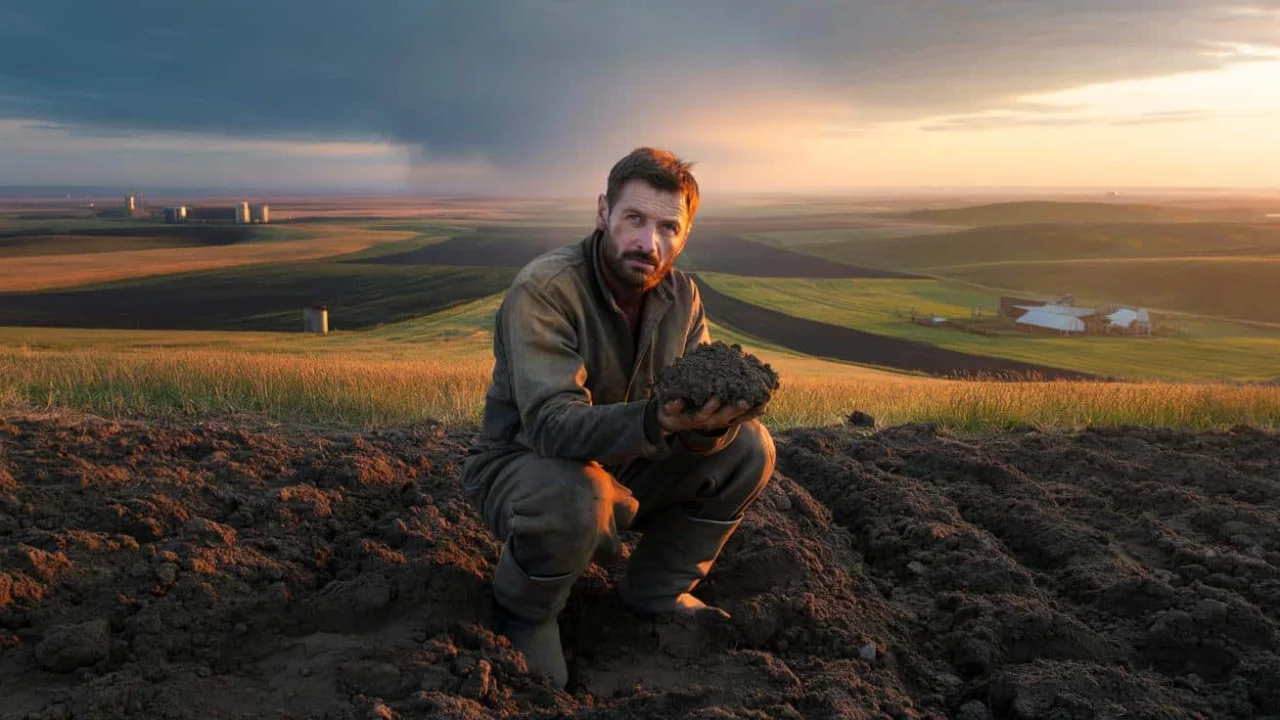
Marta couldn’t sleep. She lay awake in her small farmhouse, listening to the distant rumble of machinery across the fields. At 3 AM, someone was harvesting grain that should have been hers. The Ukrainian steppe soil beneath her feet had fed her family for three generations, but now strangers were working land that technically still belonged to her on paper.
When morning came, she walked to the edge of her property and stared at the furrows cut into earth so black it looked like chocolate cake. This wasn’t just dirt—it was chernozem, the richest soil on Earth. Her grandfather used to joke that you could plant a pencil and grow a tree. Now that same soil was tearing apart friendships, families, and entire nations.
Marta’s story plays out across thousands of farms where the world’s most fertile ground has become its most contested prize.
When black gold turns into a battlefield
The Ukrainian steppe soil stretches like a dark ribbon across Eastern Europe, creating what scientists call the world’s most productive agricultural region. This chernozem—literally “black earth” in Russian—can grow enough wheat to feed entire countries. But what once united neighboring farmers now divides them.
Since 2014, this precious soil has become the center of a complex web of territorial disputes, economic sanctions, and outright theft. Farmers who once traded freely across borders now find themselves on opposite sides of conflict zones, watching their livelihoods disappear into the fog of geopolitics.
“The soil doesn’t care about borders, but people do,” says Dr. Elena Kozlov, an agricultural economist who has studied the region for over 20 years. “What we’re seeing is essentially a land grab disguised as politics.”
The conflict goes deeper than headlines suggest. Satellite imagery shows systematic removal of topsoil from occupied territories, with Ukrainian officials documenting cases where entire fields were literally trucked away to Russia. Meanwhile, Kazakhstan has quietly expanded its grain export capacity, positioning itself as a neutral alternative to both Ukrainian and Russian wheat.
The numbers behind the soil wars
Understanding why this soil matters requires looking at the staggering agricultural output it produces. The region’s chernozem deposits represent just 7% of global farmland but produce nearly 25% of the world’s grain exports.
| Country | Chernozem Area (million hectares) | Annual Grain Production (million tons) | Global Market Share |
|---|---|---|---|
| Ukraine | 17.4 | 65-75 | 12% |
| Russia | 52.0 | 120-130 | 18% |
| Kazakhstan | 25.8 | 18-22 | 3% |
The economic impact ripples far beyond farming. Key factors driving the conflict include:
- Control over grain export routes through Black Sea ports
- Access to underground water reserves that feed the soil
- Ownership of agricultural infrastructure and storage facilities
- Rights to seed patents and farming technology
- Control over fertilizer supply chains
“Every hectare of this soil can generate $800-1,200 in annual revenue,” explains agricultural analyst Viktor Petrov. “When you’re talking about millions of hectares, the stakes become astronomical.”
The soil’s value extends beyond immediate crop yields. Chernozem naturally stores massive amounts of carbon, making it crucial for climate change mitigation. This has attracted international attention from carbon credit markets, adding another layer to the ownership disputes.
Farmers caught in the crossfire
Real people bear the cost of these soil wars. Across the Ukrainian steppe, farming families face impossible choices between abandoning their land or risking their lives to protect it.
Ivan Marchenko used to farm 500 hectares near Kharkiv. Today, half his fields are mined, his grain elevators are destroyed, and his workers have fled to Poland. He estimates it will take five years and $2 million just to clear the explosives from his Ukrainian steppe soil.
“My grandfather survived Stalin’s famine on this land,” Marchenko says. “Now I’m watching it get destroyed by people who claim to be liberating it.”
The psychological toll runs deep. Farm families who have worked the same plots for generations suddenly find themselves labeled as enemies by former neighbors. Local grain dealers who once moved freely between Ukraine, Russia, and Kazakhstan now navigate a maze of sanctions and shifting allegiances.
In Kazakhstan, farmers face different pressures. The government has encouraged expansion into previously unused chernozem areas, but international buyers worry about supply chain stability. Some Kazakh farmers report being approached by mysterious buyers offering above-market prices for long-term grain contracts.
“The soil hasn’t changed, but everything else has,” notes Maria Volkov, who runs a family farm cooperative near Almaty. “We’re growing the same crops, but now we’re competing in a completely different world.”
The ripple effects reach your dinner table
These conflicts over Ukrainian steppe soil and surrounding regions have consequences that extend far beyond Eastern Europe. Global food prices have become more volatile as traditional supply chains fragment and new ones struggle to emerge.
Countries that historically relied on cheap grain from the region now pay premium prices or search for alternative suppliers. This has triggered a domino effect, with farmers in Argentina, Australia, and North America expanding production to fill gaps left by disrupted Ukrainian and Russian exports.
The environmental impact is equally significant. Chernozem soil naturally sequesters carbon, but warfare and intensive farming practices accelerated by conflict are releasing stored carbon back into the atmosphere. Scientists estimate that damaged Ukrainian farmland alone could release the equivalent of several million tons of CO2 over the next decade.
“We’re not just talking about this year’s harvest,” warns climate scientist Dr. Anna Korhonen. “We’re potentially losing one of the planet’s most important carbon sinks while simultaneously disrupting global food security.”
International food aid programs have had to restructure their sourcing strategies, often paying higher prices for grain from more distant suppliers. This creates a cruel irony: regions with the world’s most fertile soil are importing food while their own harvests fuel geopolitical conflicts.
FAQs
What makes Ukrainian steppe soil so valuable?
The chernozem soil contains up to 15% organic matter and can hold enormous amounts of water, making it naturally fertile without heavy fertilizer use.
Is Russia really stealing soil from Ukraine?
Ukrainian officials and satellite imagery document cases of topsoil removal from occupied territories, though the full extent remains disputed.
How much of the world’s food comes from this region?
Ukraine, Russia, and Kazakhstan together typically produce about 25% of global grain exports, despite representing only 7% of farmland.
Will food prices stay high because of these conflicts?
Experts expect continued price volatility as traditional supply chains remain disrupted and alternative sources struggle to match the region’s production capacity.
Can other countries replace this agricultural production?
While other regions can increase output, the unique properties of chernozem soil make it extremely difficult to fully replace its productivity elsewhere.
What happens to the soil during active fighting?
Combat operations, mining, and heavy military vehicles can damage soil structure, while disrupted farming practices can lead to erosion and reduced fertility over time.