
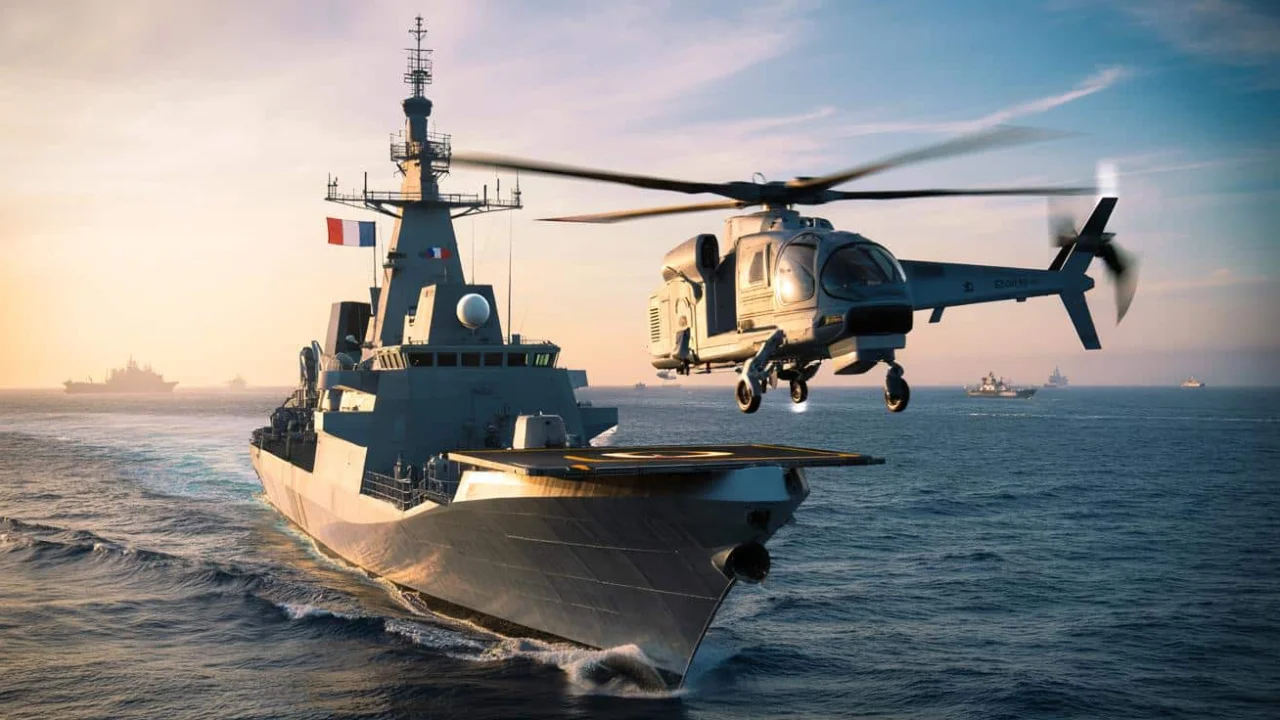
Captain Marie Dubois watched the horizon from the bridge of her frigate, scanning for threats that could emerge from anywhere in the vast Mediterranean. For decades, naval commanders like her faced a fundamental problem: ships could only see as far as their radars reached, leaving dangerous blind spots beyond the horizon. Enemy vessels could approach undetected, and suspicious activities went unnoticed until it was too late.
But that’s about to change. France just made a decision that will revolutionize how its navy operates, becoming the first country to deploy Airbus’ cutting-edge naval drone technology. This isn’t just another military purchase—it’s a strategic leap that transforms France from playing catch-up to leading the pack in naval warfare.
The French Navy will soon have eyes in the sky that never get tired, never lose focus, and can venture into dangerous areas without risking human lives. It’s the kind of technological advantage that changes the rules of the game entirely.
France Makes History with Groundbreaking Airbus Naval Drone Deal
On January 14, 2026, France’s defense procurement agency signed a contract that will reshape naval warfare. The Direction générale de l’armement (DGA) awarded Airbus Helicopters and Naval Group a production contract for six VSR700 unmanned aerial systems, making France the world’s first nation to move this revolutionary Airbus naval drone from prototype to operational reality.
This isn’t just about buying new equipment. France is positioning itself as the pioneer of next-generation naval operations while other nations are still evaluating their options. The timing couldn’t be more strategic, as maritime tensions continue rising worldwide.
“France becomes the first country to place a firm production order for the VSR700, moving the drone from prototype trials to operational reality,” confirmed defense industry analysts following the announcement.
The six systems might seem modest in number, but each represents a complete transformation in naval capability. Starting in 2028, French warships will deploy these unmanned helicopters that can operate far beyond human pilots’ traditional limitations.
What makes this deal particularly significant is Airbus’ approach to production. The company established a dedicated industrial organization specifically for unmanned systems, focusing on certified, secure production while maintaining flexibility for rapid upgrades. This addresses a common problem in military drone projects: lots of prototypes, but few delivered on schedule.
Technical Specifications and Game-Changing Capabilities
The VSR700 Airbus naval drone isn’t just a flying robot—it’s designed as an extension of the ship itself. Each system integrates seamlessly with existing naval combat systems, creating unprecedented situational awareness.
Here’s what makes these drones revolutionary:
- Maritime surveillance radar for detecting and tracking contacts beyond line of sight
- Electro-optical turret providing day and night visual identification
- AIS receiver for analyzing signals from civilian and military vessels
- Secure data links connecting directly to ship combat systems
- Autonomous operation capabilities reducing crew workload
| Feature | Capability | Advantage |
|---|---|---|
| Flight Duration | 6+ hours | Extended surveillance coverage |
| Operating Range | 100+ nautical miles | Beyond-horizon reconnaissance |
| Payload Capacity | Multiple sensors | Multi-mission flexibility |
| Weather Tolerance | All-weather operations | Continuous availability |
| Integration | Ship combat systems | Real-time data fusion |
Naval Group will handle the complete integration of the VSR700 into ship combat systems. The drone’s data feeds directly into the Steeris Mission System, treating the aircraft as another major sensor alongside traditional ship radars and sonars.
“This integration means the Airbus naval drone becomes part of the ship’s nervous system, not just an accessory,” explained maritime defense experts familiar with the project.
What This Means for Naval Warfare and Global Security
France’s decision to deploy the Airbus naval drone first creates ripple effects extending far beyond its own fleet. Other navies worldwide are watching closely, knowing they’re now competing against a force with significantly enhanced capabilities.
The practical advantages are enormous. French naval commanders can now:
- Monitor vast ocean areas without exposing crew to danger
- Identify threats hours before they reach engagement range
- Coordinate multi-ship operations with shared drone intelligence
- Conduct persistent surveillance of strategic maritime routes
This technology particularly matters in contested waters where traditional reconnaissance might provoke incidents. A drone can investigate suspicious vessels or activities without the political implications of sending crewed aircraft.
“The VSR700 gives France a tactical advantage that’s difficult to counter,” noted defense analysts. “While other nations debate procurement, France will be accumulating operational experience.”
The broader implications extend to NATO and European defense cooperation. As France develops expertise with naval drone operations, its allies will likely seek partnerships and technology sharing agreements. This positions France as a leader in autonomous naval systems development.
Industry Impact and Future Developments
Airbus’ success in securing France as the launch customer validates years of investment in naval drone technology. The company can now point to operational deployment when courting other international customers, providing a significant competitive advantage.
The production model Airbus developed specifically addresses common military drone program failures. By focusing on repeatable, certified production processes while maintaining upgrade flexibility, they’ve created a sustainable business model that can scale with demand.
Other European nations are already expressing interest in the VSR700 system. The successful French deployment will likely accelerate international sales, potentially creating a European standard for naval drone operations.
“Once France proves the operational concept, expect rapid international adoption,” predicted industry observers.
The timing aligns perfectly with growing global demand for unmanned naval systems. As maritime threats evolve and traditional approaches prove insufficient, navies worldwide need new capabilities that balance effectiveness with crew safety.
FAQs
When will France’s naval drones become operational?
The French Navy will begin deploying VSR700 systems starting in 2028, with full operational capability expected by 2030.
How many Airbus naval drones will France receive?
France ordered six complete VSR700 systems, each including an unmanned helicopter, control station, and support equipment.
What makes the VSR700 different from other naval drones?
The VSR700 integrates directly with ship combat systems, operates autonomously for 6+ hours, and provides beyond-horizon surveillance capabilities previously unavailable to naval forces.
Will other countries be able to purchase these drones?
Yes, Airbus plans to market the VSR700 internationally, with France’s operational experience providing valuable proof of concept for potential customers.
How does this change naval operations?
The drones extend a ship’s sensor range dramatically, allowing commanders to detect and respond to threats much earlier while reducing risk to crew members.
What’s the significance of France being first?
Being the launch customer gives France operational experience advantages and positions it as a leader in next-generation naval warfare capabilities.