
Marie looked out the small airplane window as they descended toward the tiny airstrip nestled between French Alps peaks. The 12-seat turboprop was loud, expensive, and belching fumes – but it was her only way to visit her elderly mother in this remote mountain town. “There has to be a better way,” she thought, watching the fuel gauge and calculating the environmental cost of this 200-kilometer hop.
She’s not alone in that frustration. Across Europe, millions of people living in rural areas face the same dilemma: noisy, polluting small aircraft are often their lifeline to the outside world.
But what if that could change completely? What if your next regional flight could be whisper-quiet, produce zero emissions, and cost a fraction of today’s prices?
The French Startup Promising an Aviation Revolution
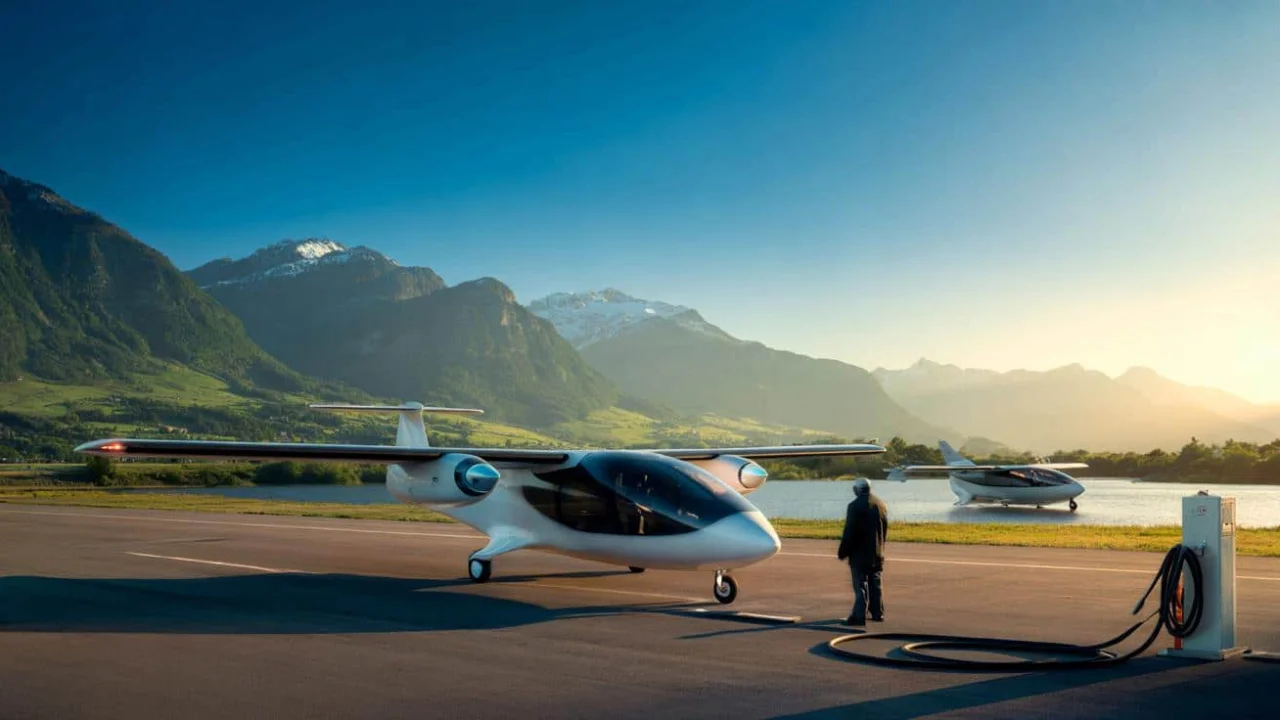
In a quiet hangar in France’s Rhône-Alpes region, engineers at startup Eenuee believe they’ve cracked the code. Their French electric aircraft project, called Gen-ee, isn’t just another incremental improvement – it’s a complete rethinking of short-haul aviation.
The numbers sound almost too good to be true: this 19-seat electric plane promises to use 11 times less energy than conventional regional aircraft on similar routes. That’s not a typo – we’re talking about a 91% reduction in energy consumption.
“We realized that chasing long-haul electric flight was missing the point,” explains a spokesperson for the project. “The real opportunity is in regional routes where people are already fed up with noisy, expensive, polluting flights.”
Unlike the aviation giants betting billions on hydrogen or sustainable fuels, Eenuee is taking a different approach. Their French electric aircraft is designed around an unconventional shape that maximizes efficiency while keeping things simple and practical.
What Makes This Electric Aircraft Different
The Gen-ee project targets a specific sweet spot that bigger companies have largely ignored. Here’s what sets this French electric aircraft apart:
- Range: 500 kilometers on a single charge – perfect for regional hops
- Capacity: 19 passengers, ideal for thin routes
- Infrastructure: Works with existing small airports – no new runways needed
- Noise: Virtually silent operation compared to turboprops
- Operating costs: Dramatically lower than conventional aircraft
The aircraft’s unconventional design isn’t just about looking different – every curve and angle serves the goal of energy efficiency. While traditional planes prioritize speed over efficiency, this French electric aircraft flips that equation.
| Feature | Traditional Turboprop | Gen-ee Electric |
|---|---|---|
| Energy Consumption | High | 91% less |
| Noise Level | Very loud | Near silent |
| Emissions | Heavy CO2 output | Zero direct emissions |
| Operating Range | 800-1000 km | 500 km |
| Runway Requirements | Standard | Short strips OK |
“The beauty is in the simplicity,” notes an industry observer. “Instead of trying to electrify a traditional plane design, they started from scratch and asked: what would an electric aircraft actually look like if you designed it properly?”
Why Regional Routes Are Perfect for Electric Flight
Regional aviation has been stuck in a frustrating cycle for decades. Rural communities need air connections, but traditional aircraft are expensive to operate on thin routes. This creates a vicious circle: high ticket prices, low passenger numbers, reduced service, and more isolation for remote areas.
The problem is particularly acute in mountainous regions like the Alps, rural Scotland, or parts of Scandinavia. Building new rail lines would cost billions and take decades. Road journeys can be slow and treacherous in winter.
Electric aircraft could break this cycle entirely. Lower operating costs mean cheaper tickets. Quieter operation means less community opposition to flights. Zero local emissions address environmental concerns.
“This isn’t about replacing Boeing 737s,” clarifies an aviation analyst. “It’s about serving routes that barely survive with today’s technology – and opening up new possibilities that were never economically viable before.”
The 500-kilometer range perfectly matches typical regional routes: Paris to Lyon, Munich to Zurich, Edinburgh to Manchester. These are journeys where flying makes sense distance-wise, but where current aircraft are overkill and inefficient.
Real-World Impact for Travelers and Communities
For people like Marie, this French electric aircraft could transform their travel experience. Instead of the current reality – expensive, noisy flights with guilt about environmental impact – electric regional aviation offers a guilt-free way to stay connected.
Rural communities stand to benefit enormously. Tourism could get a major boost when visitors can arrive quietly without disturbing the peace. Business connections become more viable. Emergency medical flights become cheaper and more accessible.
The environmental impact could be substantial too. Regional aviation currently produces disproportionate emissions per passenger because small aircraft are inherently less efficient than large ones. Electrifying this segment removes emissions entirely from the local level.
Of course, challenges remain. Battery technology needs to continue improving. Charging infrastructure must be built at regional airports. Weather conditions will affect range and operations.
But Eenuee isn’t waiting for perfect conditions. Their French electric aircraft is designed to work with today’s battery technology while being upgradeable as batteries improve.
“We’re not trying to solve every aviation problem at once,” explains a project engineer. “We’re focusing on the routes where electric makes sense right now, and building from there.”
The Race for Electric Aviation Leadership
While Boeing and Airbus pour resources into sustainable aviation fuels and hydrogen, smaller companies like Eenuee are quietly working on electric solutions that could arrive much sooner.
The French electric aircraft sector is particularly active, with government support for clean aviation initiatives. France sees electric aircraft as a way to maintain its aerospace leadership while addressing climate commitments.
Other countries are watching closely. Norway has committed to electrifying all short-haul flights by 2040. Several U.S. companies are developing electric aircraft for different market segments.
But Eenuee’s approach – focusing on practical, near-term applications rather than headline-grabbing long-range concepts – could give them a crucial head start in bringing electric aviation to everyday travelers.
FAQs
When will this French electric aircraft be available for passengers?
While Eenuee hasn’t announced specific timelines, most industry experts expect electric regional aircraft to enter service within the next 5-7 years, pending certification.
How much will tickets cost on electric aircraft?
Lower operating costs should translate to cheaper tickets, though exact pricing will depend on route competition and airport fees. The reduction in fuel costs alone could cut ticket prices significantly.
Can electric aircraft fly in bad weather?
Electric aircraft face the same weather limitations as conventional planes, though they may be less affected by turbulence due to their typically lighter weight and different design characteristics.
What happens if the battery runs out during flight?
Like all aircraft, electric planes are designed with safety margins and backup systems. Battery management systems monitor power continuously, and flight planning includes substantial reserves.
Will this replace all regional flights?
The 500-kilometer range means this French electric aircraft targets specific route types. Longer regional routes will likely continue using conventional aircraft until battery technology improves further.
How long does it take to charge the aircraft?
Charging times depend on the power infrastructure available, but fast-charging systems being developed could enable turnarounds similar to conventional aircraft refueling times.