
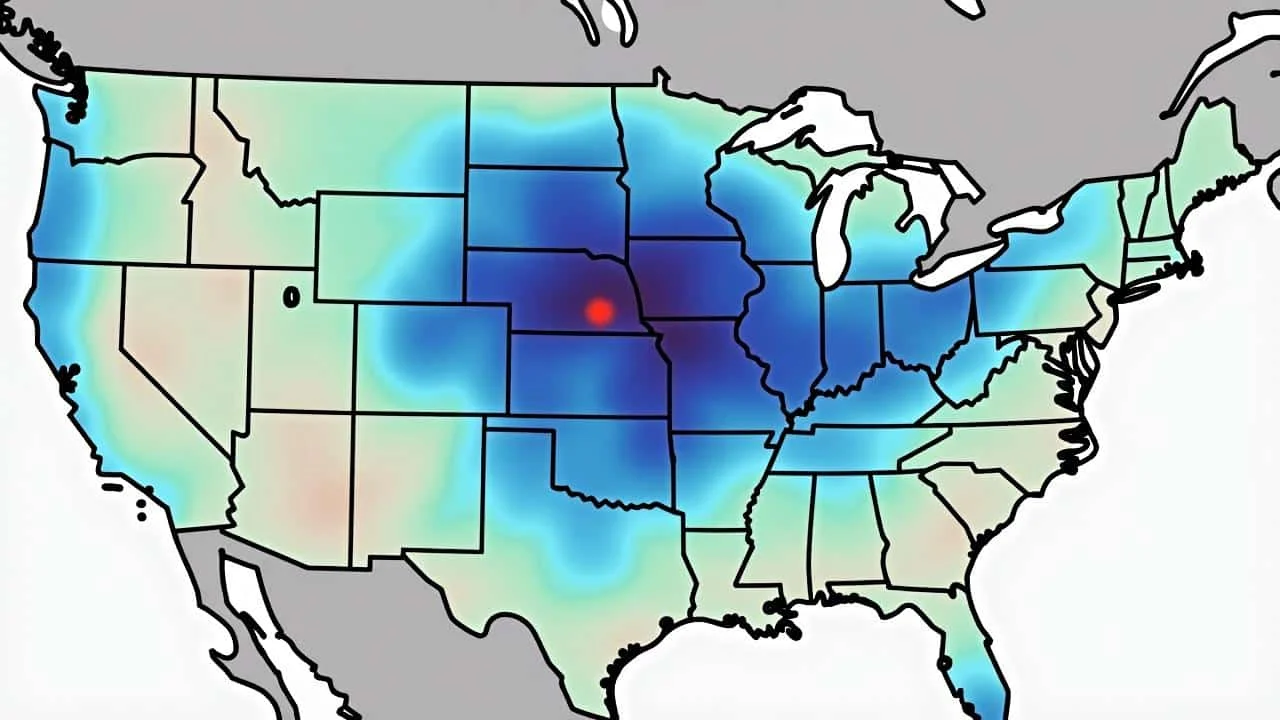
Sarah Martinez was checking her weather app for the third time that morning when the notification popped up: “Polar Vortex Advisory – Prepare for Extreme Temperature Swings.” She lived in Nashville, Tennessee—nowhere near the Arctic. Yet there it was, a red warning telling her to expect temperatures 40 degrees below normal within days.
Down the street, her neighbor was still watering his lawn in shorts. Two states over, friends in Minnesota were posting photos of ice fishing in January weather that felt more like March. Something was clearly broken in the atmosphere, and meteorologists had a name for it: a polar vortex disruption.
What Sarah didn’t know was that 30 miles above her head, one of Earth’s most powerful weather engines was starting to wobble—and when it falls apart completely, millions of people feel the consequences.
When the Arctic’s Security System Breaks Down
Think of the polar vortex as nature’s ultimate security system for keeping Arctic cold where it belongs. This massive ring of spinning air sits high in the stratosphere, acting like an invisible fence around the North Pole.
When it’s healthy and strong, the vortex keeps frigid air locked up north while the rest of us enjoy predictable weather patterns. But when a polar vortex disruption occurs, that fence essentially collapses.
“It’s like a dam bursting, except instead of water, you get a flood of Arctic air spilling into places that aren’t prepared for it,” explains Dr. Amy Chen, a climatologist at the National Weather Service. “The disruption doesn’t just affect one region—it scrambles weather patterns across entire continents.”
The process starts with something called sudden stratospheric warming. Powerful atmospheric waves, created by mountain ranges and temperature differences between land and ocean, punch upward into the stratosphere. When these waves are strong enough, they heat the polar region rapidly and weaken the vortex’s circulation.
Sometimes the vortex just wobbles and recovers. Other times, it splits into pieces or shifts dramatically off-center. That’s when the real chaos begins.
The Domino Effect Nobody Sees Coming
A polar vortex disruption doesn’t announce itself with thunderclaps or visible storms. Instead, it triggers a cascade of atmospheric changes that can take weeks to fully unfold:
- Jet stream displacement: The high-altitude river of air that guides storms gets pushed into wild, meandering patterns
- Temperature inversions: Regions that should be cold turn warm, while typically mild areas face arctic blasts
- Storm track shifts: Weather systems follow unusual paths, bringing snow to unexpected places
- Persistent patterns: Instead of normal weather variety, regions get stuck in extreme conditions for weeks
The February 2021 Texas freeze offers a perfect example. As the polar vortex split apart, arctic air poured south while the jet stream buckled into an extreme pattern. Texas, unprepared for sustained freezing temperatures, saw its power grid fail and water systems freeze.
| Recent Major Disruptions | Year | Primary Impact Regions | Duration |
|---|---|---|---|
| Texas Arctic Blast | 2021 | South-Central US | 2 weeks |
| Beast from the East | 2018 | Europe | 3 weeks |
| North American Deep Freeze | 2014 | Eastern US/Canada | 6 weeks |
| European Cold Snap | 2012 | Eastern Europe | 4 weeks |
“What people don’t realize is that these events are becoming more frequent,” notes meteorologist Dr. James Rodriguez. “We’re seeing major polar vortex disruptions about every two to three years now, compared to every five to seven years in previous decades.”
Who Gets Hit and How Hard
The cruel irony of polar vortex disruptions is their unpredictability. While scientists can detect the initial stratospheric warming, pinpointing exactly which regions will bear the brunt remains challenging.
However, certain patterns have emerged. When the vortex splits, one piece often parks itself over Europe while another settles near North America. This configuration typically means:
- Eastern United States: Brutal cold snaps, increased snow, infrastructure strain
- Western United States: Unusually warm temperatures, drought conditions, fire risk
- Northern Europe: Siberian cold, transportation disruptions, energy demand spikes
- Southern Europe: Mild temperatures, reduced snow, agricultural impacts
The human cost extends far beyond inconvenience. During the 2021 Texas event, more than 200 people died from cold-related causes. The 2018 European disruption killed over 60 people and caused billions in economic damage.
“These aren’t just weather events—they’re humanitarian crises in the making,” emphasizes emergency management specialist Dr. Lisa Park. “Communities that never prepare for extreme cold suddenly find themselves in life-threatening situations.”
Agriculture takes a particularly hard hit. Crops in regions experiencing unexpected freezes can suffer massive losses, while areas that should be cold miss crucial winter chill hours needed for fruit production.
The Ripple Effects Keep Coming
Perhaps most concerning is how polar vortex disruptions create cascading problems that persist long after temperatures return to normal.
Energy systems face enormous strain. Power grids designed for typical winter loads suddenly deal with unprecedented demand. Natural gas prices spike as heating needs soar in unprepared regions. Renewable energy sources, particularly wind and solar, struggle to function in extreme conditions they weren’t designed to handle.
Transportation networks collapse. Airports shut down, not just from snow, but because equipment fails in temperatures far below design limits. Roads buckle and crack. Supply chains that depend on predictable weather patterns break down completely.
“The February 2021 event showed us how quickly modern infrastructure can crumble when faced with conditions outside normal parameters,” explains infrastructure analyst Dr. Kevin Thompson. “We’re talking about rolling blackouts, burst pipes, and transportation paralysis lasting for weeks.”
The economic impact spreads globally. Insurance claims skyrocket. Agricultural futures markets swing wildly. Energy costs affect everything from shipping to manufacturing, creating price increases that consumers feel months later.
What This Means for You Right Now
Current atmospheric monitoring shows telltale signs of an approaching polar vortex disruption. Stratospheric temperatures above the Arctic have begun rising rapidly—the classic precursor to vortex breakdown.
While scientists can’t predict exactly when or where the worst impacts will hit, the message is clear: prepare for weather extremes that could arrive with little warning.
Smart preparation doesn’t require panic buying or bunkers. It means having emergency supplies for extended power outages, protecting pipes from freezing, and staying informed about rapidly changing conditions.
More importantly, it means understanding that these events are part of our new climate reality. As the Arctic continues warming faster than other regions, the polar vortex becomes increasingly unstable, making disruptions more frequent and potentially more severe.
FAQs
How long does a polar vortex disruption typically last?
Most disruptions persist for 2-6 weeks, though their effects on weather patterns can continue for up to two months after the vortex reforms.
Can scientists predict exactly where the cold air will hit?
While meteorologists can detect the initial disruption, pinpointing specific regional impacts remains challenging due to the chaotic nature of atmospheric dynamics.
Are polar vortex disruptions becoming more common?
Yes, major disruptions now occur roughly every 2-3 years compared to every 5-7 years in previous decades, likely linked to Arctic warming trends.
What’s the difference between the polar vortex and a regular cold snap?
Regular cold snaps are temporary weather events, while polar vortex disruptions fundamentally alter atmospheric circulation patterns for weeks or months.
Should people in warm climates worry about these events?
Absolutely. Polar vortex disruptions can bring arctic conditions to regions that rarely freeze, creating dangerous situations for unprepared communities.
How can I prepare for a potential polar vortex event?
Keep emergency supplies including food, water, batteries, and blankets. Protect pipes from freezing, ensure heating system functionality, and stay informed through official weather channels.