
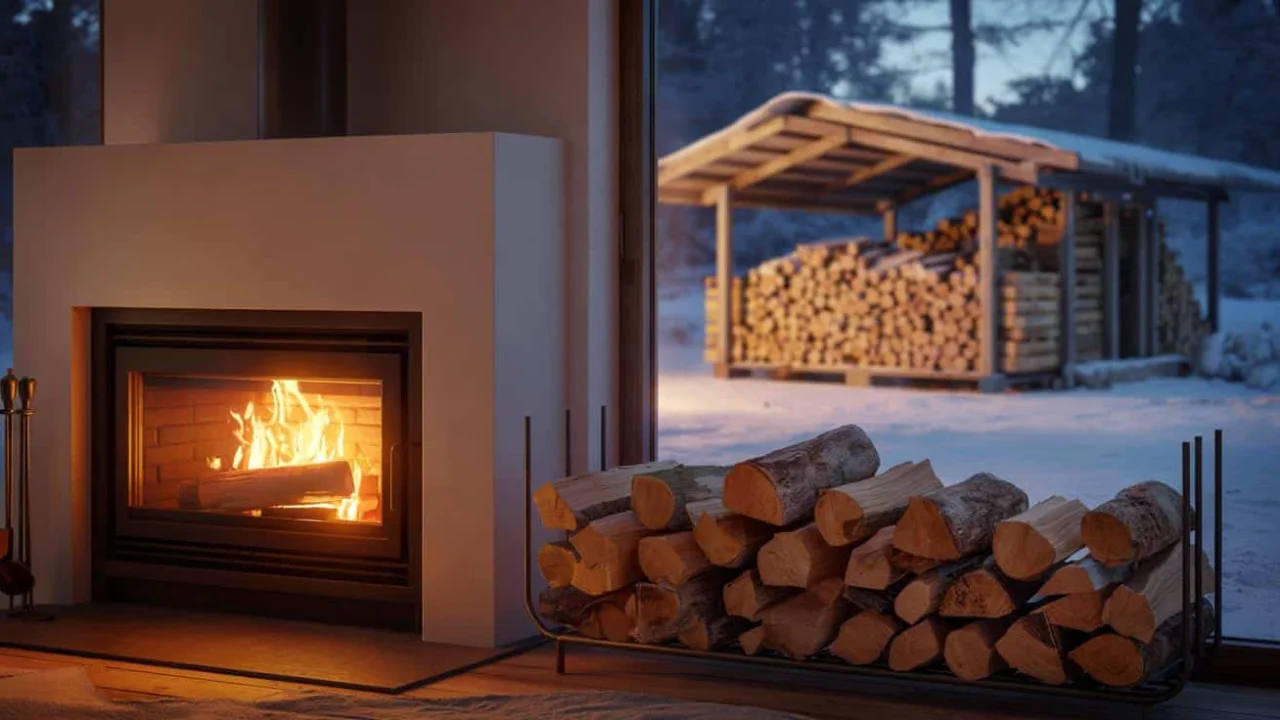
Sarah’s heart sank as she watched the delivery truck disappear down her country lane, leaving behind what looked like a pathetically small pile of logs. She’d ordered what the supplier called “five cubic metres of seasoned oak” — surely enough to keep her cottage warm through winter. But standing there in October drizzle, staring at the modest heap beside her woodshed, doubt crept in.
By February, Sarah was burning her garden fence panels. She’d learned the hard way that calculating cubic metres firewood isn’t as straightforward as it sounds, and that expensive lesson left her scrambling for emergency wood supplies at premium prices.
Sarah’s story isn’t unique. Across the country, households are rediscovering wood heating as energy bills soar and the desire for cozy, independent warmth grows stronger. But getting your firewood calculation wrong can leave you literally out in the cold.
Why Wood Measurement Gets Confusing Fast
The confusion starts with how wood is measured and sold. In France, they use “stères” — officially one cubic metre of logs cut to one-metre lengths and neatly stacked. Sounds simple enough, right?
Here’s where it gets tricky. Your wood burner probably can’t handle one-metre logs. Most modern stoves take 25cm, 33cm, or 50cm pieces. When suppliers cut those long logs down to size, something interesting happens — the wood takes up less space.
Think of it like packing a suitcase. Big items leave gaps, but smaller pieces nestle together more efficiently. The same amount of wood that measured one cubic metre in long lengths might only occupy 0.7 cubic metres once cut shorter.
“I’ve seen customers get genuinely upset when their ‘five cubic metres’ doesn’t look like five cubic metres in their shed,” explains timber merchant James Crawford. “But they’ve got exactly the same amount of wood — it’s just packed tighter.”
In the UK and US, you’ll encounter different terms entirely. “Loose cubic metres,” “stacked cubic metres,” and “cords” all mean different things. A traditional cord measures 3.62 cubic metres when properly stacked, but “face cords” or “rick cords” can be much smaller.
The Real Factors That Determine Your Wood Needs
Predicting your cubic metres firewood requirements isn’t just about house size. Five crucial factors determine whether you’ll cruise through winter on a modest pile or burn through a small forest.
Your home’s size matters, obviously, but volume trumps floor area. A compact bungalow with standard ceilings needs far less wood than a farmhouse with soaring spaces and open-plan layouts. But insulation quality makes the biggest difference of all.
| Home Type | Floor Area | Annual Wood Need |
|---|---|---|
| Well-insulated modern home | 90-110 m² | 5-7 cubic metres |
| Older home, good insulation | 120-150 m² | 8-12 cubic metres |
| Period property, poor insulation | 150-200 m² | 12-18 cubic metres |
| Large farmhouse, drafty | 200+ m² | 15-25 cubic metres |
Climate plays a huge role too. Scottish Highlands winters demand more wood than mild southern counties. Your heating habits matter — keeping one room toasty differs vastly from warming the whole house.
Wood quality dramatically affects consumption. Properly seasoned hardwood like oak or ash burns longer and hotter than softwood or damp logs. Moisture content should be below 20% for efficient burning.
- Hardwood (oak, ash, beech): Maximum heat output, burns slowly
- Softwood (pine, fir): Quick to light, burns faster, needs more volume
- Wet wood: Poor heat, excessive smoke, rapid consumption
- Kiln-dried wood: Consistent quality, immediate use, premium price
“The difference between seasoned hardwood and whatever someone’s cleared from their garden is night and day,” notes heating engineer Lisa Chen. “Bad wood means you’re constantly feeding the fire and getting half the heat.”
Working Out Your Personal Wood Budget
Start with your home’s heated area and multiply by your regional climate factor. Mild regions need roughly 0.06 cubic metres per square metre of heated space annually. Cold areas require 0.08 to 0.12 cubic metres per square metre.
But these are starting points. Factor in your insulation quality, ceiling heights, and how much you rely on wood heating. Using your stove as occasional backup requires 2-4 cubic metres yearly. Primary heating for a whole winter demands much more.
Consider your daily burning patterns too. Weekend warriors who light fires Friday through Sunday need less wood than families running stoves dawn to dusk throughout winter months.
“Most people underestimate their first year, then overcompensate and buy too much the second year,” observes wood supplier Mark Thompson. “Keep records of what you actually burn — it’s the only way to get accurate.”
Don’t forget storage logistics. Cubic metres firewood needs dry, ventilated storage. Stack wood off the ground, cover the top but leave sides open for airflow. Wet wood loses heating value and creates more pollution.
Plan your purchase timing carefully. Buying in spring or early summer often costs less than autumn panic-buying. Seasoned wood ordered in March gives you months to organize proper storage before heating season begins.
Getting Your Order Right First Time
Calculate conservatively for your first winter, but build in a safety margin. Running short in January means paying premium prices for emergency supplies. Better to have surplus wood carrying over than scrambling mid-winter.
Always clarify exactly what you’re buying. Ask suppliers whether their cubic metre measurement is stacked or loose tipped, what log lengths you’ll receive, and the wood’s moisture content. These details directly impact value.
Consider mixed orders for flexibility. Combine dense hardwood for overnight burning with lighter wood for quick warmth. Some suppliers offer “winter mixes” blending different species for versatile heating.
FAQs
How much does a cubic metre of firewood typically cost?
Prices vary by region and wood type, but expect £60-120 per cubic metre for seasoned hardwood, with delivery adding £20-50 depending on distance.
Can I burn freshly cut wood immediately?
No, fresh wood contains 40-60% moisture and burns poorly while creating excessive smoke. Proper seasoning takes 12-24 months depending on species and storage conditions.
What’s the difference between hardwood and softwood for heating?
Hardwood burns longer and produces more heat per cubic metre, making it more economical despite higher upfront costs. Softwood lights easily but burns quickly.
How do I know if my wood is properly seasoned?
Seasoned wood feels lighter, has cracks in the ends, makes a hollow sound when knocked together, and shows moisture content below 20% on a digital meter.
Should I stack my wood immediately after delivery?
Yes, proper stacking improves airflow and prevents moisture retention. Stack off the ground with spaces between pieces, covering only the top portion.
How long does firewood last in storage?
Properly stored seasoned wood lasts 3-5 years without quality loss. Keep it dry, ventilated, and protected from ground moisture for best results.