
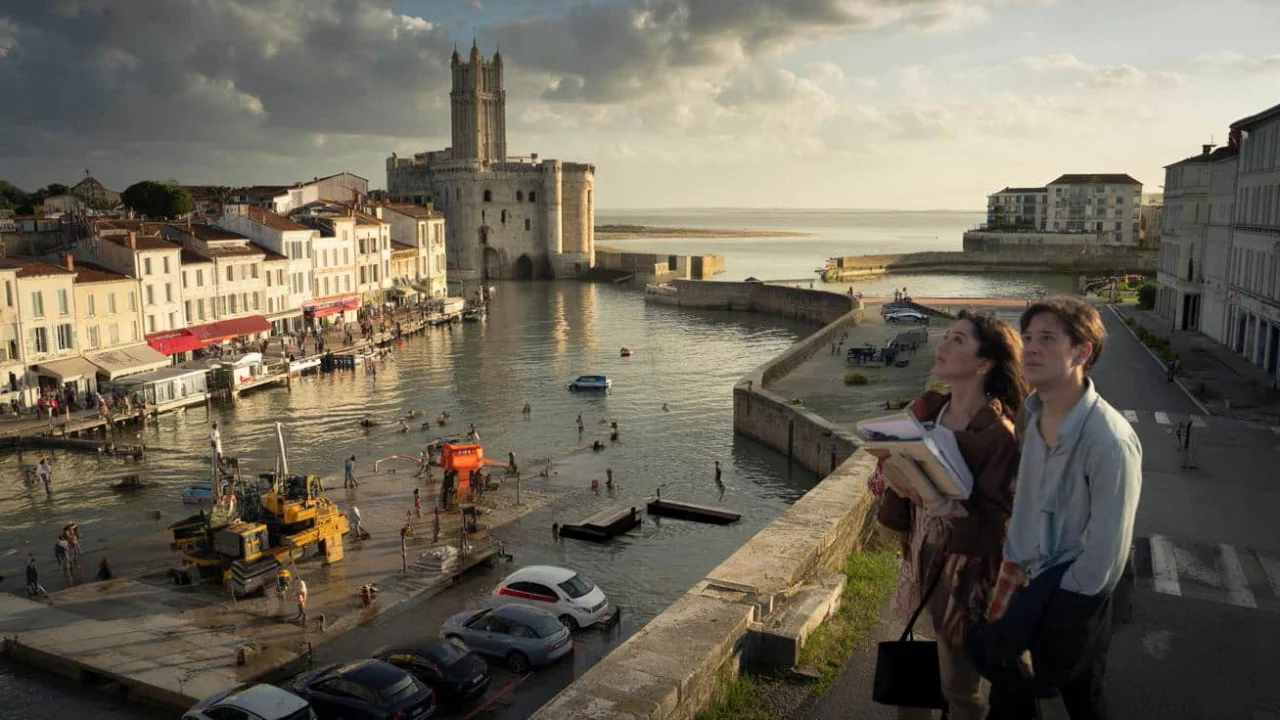
Marie Dubois still remembers the morning she woke up to find her car floating in the underground garage beneath her La Rochelle apartment. It was March 2023, during what locals call a “normal” spring tide. No dramatic storm, no breaking news alerts—just the Atlantic Ocean quietly reclaiming space it once knew well.
“I thought it was a freak accident,” Marie recalls, standing in her kitchen that overlooks the medieval port towers. “But then my neighbor mentioned it happened to him twice last winter. That’s when I realized this wasn’t going away.”
Marie’s story isn’t unique anymore. Across this picturesque French coastal city, residents are discovering that their dream location is becoming a daily gamble with nature. And by 2030, that gamble might not be worth taking.
When Paradise Starts Sinking
La Rochelle has always been defined by its relationship with the sea. Those iconic stone towers that guard the old harbor have watched over fishing boats, merchant ships, and tourists for centuries. But climate change is rewriting the rules of this ancient dance between land and water.
“By 2030, we’re looking at regular flooding in areas that have stayed dry for generations,” explains Dr. Philippe Renard, a coastal engineer who has studied the Atlantic coastline for over two decades. “The sea isn’t just rising—it’s becoming more aggressive.”
The numbers tell a stark story. La Rochelle sits barely above sea level in many neighborhoods, making it incredibly vulnerable to even modest changes. When you combine thermal expansion of ocean water with accelerating ice melt from Greenland and Antarctica, the timeline becomes uncomfortably short.
Urban planners now work with detailed submersion maps showing which streets will become temporary rivers during high tides. The old port area, currently packed with restaurants and boutique shops, faces regular inundation by the decade’s end.
The Real Cost of Coastal Living
Climate projections that once focused on 2050 or 2100 have been dramatically updated. Many tipping points are now expected in the 2030s—well within the lifespan of current mortgages and business leases.
French insurance companies are already recalculating risk assessments neighborhood by neighborhood. Properties in designated “red zones” face mounting challenges:
| Challenge | Timeline | Impact |
|---|---|---|
| Insurance premium increases | 2024-2026 | 200-400% rise in coastal areas |
| Property value decline | 2025-2028 | 15-30% drop in flood-prone zones |
| Infrastructure strain | 2026-2030 | Regular service disruptions |
| Business relocations | 2027-2031 | Loss of coastal commerce |
“For many homeowners, the financial wave will hit before the physical one,” notes Sylvie Moreau, a real estate analyst specializing in coastal markets. “Banks are becoming nervous about lending on properties that might be underwater—literally—before the loan is repaid.”
The ripple effects extend far beyond individual property owners. Local businesses that depend on foot traffic are already seeing customers avoid the old town during high tide warnings. Restaurant owners report having to close several days per month when sidewalks disappear under brackish water.
Living with Water: The New Normal
Residents of La Rochelle 2030 will need to adapt to a dramatically different rhythm of life. Morning commutes will be planned around tide tables. Parking strategies will involve checking flood forecasts. Evening walks along the harbor may become afternoon walks, when the water levels permit.
The city is investing heavily in adaptation measures, but each solution comes with limitations:
- Raised seawalls and quays – Expensive and only effective up to a certain water level
- Improved drainage systems – Helpful for moderate flooding but overwhelmed during storm surges
- Floating infrastructure – Innovative but requires complete redesign of utilities and roads
- Managed retreat – The most effective long-term solution but politically and emotionally challenging
Local authorities face an impossible equation: how do you protect a historic city that was built when the sea was predictably lower and calmer? Every euro spent on defenses might buy only a few more years before nature demands the next expensive upgrade.
“We’re not just fighting today’s ocean,” explains Mayor Catherine Montiel during a recent town hall meeting. “We’re trying to guess what the ocean will look like in 2035, 2040, and beyond. That’s extremely difficult when the pace of change keeps accelerating.”
Why You Should Start Planning Now
The transformation of La Rochelle isn’t hypothetical—it’s already underway. Smart residents and investors are making decisions now, before the full scale of change becomes obvious to everyone.
If you’re considering a move to La Rochelle, timing matters enormously. Properties in higher elevations or newer developments with modern flood defenses will likely maintain value better than historic buildings in the old port area.
“The people who thrive in La Rochelle 2030 will be those who plan for water, not against it,” observes urban planner Jean-Luc Bertrand. “That means choosing where to live, work, and invest based on flood maps, not just pretty views.”
The city’s most vulnerable areas—those charming streets just steps from the harbor—may become unsuitable for year-round residence. They might transform into seasonal spaces, vibrant during dry months but largely abandoned when tides turn hostile.
For current residents, the window for adaptation is closing. Those who can afford to modify their properties or relocate within the city are already making moves. Those who cannot face an uncertain future in a landscape that no longer plays by familiar rules.
The story of La Rochelle 2030 is ultimately about more than one French city. It’s a preview of how coastal communities worldwide will grapple with a planet that’s changing faster than anyone predicted. The question isn’t whether change will come—it’s whether we’ll be ready when it arrives.
FAQs
How often will La Rochelle flood by 2030?
Current projections suggest regular flooding during high tides, potentially 15-20 days per year in the most vulnerable areas.
Will property values really drop in La Rochelle?
Properties in flood-prone zones are already seeing insurance increases and buyer hesitancy, with 15-30% value declines expected by 2028.
Can La Rochelle’s sea defenses protect the city?
Current defenses help with moderate flooding but aren’t designed for the accelerated sea level rise now expected.
Should I avoid buying property in La Rochelle?
Focus on elevation and modern flood defenses rather than avoiding the city entirely—some areas will remain viable.
What’s the city doing to prepare for 2030?
La Rochelle is investing in improved drainage, raised infrastructure, and new urban planning that accounts for regular flooding.
Is this happening in other French coastal cities too?
Yes, similar challenges face many Atlantic and Mediterranean coastal communities, making this a nationwide coastal adaptation issue.