
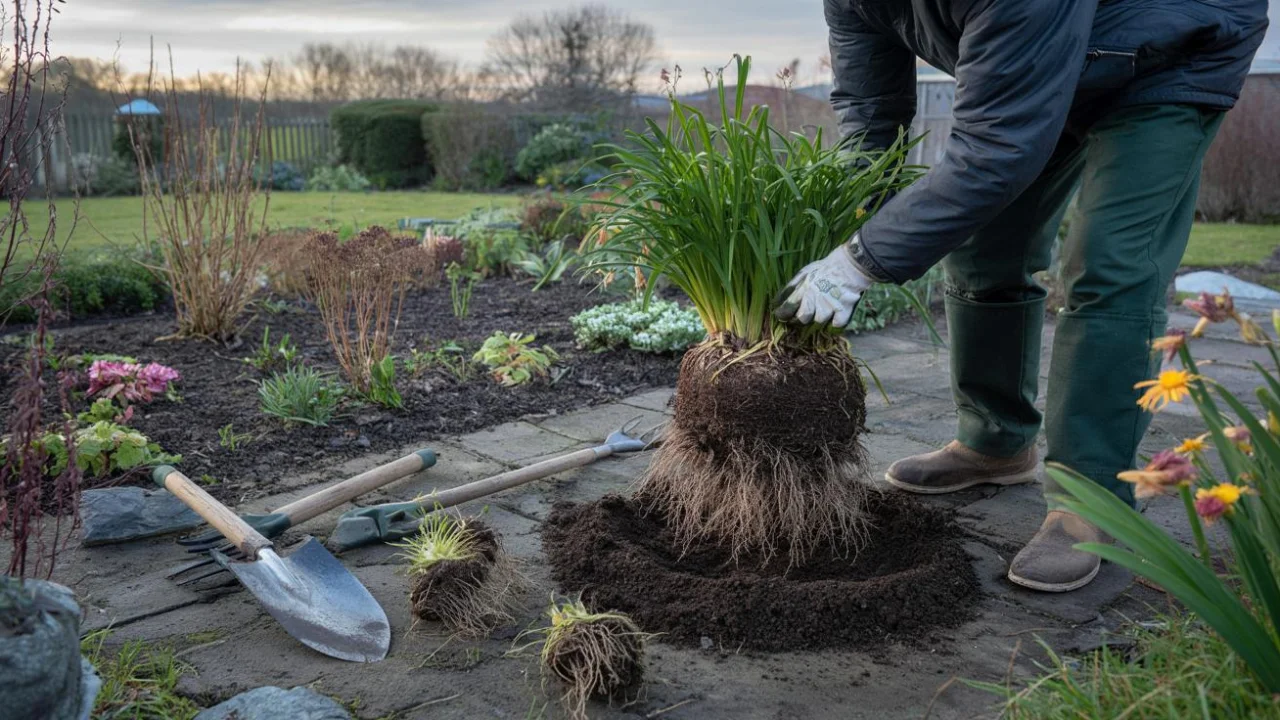
Sarah stared at her back garden through the kitchen window, coffee mug warming her hands. The hostas looked like brown stumps, the daylilies had vanished completely, and everything seemed dead. Her neighbor Mike was out there with a spade, digging around what looked like lifeless clumps. “What on earth is he doing?” she wondered.
Three hours later, Mike knocked on her door with five small plants in pots. “These are from that big clump of purple asters by my fence,” he said with a grin. “They’ll give you gorgeous flowers by September.” Sarah was amazed – she had no idea you could multiply plants for free just by splitting them up.
That conversation changed everything Sarah knew about gardening timing. Like most people, she thought January was for staying indoors and waiting for spring. She had no idea this cold, dreary month was actually the perfect time for dividing perennials.
Why Late January Is Your Garden’s Secret Window
Here’s what most gardeners get wrong: we think plants need warmth to handle being moved or divided. But dividing perennials works best when they’re fast asleep, not when they’re bursting with spring energy.
Right now, your perennials are in deep dormancy. Their sap has retreated, top growth is dead or dormant, and roots are just ticking over slowly. This makes late January the least stressful time possible for major surgery.
“Think of it like performing an operation on someone under anesthesia,” explains master gardener Lisa Chen, who manages a 200-plant perennial border. “The plant barely knows what’s happening.”
When you divide a dormant clump, those inevitable root wounds start healing immediately. By the time spring arrives and growth hormones kick in, each new division has already developed fresh root tips and is ready to power new shoots.
There’s also a practical bonus: winter rain softens the soil, making it much easier to dig around established clumps without destroying half the root system in the process.
The Plants That Love January Division (And the Ones That Don’t)
Not every perennial appreciates winter division. Focus on tough, deciduous types that have either disappeared completely underground or look like brown stubble above soil level.
The best candidates are clumps that have been growing in the same spot for three to four years and are starting to flower less in their centers – a sure sign they need refreshing.
| Perfect for January Division | Wait Until Spring |
|---|---|
| Daylilies (Hemerocallis) | Ornamental grasses |
| Autumn asters | Tender perennials (agapanthus, etc.) |
| Garden phlox | Plants with winter foliage (hellebores) |
| Coreopsis | Recently planted perennials (under 2 years) |
| Black-eyed Susan (Rudbeckia) | Spring-blooming bulbs |
| Hostas (if soil isn’t frozen) | Woody perennials (lavender, sage) |
“I’ve been dividing hostas in January for twenty years,” says commercial grower Tom Rodriguez. “As long as you can get a spade in the ground, they barely notice being moved.”
How to Actually Do the Division
The process is simpler than most people think, but timing and technique matter.
Choose a dry day when the soil isn’t waterlogged or frozen solid. You’ll need a sharp spade, a garden fork, and possibly an old bread knife for stubborn clumps.
- Dig around the entire clump, about 6 inches out from the edge
- Lift the whole mass with a fork, shaking off excess soil
- Look for natural divisions where the plant wants to separate
- Use your spade or knife to slice through thick root sections
- Aim for divisions with at least 3-5 healthy growing points each
- Replant immediately in prepared soil with compost worked in
Each division should have both roots and visible growing buds or shoots. Tiny pieces might survive, but larger chunks establish much faster.
What This Means for Your Summer Garden
The payoff from January division becomes obvious by mid-summer. Instead of one tired, sparse clump, you’ll have multiple vigorous plants producing more flowers than you’ve ever seen.
Daylilies that seemed to be struggling will suddenly produce dozens of buds per division. Asters that were getting woody and sparse will bush out with fresh, healthy growth. Garden phlox will stand taller and flower longer.
“The difference is like night and day,” explains landscape designer Maria Santos. “Divided plants have so much more energy because they’re not competing with themselves for resources.”
You’ll also end up with extras to fill bare spots, trade with neighbors, or pot up for gifts. One mature hosta clump can easily become five plants. A large daylily might divide into eight or more sections.
The economic benefit is substantial too. Instead of buying new perennials at £8-15 each, you’re creating £80-150 worth of plants for free – just the cost of a bit of compost and your time.
Why February Is Too Late
By February, even hardy perennials start sensing longer days and preparing for growth. Sap begins rising, dormant buds swell, and root activity increases.
Dividing perennials once this process starts creates much more stress. The plant has to recover from division wounds while simultaneously trying to push out new growth. Many divisions fail to establish properly and struggle all season.
“I see this every year with gardeners who wait until they can see new shoots,” notes garden center owner David Wright. “The success rate drops significantly after early February.”
Spring division can work, but it requires more careful watering, often needs temporary shade protection, and many divisions will be smaller and flower less in their first year.
Getting Started This Weekend
If you’ve never tried dividing perennials, start with something foolproof like daylilies or rudbeckia. These plants are nearly indestructible and respond beautifully to division.
Look for clumps that have been in place for several years and seem less vigorous in their centers. These are giving you clear signals that they need refreshing.
Don’t worry about perfect timing – any dry day in the next few weeks will work. Just avoid days when the ground is waterlogged or frozen solid.
The most common mistake is being too cautious with the divisions. Aim for chunks about the size of your fist rather than tiny pieces. Bigger divisions establish faster and flower sooner.
FAQs
Can I divide perennials if there’s still frost at night?
Yes, as long as the soil isn’t frozen solid during the day. Light frost won’t harm dormant divisions.
What if I can’t replant the divisions immediately?
Keep them in a cool, shaded spot with roots covered by damp newspaper or burlap for up to a week. Plant as soon as possible.
How often should I divide my perennials?
Most benefit from division every 3-5 years, though fast-growing types like asters might need it every 2-3 years.
Will divided plants flower this year?
Yes, most will flower normally since they’re established plants, just refreshed. Some might even flower better than before.
What’s the biggest mistake people make when dividing perennials?
Waiting too long and making divisions too small. Bigger chunks recover faster and establish more successfully.
Can I divide plants that were only planted last year?
It’s better to wait until they’ve been established for at least two full growing seasons before dividing.