
Picture this: you’re scrolling through news from Ukraine when you see yet another headline about drone swarms overwhelming air defenses. Cheap, deadly kamikaze drones are changing warfare, and traditional missile systems costing millions can’t keep up with threats that cost a few thousand dollars each.
Now imagine a small French company in Alsace has been quietly working on something that could flip this equation. In a modest industrial workshop far from the glamorous defense corridors of Paris, engineers have created what might be the future of drone warfare.
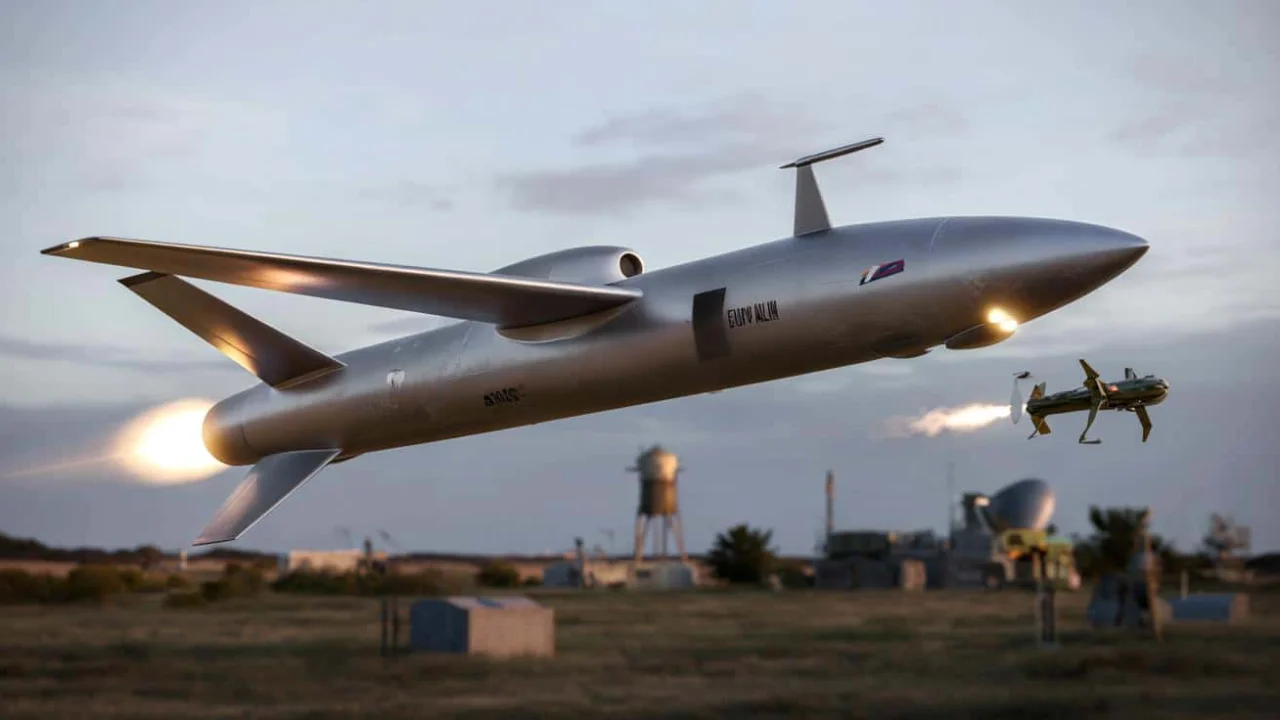
The Fury ALM French drone doesn’t look like your typical quadcopter. Instead, it resembles a miniature jet fighter that could reshape how militaries protect themselves from the swarm of budget drones terrorizing modern battlefields.
What Makes the Fury ALM Different from Regular Drones
When you first see the Fury ALM, you might mistake it for a remote-control airplane. But this French drone packs capabilities that put it in a completely different category than anything you’ve seen before.
- France’s Fronde 2.0 loitering munition hits breakthrough that could reshape modern warfare tactics
- Why France’s New Serval Armoured Vehicles Could Change Everything for European Defense
- Turkish Airlines emergency landing triggered by passenger’s alarming Wi-Fi network name in Barcelona
- French Army’s €4.6 Million Motorbike Purchase Reveals Surprising Military Strategy Shift
- Air Force quietly restocks its most devastating weapon after Iran strikes underground nuclear sites
- British Army quietly slashing paratrooper units in sweeping military cuts nobody saw coming
Developed by ALM Meca, a small company based in France’s Alsace region, this interceptor drone measures just 1.1 meters in length with a wingspan slightly over one meter. Don’t let the compact size fool you – this machine has been engineered for one purpose: hunting down and destroying hostile drones at incredible speed.
“We designed Fury to be the perfect predator for modern drone threats,” explains a company spokesperson. “It combines missile-like speed with drone-like maneuverability.”
The Fury ALM French drone can reach speeds up to 700 km/h – roughly three times faster than most combat drones currently buzzing around conflict zones. Even more impressive? The entire system was developed in under a year.
Technical Specifications That Pack a Punch
Here’s what makes this French interceptor drone so special compared to traditional air defense systems:
| Specification | Fury ALM | Typical Combat Drone |
|---|---|---|
| Maximum Speed | 700 km/h | 200-250 km/h |
| Length | 1.1 meters | 0.5-2 meters |
| Wingspan | 1+ meter | Varies widely |
| Primary Mission | Drone interception | Reconnaissance/Attack |
| Development Time | Under 1 year | 2-5 years typical |
The key innovation lies in Fury’s hybrid design philosophy. ALM Meca calls it “the best of missile and drone” – combining the explosive speed of a cruise missile with the reusability and precision of an advanced drone platform.
Key features that set the Fury ALM apart:
- High-speed jet propulsion system for rapid interception
- Advanced targeting sensors for tracking fast-moving threats
- Explosive payload designed for proximity detonation
- Lightweight composite construction for maximum agility
- Quick deployment capability from mobile launchers
“Traditional air defense missiles cost hundreds of thousands or millions of dollars per shot,” notes a defense analyst familiar with the project. “Fury offers similar effectiveness at a fraction of the cost.”
Why This French Drone Could Change Modern Warfare
The timing couldn’t be more critical. Across conflict zones worldwide, cheap suicide drones are overwhelming expensive air defense systems. A $500 homemade drone can destroy a $50 million tank, while traditional interceptor missiles costing $100,000 each quickly drain military budgets.
The Fury ALM French drone addresses this cost-effectiveness gap head-on. Instead of firing million-dollar missiles at thousand-dollar threats, militaries could deploy multiple Fury units for the same price as a single traditional interceptor.
Here’s how Fury changes the game:
- Rapid response to drone swarms within minutes
- Cost-effective solution for budget-conscious militaries
- Reusable platform reduces long-term operational costs
- Scalable deployment for large-area protection
“We’re seeing interest from multiple foreign militaries already,” reveals an ALM Meca representative. “The ability to quickly neutralize drone threats at reasonable cost is exactly what modern forces need.”
The implications extend beyond just military applications. As drone technology becomes more accessible to non-state actors and terrorist groups, civilian infrastructure increasingly faces drone-based threats. Airports, nuclear facilities, and government buildings all need affordable protection solutions.
Real-World Applications and Market Interest
Foreign militaries are already taking notice of this French innovation. The drone’s proven ability to intercept hostile aircraft at extreme speeds makes it particularly attractive for nations facing regular drone incursions along their borders.
Current applications being explored include:
- Border security against smuggling drones
- Protection of critical infrastructure facilities
- Mobile air defense for advancing military units
- Counter-drone operations in urban environments
- Naval vessel protection against maritime drone threats
“The versatility is what impresses potential customers most,” explains a defense industry insider. “One platform can handle multiple threat scenarios.”
The Fury ALM’s success story also highlights how smaller defense companies can compete with major contractors. While aerospace giants spend years and billions developing complex systems, ALM Meca’s focused approach delivered results in record time.
This rapid development cycle means the Fury ALM French drone can adapt quickly to evolving threats. Software updates, payload modifications, and performance enhancements can be implemented much faster than traditional military procurement cycles allow.
FAQs
How fast can the Fury ALM French drone actually fly?
The Fury ALM reaches speeds up to 700 km/h, making it roughly three times faster than most combat drones currently in use.
What makes Fury different from regular military drones?
Unlike traditional drones designed for surveillance or attack missions, Fury is specifically engineered as a high-speed interceptor to hunt down and destroy other drones.
How much does the Fury ALM cost compared to traditional air defense missiles?
While exact pricing isn’t public, ALM Meca positions Fury as significantly more cost-effective than traditional interceptor missiles that can cost hundreds of thousands of dollars per shot.
Can the Fury ALM be reused after missions?
The drone is designed as a reusable platform, though it carries explosive payloads for destroying targets, so each interception mission requires replacing the warhead component.
Which countries are interested in buying the Fury ALM?
ALM Meca reports interest from multiple foreign militaries, though specific customer names haven’t been publicly disclosed due to defense procurement confidentiality.
How quickly was the Fury ALM developed?
Remarkably, ALM Meca developed the entire Fury system in under one year, demonstrating how focused innovation can compete with traditional lengthy defense development cycles.