
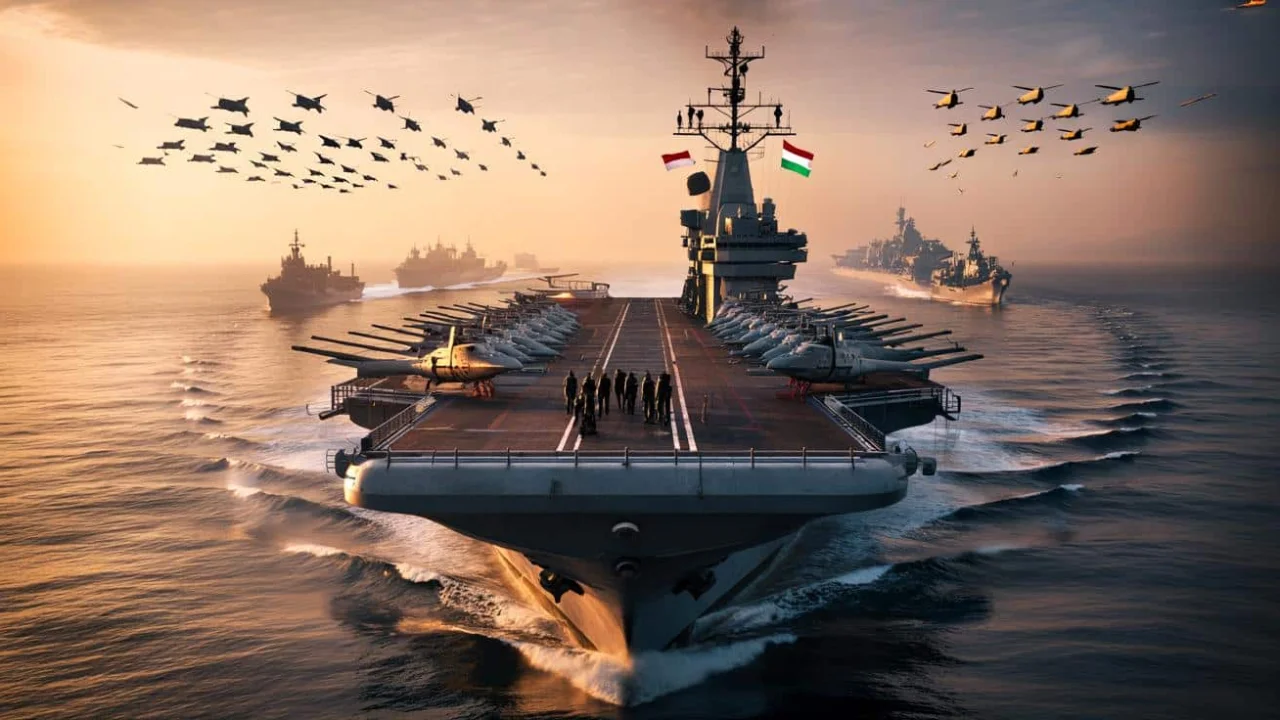
Captain Rizki Pratama still remembers the exact moment he knew Indonesia needed an aircraft carrier. Standing on the bridge of a frigate in the South China Sea three years ago, he watched foreign naval vessels patrol waters that should have been Indonesia’s domain. The archipelago nation with over 17,000 islands was being outmaneuvered by countries with serious naval aviation capabilities.
That frustration is shared by many in Indonesia’s military circles today. Which is why the Indonesian Navy’s bold push to acquire the retired Italian aircraft carrier Giuseppe Garibaldi has captured so much attention—and created such urgency.
The Indonesian aircraft carrier deal represents more than just a ship purchase. It’s about national pride, regional power dynamics, and Indonesia’s determination to project strength across its vast maritime borders.
Racing Against Time for National Glory
Indonesia’s Chief of Naval Staff, Admiral Muhammad Ali, has made it crystal clear: the former Italian carrier must arrive before October 5th. That’s the date of Indonesia’s Armed Forces Day, the biggest military showcase of the year.
- Japan quietly locks in 2035 timeline for revolutionary GCAP fighter aircraft that could reshape air warfare
- Washington’s Quiet Plan to Make America’s Factories the New Defense Frontline
- Japan’s hypersonic missile defense system enters mass production—what this means for regional security
- Italy’s GCAP warplane price soars to $21 billion as defense officials scramble to justify the massive cost overrun
- Two Europe defense winners quietly secured billions while major fighter jet project crumbles
- Japan’s F-35B Fighter Jets Now Operational: What This Means for Regional Security Balance
The timing isn’t coincidental. Military parades and naval displays during this anniversary serve as Indonesia’s way of showing neighbors—and potential rivals—exactly what capabilities they’re dealing with.
“We want to demonstrate Indonesia’s first aircraft carrier capability during our most important military ceremony,” Admiral Ali stated during a recent briefing. “This ship represents our commitment to defending our maritime sovereignty.”
But here’s the catch: negotiations with Italy are still ongoing. No final contract has been signed, yet the Indonesian Navy is already planning how to showcase their potential new flagship.
The Giuseppe Garibaldi served Italy’s navy for over three decades before being decommissioned. Now, this veteran warship could become the centerpiece of Indonesia’s naval modernization program.
What This Deal Really Means
The Indonesian aircraft carrier acquisition involves much more than just buying a ship. Here are the key details emerging from ongoing negotiations:
- The Giuseppe Garibaldi is a light aircraft carrier capable of operating VTOL aircraft and helicopters
- Indonesia would need extensive crew training and maintenance support from Italy
- The deal potentially includes technology transfer agreements
- Operational readiness could take 2-3 years even after delivery
- The ship would require significant modifications for Indonesian Navy standards
| Specification | Giuseppe Garibaldi Details |
|---|---|
| Length | 180 meters (591 feet) |
| Aircraft Capacity | 16 aircraft/helicopters |
| Crew | 550 personnel |
| Service Years | 1985-2022 |
| Estimated Cost | $200-300 million (including support) |
Maritime security expert Dr. Sarah Widodo from Jakarta’s Institute for Strategic Studies explains the broader implications: “This isn’t just about having an aircraft carrier. It’s about Indonesia signaling that it’s ready to play in the same league as regional powers like India and Thailand.”
The Indonesian aircraft carrier would dramatically change how the country can project power across its maritime domain. With the ability to deploy aircraft far from shore, Indonesia could better patrol its exclusive economic zone and respond to incidents in disputed waters.
Real Challenges Behind the Headlines
Getting the Giuseppe Garibaldi to Indonesian waters by October represents just the beginning of a massive undertaking. The real work starts after the cameras stop rolling at the Armed Forces Day ceremony.
Operating an aircraft carrier requires specialized skills that Indonesia’s navy is still developing. Pilots need carrier landing certification, deck crews require extensive training, and maintenance teams must master complex systems.
“You can’t just sail an aircraft carrier into port and expect it to be ready for action,” notes Commander James Thompson, a retired U.S. Navy aviator who has consulted on international carrier programs. “The learning curve is steep and expensive.”
Indonesia faces several practical hurdles:
- Training hundreds of specialized crew members
- Establishing carrier-capable aircraft squadrons
- Building maintenance and support infrastructure
- Integrating the carrier with existing fleet operations
- Managing the substantial operational costs
The Indonesian aircraft carrier program also needs to address aircraft compatibility. The Giuseppe Garibaldi was designed for Harrier jump jets and various helicopters. Indonesia would need to acquire suitable aircraft or modify the ship for different platforms.
Regional Power Play
Indonesia’s carrier ambitions aren’t happening in a vacuum. The country is responding to increased military activity in the South China Sea and growing tensions over maritime boundaries.
China’s expanding naval presence has particularly concerned Indonesian military planners. Having an aircraft carrier would give Indonesia greater flexibility to assert its territorial claims and support allies in regional disputes.
“This acquisition sends a clear message to all regional players,” explains defense analyst Bambang Suryono. “Indonesia is not content to be a passive observer in Southeast Asian maritime security.”
The Indonesian aircraft carrier could also strengthen the country’s role in international naval partnerships. Indonesia already participates in multinational exercises, and a carrier capability would make it a more valuable partner for countries like Australia, India, and the United States.
Thailand operates a small aircraft carrier, and India has multiple carrier programs underway. Indonesia’s entry into this exclusive club would reshape regional naval dynamics significantly.
Financial and Political Realities
Behind the military fanfare lies a complex web of budget considerations and political calculations. Aircraft carriers are expensive to buy, modify, and operate. Indonesia’s defense budget must balance carrier costs against other military priorities.
The deal also requires approval from Italy’s government and potentially other NATO allies, since military technology transfers involve sensitive strategic considerations.
President Joko Widodo’s administration sees the Indonesian aircraft carrier as part of broader maritime infrastructure development. The project aligns with Indonesia’s goal of becoming a major maritime power by 2030.
However, critics question whether Indonesia should prioritize a prestigious aircraft carrier over more basic naval capabilities like patrol vessels and submarines for archipelagic defense.
FAQs
When will Indonesia receive the Giuseppe Garibaldi aircraft carrier?
The Indonesian Navy wants delivery before October 5th for Armed Forces Day, but negotiations are still ongoing with no final contract signed.
How much will the Indonesian aircraft carrier cost?
Estimates suggest $200-300 million including the ship, modifications, training, and initial support packages.
What aircraft will operate from Indonesia’s carrier?
The ship can handle VTOL aircraft and helicopters, but Indonesia hasn’t announced specific aircraft acquisition plans yet.
Why does Indonesia want an aircraft carrier?
To project naval power across its vast archipelago, strengthen territorial defense, and enhance regional military standing.
How long will it take to make the carrier operational?
Even after delivery, full operational capability could take 2-3 years due to crew training and system integration requirements.
Will this be Indonesia’s only aircraft carrier?
The Giuseppe Garibaldi would be Indonesia’s first carrier, but officials haven’t ruled out additional acquisitions in the future.