
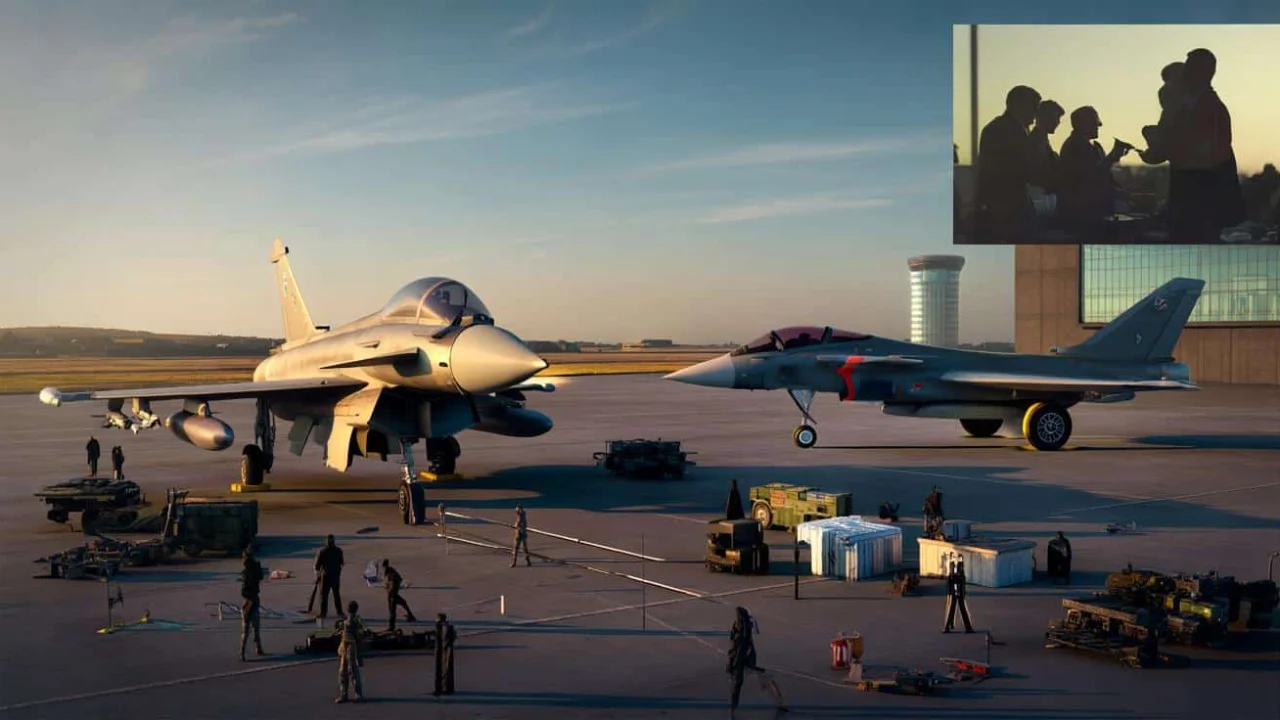
Picture this: you’re sitting in a government meeting room in Paris, watching defense officials flip through budget reports with increasingly worried expressions. The numbers don’t lie – Europe’s most ambitious fighter jet project cost taxpayers billions more than anyone expected. Now, as these same officials plan the continent’s next generation of combat aircraft, those expensive lessons are casting a long shadow over every decision.
That uncomfortable reality just got a lot more public. A new French Senate report has dropped a bombshell about the Eurofighter programme, revealing that each aircraft ended up with a unit cost nearly double that of France’s homegrown Rafale fighter. The timing couldn’t be more awkward – or more relevant.
While defense ministers across Europe argue about who should lead their next major weapons project, this cost comparison is forcing everyone to confront an uncomfortable truth about international cooperation in military aviation.
When Cooperation Gets Expensive
The Eurofighter unit cost revelation comes at a moment when France, Germany, and Spain are locked in their own heated dispute over the Future Combat Air System (FCAS). This ambitious project aims to deliver a New Generation Fighter and networked combat system by the 2040s, but progress has stalled for months over governance issues.
- Skyranger 30 DefendAir missile integration quietly revolutionizes Europe’s drone defense capabilities
- Peru’s F-16 Viper selection shocks defense industry as Chinese port investments influence decision
- Belarus Oreshnik missile deployment sparks global alarm, but military experts reveal shocking truth
- India quietly challenges Boeing and Airbus with its first homegrown passenger jet that could change everything
- Switzerland’s Patriot missile deal hangs by a thread as officials consider dramatic Franco-Italian pivot
- This Regiment’s Wire-Guided Loitering Munition Could Change Everything About Modern Warfare
“We’ve seen this movie before, and it doesn’t end well for taxpayers,” explains a former defense procurement official who worked on both programs. “When you have too many cooks in the kitchen, especially when they’re from different countries with different priorities, costs spiral out of control.”
The French Senate report points to fundamental structural problems in how the Eurofighter program was managed. Unlike the more streamlined approach France took with its Rafale, the Eurofighter involved four partner nations – the UK, Germany, Italy, and Spain – each insisting on their own industrial share and technical requirements.
Dassault Aviation, which leads France’s part of the FCAS project, is now using these cost comparisons to argue for clearer leadership structures. The company wants the authority to make technical decisions without endless committee meetings and compromises that satisfy political rather than engineering needs.
Breaking Down the Numbers That Matter
The cost disparity between these two European fighter programs tells a story that goes far beyond simple accounting. Here’s what the latest analysis reveals:
| Aircraft Program | Estimated Unit Cost | Development Partners | Total Aircraft Built |
|---|---|---|---|
| Eurofighter Typhoon | ~€120-140 million | 4 countries | 681 aircraft |
| Dassault Rafale | ~€70-80 million | France only | 300+ aircraft |
| Projected FCAS/NGF | TBD | 3 countries | 500+ planned |
The Eurofighter unit cost includes several factors that made the program particularly expensive:
- Multiple assembly lines across four different countries
- Duplicate administrative structures and oversight bodies
- Complex workshare agreements that prioritized politics over efficiency
- Extended development timeline due to competing national requirements
- Higher maintenance costs from varied national modifications
“Every partner country wanted their slice of the industrial pie,” notes an aerospace industry analyst. “But when you’re building the same aircraft in four different places with four different supply chains, efficiency goes out the window.”
The Rafale, by contrast, benefited from unified French decision-making and a single production line. While this approach limited international sales initially, it kept development costs under control and allowed for faster design iterations.
What This Means for Defense Budgets and Future Projects
These cost revelations are sending shockwaves through European defense planning circles. With military budgets under pressure and new threats emerging, the Eurofighter unit cost comparison is forcing some uncomfortable conversations about cooperation versus efficiency.
For taxpayers, the implications are direct and significant. The higher Eurofighter costs mean fewer aircraft for the same budget, reduced capability per euro spent, and longer gaps between equipment upgrades.
“Defense ministers love talking about European cooperation, but they hate explaining to parliament why each plane costs twice what the French are paying,” observes a Brussels-based defense policy expert.
The current FCAS dispute reflects these same tensions. Airbus, representing German and Spanish interests, wants a joint-venture structure that ensures equal participation. Dassault argues this approach will repeat the Eurofighter’s costly mistakes.
Meanwhile, other European nations are watching carefully. Countries like Belgium, the Netherlands, and Poland face their own fighter replacement decisions and are weighing the cost lessons from both programs.
Learning from Expensive Mistakes
The contrast between the Eurofighter unit cost and Rafale pricing isn’t just about money – it’s about what works in modern weapons development. The defense industry has evolved significantly since these programs began, with new technologies and faster development cycles demanding different approaches.
“The old model of spreading work around to keep everyone happy just doesn’t work anymore,” argues a former NATO procurement official. “You end up with a Frankenstein’s monster that nobody really wants.”
Some experts suggest hybrid models that combine the best aspects of both approaches. This might involve lead-nation responsibility for specific components while maintaining meaningful workshare for partners.
The stakes couldn’t be higher. FCAS represents Europe’s biggest defense investment of the next two decades, with total program costs estimated at over €100 billion. Getting the structure wrong could saddle European air forces with another generation of overpriced, compromised aircraft.
As negotiations continue, the Eurofighter’s costly legacy serves as both warning and guide. European defense leaders must decide whether they’re willing to prioritize efficiency over politics – or if they’re destined to repeat the same expensive mistakes.
FAQs
Why does the Eurofighter cost twice as much as the Rafale?
The Eurofighter program involved four partner countries, each requiring separate production lines, administrative structures, and industrial workshares, significantly driving up per-unit costs compared to France’s streamlined single-nation Rafale program.
How many Eurofighter aircraft have been built so far?
Approximately 681 Eurofighter Typhoon aircraft have been produced across the four partner nations (UK, Germany, Italy, and Spain) since the program began.
What is the FCAS program and why does it matter?
The Future Combat Air System (FCAS) is a joint French-German-Spanish project to develop next-generation fighter aircraft and combat systems for the 2040s, representing Europe’s largest defense investment with costs exceeding €100 billion.
Could the FCAS program face the same cost problems as the Eurofighter?
Yes, current disputes over program governance and workshare arrangements mirror the structural issues that drove up Eurofighter costs, leading to concerns about repeating similar expensive mistakes.
Which European fighter jet offers better value for money?
Based on unit costs, the French Rafale appears to offer significantly better value, costing roughly half as much per aircraft as the multinational Eurofighter while delivering comparable capabilities.
How do these cost differences affect military procurement decisions?
Higher unit costs mean defense budgets can purchase fewer aircraft, reducing overall fleet size and capability while extending replacement cycles, forcing difficult trade-offs in military planning.