
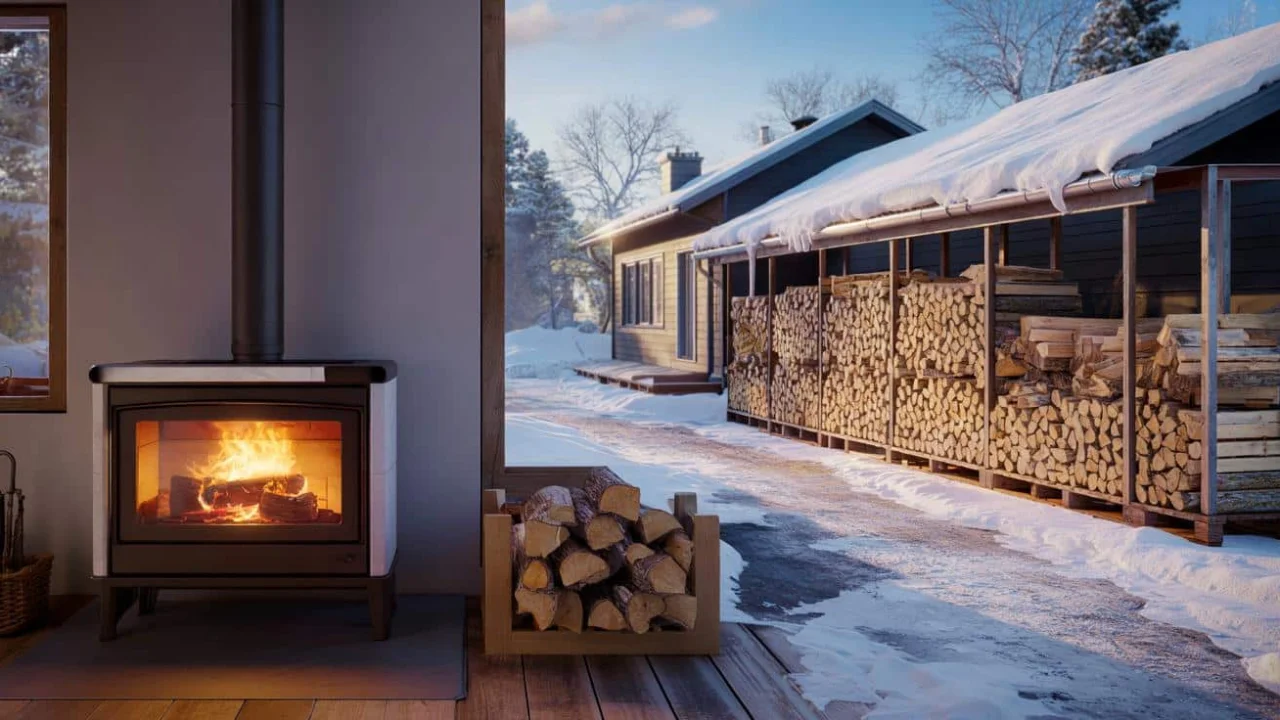
Sarah stared at the woodshed behind her cottage, counting the neatly stacked logs for the third time that morning. Her neighbor had warned her about running short last February, when a late cold snap caught everyone off guard. “Better to have too much than wake up to a freezing house,” he’d said. But standing there with her calculator app open, Sarah wondered if she’d ordered enough firewood to keep her 100-square-meter home warm all winter.
It’s a question thousands of homeowners face every autumn. You want the peace of mind that comes with a well-stocked woodshed, but you also don’t want to tie up half your savings in logs that might last three winters.
The tricky part? Your firewood heating requirements depend on far more than just square footage.
Why Your Neighbor Burns Half the Wood You Do
Walk through any neighborhood where wood heating is common, and you’ll hear wildly different stories. One family burns through 12 cubic meters a season, while their identically-sized neighbor next door uses just 5.
The difference isn’t luck or some secret technique. It comes down to six key factors that can double or halve your wood consumption:
- Your home’s insulation quality and how tight it is against drafts
- The type of wood-burning appliance you’re using
- Your local climate and how exposed your house is to wind
- The species and moisture content of your firewood
- Whether you heat 24/7 or just evenings and weekends
- Your comfort preferences (some people are happy at 18°C, others need 22°C)
“Most people focus on square footage first, but insulation makes the biggest difference,” says Mark Henderson, a heating contractor with 20 years of experience. “I’ve seen 80-square-meter homes that burn more wood than well-insulated 120-square-meter places.”
For a reasonably modern home between 80 and 120 square meters, expect to use anywhere from 4 to 10 cubic meters of seasoned hardwood per winter. That’s a huge range, which is exactly why getting your estimate right matters.
Breaking Down Real-World Firewood Numbers
Let’s get specific about firewood heating requirements for different home sizes and heating systems. These estimates assume you’re using wood as your primary heat source during a typical winter:
| Home Size | Insulation Level | Modern Wood Stove | Fireplace Insert | Open Fireplace |
|---|---|---|---|---|
| 80 m² | Well insulated | 3-4 m³ | 4-5 m³ | 8-12 m³ |
| 100 m² | Well insulated | 4-6 m³ | 5-7 m³ | 10-15 m³ |
| 120 m² | Well insulated | 5-7 m³ | 6-8 m³ | 12-18 m³ |
| 80 m² | Average insulation | 4-5 m³ | 5-6 m³ | 10-14 m³ |
| 100 m² | Average insulation | 5-7 m³ | 6-8 m³ | 12-16 m³ |
| 120 m² | Average insulation | 6-8 m³ | 7-9 m³ | 14-20 m³ |
The jump from a modern wood stove to an open fireplace is dramatic because of efficiency. A good wood stove captures about 70-80% of the wood’s heat energy, while an open fireplace typically manages just 10-20%.
“Think of an open fireplace as expensive ambiance,” explains Lisa Chen, an energy efficiency consultant. “You’re basically heating your chimney and the outdoors more than your living room.”
What These Numbers Mean for Your Budget and Storage
Understanding your firewood heating requirements isn’t just about staying warm. It’s about practical planning that affects your wallet and your property.
A cubic meter of seasoned hardwood typically costs between $80 and $150, depending on your location and the species. For a 100-square-meter home with good insulation and a modern stove, you’re looking at $320 to $900 for a winter’s supply.
Storage space is equally important. Each cubic meter needs about 1.2 square meters of shed space when properly stacked. That 6-cubic-meter order requires roughly 7 square meters of covered, ventilated storage.
Timing matters too. Wood needs at least 12-18 months to properly season after cutting. Many experienced wood burners order two winters ahead, keeping one season’s supply ready while the next batch dries.
“I tell my customers to think like a squirrel,” says Tom Bradley, who supplies firewood across three counties. “Order your wood in spring when prices are lowest, and always have next year’s supply seasoning in the stack.”
The Hidden Factors That Change Everything
Beyond home size and stove type, several factors can dramatically shift your firewood consumption:
Wood species and moisture content make a massive difference. Dry oak or maple provides about 25% more heat per cubic meter than pine or poplar. Wet wood with 25% moisture content delivers roughly 30% less heat than properly seasoned wood at 15-20% moisture.
Your heating habits matter more than you might think. Heating continuously requires about 40% more wood than heating just evenings and weekends. Setting your thermostat 2°C lower can reduce wood consumption by 15-20%.
Home orientation and exposure play a role too. A house facing north with lots of windows will burn more wood than a south-facing home protected from prevailing winds.
“Geography is destiny when it comes to wood heating,” notes Jennifer Walsh, who studies residential energy use. “A home in a valley might use 30% less wood than the same house on an exposed hilltop just two kilometers away.”
FAQs
How early should I order firewood for winter?
Order by late spring or early summer for the best prices and selection. Wood needs 12-18 months to properly season, so many people stay a year ahead.
Can I heat a 100 m² home entirely with wood?
Yes, but you’ll need a properly sized modern wood stove or furnace, good insulation, and 5-8 cubic meters of seasoned wood per winter depending on your climate.
What’s the difference between a cubic meter and a cord of wood?
A full cord equals about 3.6 cubic meters, though measurements vary by region. Always clarify exactly what unit your supplier uses when ordering.
How do I know if my wood is properly seasoned?
Well-seasoned wood has visible cracks in the ends, sounds hollow when knocked together, and has a moisture content below 20% when tested with a meter.
Should I mix different wood species?
Yes, many people use softer woods like pine for kindling and shoulder seasons, then burn hardwoods like oak or maple during the coldest months for maximum heat output.
What happens if I run out of wood mid-winter?
Emergency wood purchases in winter typically cost 30-50% more than seasonal orders. Some suppliers offer smaller quantities, but availability can be limited during cold snaps.