
Sarah stood at the exit of the Tokyo subway station, watching her travel companions frantically tap their phones while she instinctively turned left toward the cherry blossom-lined street she’d glimpsed from the train window twenty minutes earlier. Within minutes, she’d led them to their hotel while they were still downloading offline maps. “How do you just… know?” her friend asked, genuinely bewildered.
This scene plays out millions of times daily across the globe. Some people seem blessed with an internal compass that never fails, while others get lost in their own neighborhood. The difference isn’t luck or some mystical sense of direction—it’s all about how your brain processes and stores spatial navigation memory.
Recent neuroscience research reveals that our ability to remember directions stems from a sophisticated network of brain regions working together like a high-tech navigation system. Understanding why some people excel at this while others struggle opens fascinating insights into how our minds create mental maps of the world around us.
Your Brain’s Built-In GPS System
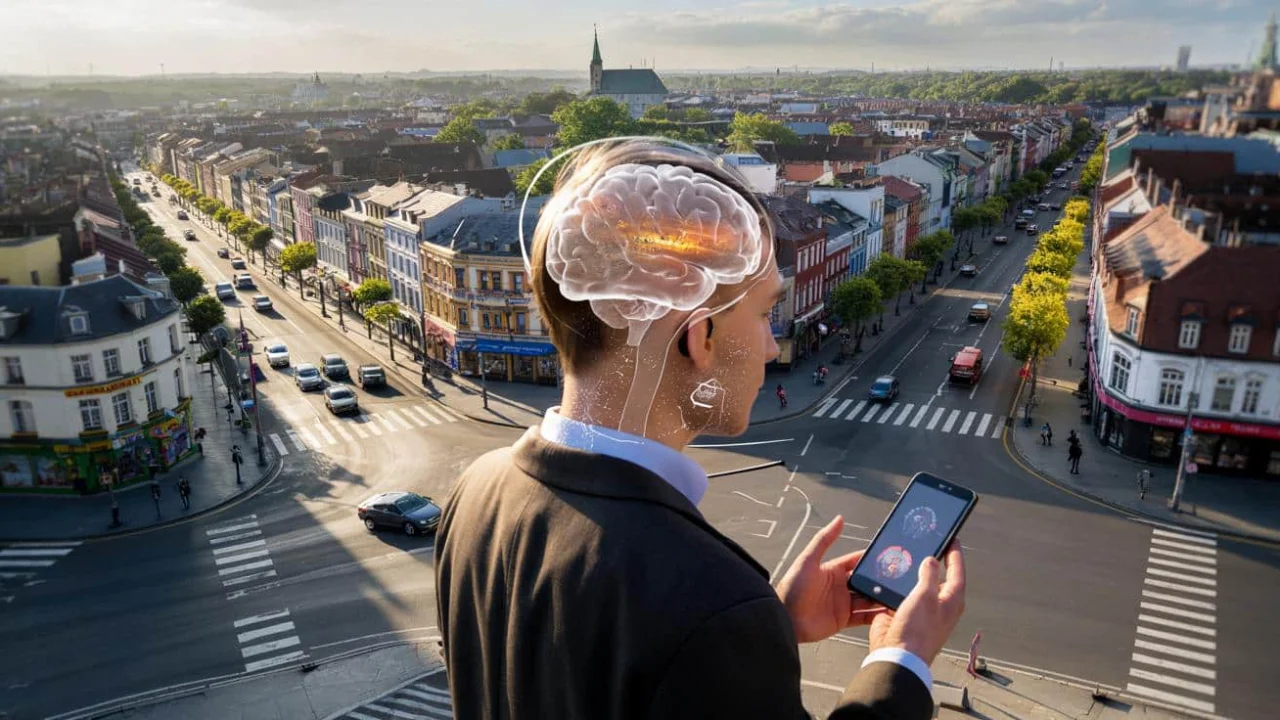
Deep inside your brain lies a remarkable navigation network that would make any GPS device jealous. The star player is your hippocampus, which contains specialized “place cells” that fire when you’re in specific locations. Think of them as your brain’s way of dropping pins on an internal map.
- One conversation opener researchers say instantly makes strangers trust you more
- USS John F. Kennedy Finally Sets Sail After Years of Delays and Cost Overruns
- This overlooked factor explains why homes always feel colder despite cranked-up heating
- Sweden quietly explores nuclear weapons cooperation with France and UK after joining NATO
- French Navy’s mini drone gets game-changing VTOL upgrade that lets more ships launch surveillance missions
- Singapore drone warfare takes shocking turn as city-state abandons surveillance-only approach
Working alongside these place cells are “grid cells” in the entorhinal cortex, which create a hexagonal pattern that acts like coordinate system for your brain. “These grid cells essentially provide the brain with its own graph paper,” explains Dr. Lisa Giocomo, a neuroscientist at Stanford University. “They help measure distances and angles as you move through space.”
But the real magic happens in how people use this system. Researchers have identified two main navigation strategies that determine how well someone remembers directions:
- Allocentric strategy: Creating bird’s-eye view mental maps that show relationships between landmarks
- Egocentric strategy: Following turn-by-turn sequences based on personal perspective
- Hybrid approach: Flexibly switching between both methods depending on the situation
People who excel at spatial navigation memory typically master this flexible switching. They might use the allocentric approach to get the big picture, then zoom into egocentric mode for specific turns and landmarks.
What Makes Some Brains Better at Navigation
The differences in spatial navigation memory aren’t just about strategy—they’re also physical. London taxi drivers, famous for mastering “The Knowledge” of the city’s 25,000 streets, actually show measurable changes in their brain structure. Their posterior hippocampus grows larger from years of intensive navigation practice.
“The brain is remarkably plastic when it comes to spatial skills,” notes Dr. Eleanor Maguire from University College London, who conducted the taxi driver studies. “But genetics also play a role—some people are simply born with advantages in how their navigation networks develop.”
Here’s what research reveals about the factors that influence navigation ability:
| Factor | Impact on Navigation | Can It Be Improved? |
|---|---|---|
| Hippocampus size | Larger size correlates with better spatial memory | Yes, through practice and exercise |
| Strategy preference | Flexible switchers perform best | Yes, through training |
| Gaming experience | 3D games enhance spatial updating | Yes, specific games help |
| GPS dependency | Heavy use reduces natural skill development | Yes, by limiting GPS reliance |
| Age | Decline typically starts in middle age | Partially, through continued practice |
Experience shapes these abilities more than you might expect. People who spend time hiking, orienteering, or exploring new environments show stronger spatial navigation memory than those who stick to familiar routes. Even video games matter—particularly 3D adventure games that require mental map-building.
The GPS Dilemma: Are We Losing Our Way?
Here’s where things get concerning for our collective navigation future. Heavy reliance on GPS and smartphone directions appears to be weakening our natural spatial navigation memory systems. When you mindlessly follow turn-by-turn directions, your brain doesn’t engage the same learning processes that build robust mental maps.
“GPS gives us the fish, but doesn’t teach us to fish,” explains Dr. Véronique Bohbot, a cognitive neuroscientist at McGill University. “People who rely heavily on GPS show reduced activity in their hippocampus during navigation tasks.”
This isn’t just about getting lost when your phone dies. Research suggests that people who don’t regularly exercise their spatial navigation systems may be at higher risk for cognitive decline later in life. The hippocampus is one of the first brain regions affected by Alzheimer’s disease, and keeping it active through navigation challenges may help maintain cognitive health.
The good news? You can strengthen these systems at any age. Activities that boost spatial navigation memory include:
- Exploring new neighborhoods without GPS assistance
- Playing strategic video games that require map knowledge
- Learning to read traditional maps and compasses
- Taking different routes to familiar destinations
- Practicing landmark identification and naming
- Engaging in orienteering or geocaching activities
Real-World Applications and Future Implications
Understanding spatial navigation memory has implications far beyond helping you find your way to the coffee shop. Researchers are using navigation tests to detect early signs of dementia, sometimes years before other symptoms appear. Changes in grid cell activity in the entorhinal cortex can signal the beginning of Alzheimer’s disease.
Urban planners are also paying attention to this research. Cities designed with clear landmarks, logical street patterns, and distinctive neighborhoods help residents develop better mental maps. This isn’t just convenience—it’s about creating environments that support healthy brain function.
For parents wondering about their children’s screen time, the research offers clear guidance. While some video games can enhance spatial skills, passive consumption of location-based services may hinder natural development of navigation abilities. Balance is key.
“The brain systems for navigation evolved over millions of years,” points out Dr. Russell Epstein from the University of Pennsylvania. “We shouldn’t abandon them lightly in favor of technology that does the thinking for us.”
The most practical takeaway? Start building your spatial navigation memory today. Begin trips by looking at a map overview, identify distinctive landmarks along your route, and occasionally challenge yourself to navigate without digital assistance. Your future self—and your hippocampus—will thank you.
FAQs
Can you improve your sense of direction as an adult?
Yes, research shows the brain remains plastic throughout life. Regular practice with map reading, exploration, and navigation challenges can strengthen spatial memory systems even in older adults.
Do men really have better navigation skills than women?
Studies show small average differences, but individual variation is much larger than gender differences. Strategy preference and experience matter more than biological sex.
Is it bad to use GPS all the time?
Heavy GPS reliance can weaken your natural navigation development, but occasional use is fine. The key is balancing convenience with actively engaging your spatial memory systems.
Why do I remember some routes perfectly but get lost in other places?
Your brain encodes routes differently based on landmarks, emotional significance, and how much attention you paid during learning. Distinctive features and personal relevance strengthen spatial memories.
Can video games really improve navigation skills?
Certain types can, particularly 3D adventure games that require building mental maps and spatial problem-solving. However, passive GPS-style games don’t provide the same benefits.
At what age do navigation skills typically decline?
Most people see some decline starting in their 50s, but regular practice and physical exercise can help maintain spatial navigation abilities well into later life.