
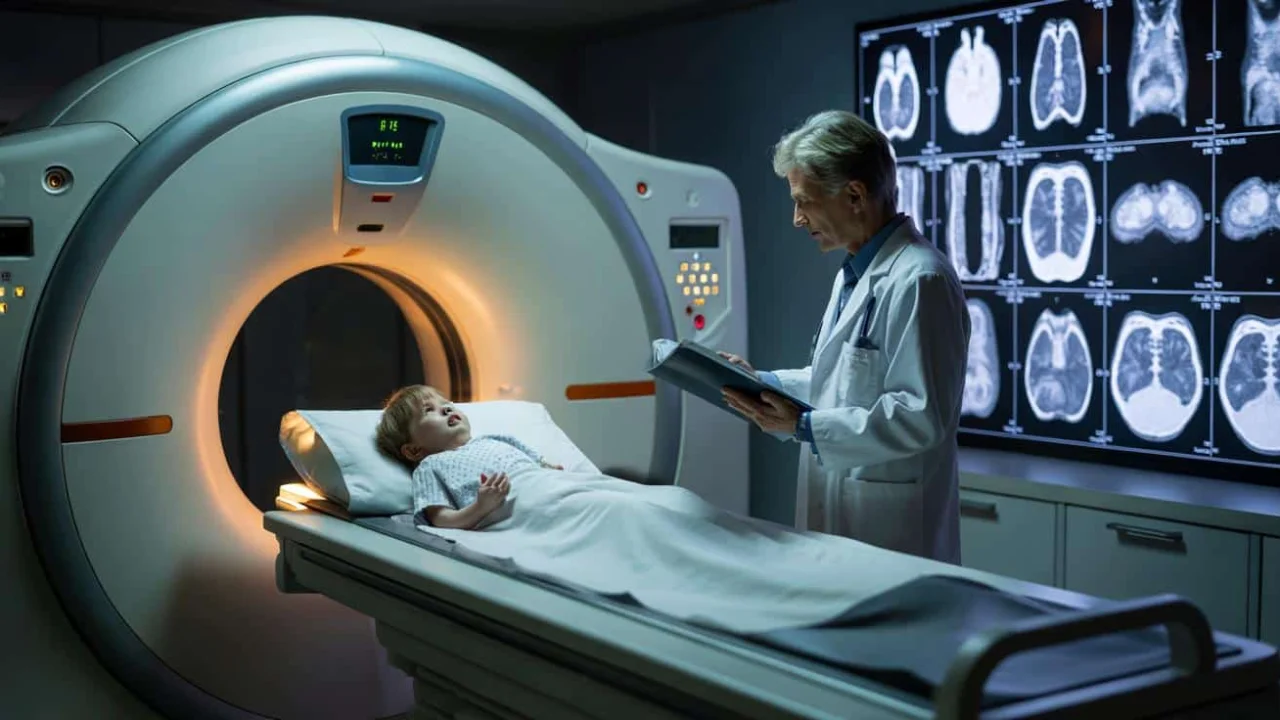
Sarah clutched her six-year-old son’s hand as they waited for his third CT scan in eight months. First came the emergency room visit after a playground fall, then the follow-up scan when headaches persisted, and now this one to “just make sure everything looks good.” Each time, she’d asked about the radiation, and each time, doctors assured her the benefits outweighed any risks.
Now, a major new study is making parents like Sarah—and doctors everywhere—question whether we’ve been too quick to reach for one of medicine’s most powerful tools. The research suggests that our current use of CT scans could trigger over 100,000 additional cancer cases in the coming decades.
This uncomfortable reality is forcing hospitals, doctors, and patients to confront a difficult question: when medical imaging designed to save lives might actually be creating future harm, how do we find the right balance?
The Numbers That Are Changing Everything
A groundbreaking study published in JAMA Internal Medicine analyzed the 93 million CT scans performed on 62 million Americans in 2023 alone. The researchers didn’t just count scans—they calculated the radiation doses patients received and modeled what that exposure could mean for their lifetime cancer risk.
The results are sobering. Scientists estimate that current CT scan usage in the United States could lead to approximately 103,000 additional cancers over patients’ lifetimes. That’s not a prediction for next year, but a long-term projection based on how radiation exposure accumulates across entire populations.
“We’re talking about a significant public health impact that’s been hiding in plain sight,” explains Dr. Michael Rodriguez, a radiation oncologist not involved in the study. “These aren’t immediate effects—they’re cancers that could develop 10, 20, or 30 years down the line.”
The research team projected that if current scanning practices continue unchanged, CT-related cancers could eventually account for up to 5% of all new cancer diagnoses annually. While that percentage might seem small, it represents thousands of people whose lives could be fundamentally altered by medical procedures they underwent years earlier.
Which Cancers Worry Scientists Most
The ct scan cancer risk isn’t distributed equally across all cancer types. Certain cancers show stronger links to medical radiation exposure, creating specific areas of concern for both patients and healthcare providers.
| Cancer Type | Risk Level | Most Vulnerable Age Group |
|---|---|---|
| Lung Cancer | High | All ages |
| Colon Cancer | High | Adults 40+ |
| Leukemia | Moderate to High | Children and young adults |
| Bladder Cancer | Moderate | Adults 50+ |
| Breast Cancer | Moderate | Women under 40 |
| Thyroid Cancer | Moderate | Children and young women |
These cancers are already among the most common in developed countries, which makes any additional cases from medical imaging particularly concerning. The overlap between naturally occurring cancers and those potentially caused by radiation exposure creates a complex web of risk that’s difficult for both doctors and patients to navigate.
“What keeps me up at night is that we’re potentially creating tomorrow’s cancer patients while trying to help today’s,” admits Dr. Lisa Chen, a pediatric radiologist. “The radiation from a single scan might be small, but when you multiply it across millions of procedures, the numbers become staggering.”
Why Children Face the Greatest Danger
The study’s most alarming findings center on children and teenagers. Young bodies are particularly vulnerable to radiation because their cells divide more rapidly and they have decades ahead for any radiation-induced damage to manifest as cancer.
Researchers found that dose for dose, children face significantly higher long-term cancer risks from CT scans than adults. This vulnerability is especially pronounced for head scans, which are commonly ordered for children who’ve suffered head injuries or show signs of neurological problems.
“A child’s developing brain tissue is incredibly sensitive to radiation,” explains Dr. James Thompson, a pediatric emergency physician. “What might be a relatively low risk for a 50-year-old could translate to a much more serious concern for a 5-year-old.”
For pediatric patients, the most concerning scans include:
- Head and brain CT scans (highest risk for children)
- Chest scans for respiratory problems
- Abdominal scans for stomach pain or trauma
- Multiple follow-up scans over short periods
The cumulative effect is particularly worrying. Many children receive multiple scans over their lifetime—for injuries, chronic conditions, or routine monitoring. Each scan adds to their total radiation exposure, potentially pushing their cancer risk higher.
The Real-World Dilemma Facing Doctors and Families
Understanding ct scan cancer risk creates an impossible balancing act for healthcare providers. CT scans save lives by catching strokes early, diagnosing internal injuries after accidents, and detecting cancers that might otherwise go unnoticed until it’s too late.
Dr. Sarah Martinez, an emergency room physician, describes the daily challenge: “When a patient comes in with chest pain, I have seconds to decide whether the immediate benefit of a CT scan outweighs the long-term cancer risk. Most of the time, the answer is yes—but this research is making those decisions much more complex.”
The study is already influencing medical practice in several ways:
- Hospitals are reviewing their scanning protocols more carefully
- Doctors are having more detailed conversations with patients about radiation risks
- Alternative imaging methods like ultrasound and MRI are being considered more frequently
- Pediatric facilities are implementing stricter guidelines for child CT scans
But change isn’t happening fast enough for some experts. “We need immediate action to reduce unnecessary scans while still providing excellent medical care,” argues Dr. Patricia Williams, a public health researcher. “Every day we delay could mean more future cancer cases.”
The challenge extends beyond individual doctor-patient relationships. Insurance companies often pressure physicians to order definitive tests quickly. Patients sometimes demand scans for reassurance. And in our lawsuit-conscious medical environment, doctors worry about missing diagnoses if they don’t use every available tool.
What This Means for You and Your Family
This research doesn’t mean you should refuse CT scans when doctors recommend them. Instead, it highlights the importance of being an informed patient who asks the right questions before any scan.
Before agreeing to a CT scan, consider asking your doctor:
- Is this scan absolutely necessary for my diagnosis or treatment?
- Could we get the same information from ultrasound, MRI, or other non-radiation imaging?
- How many previous CT scans have I had, and what’s my cumulative exposure?
- For children: Are there pediatric-specific protocols that use lower radiation doses?
The key is finding the sweet spot between necessary medical care and unnecessary radiation exposure. Most experts agree that life-saving scans should never be avoided, but routine or repeat scans deserve closer scrutiny.
FAQs
How dangerous is one CT scan?
A single CT scan carries a very small individual cancer risk, but that risk accumulates with multiple scans over time.
Should I be worried about CT scans I’ve already had?
Past scans can’t be undone, but the individual risk from previous scans remains small—focus on making informed decisions about future imaging.
Are there safer alternatives to CT scans?
Yes, ultrasound and MRI don’t use radiation and can often provide similar diagnostic information, though they have limitations for certain conditions.
Why are children at higher risk?
Children’s rapidly dividing cells are more susceptible to radiation damage, and they have more years for radiation-induced cancers to develop.
Will hospitals start limiting CT scans now?
Many hospitals are already reviewing their protocols, but changes will likely be gradual as medical communities develop new guidelines.
What radiation dose is considered safe?
There’s no universally “safe” level of radiation exposure—the risk increases with dose, which is why minimizing unnecessary scans is important.