
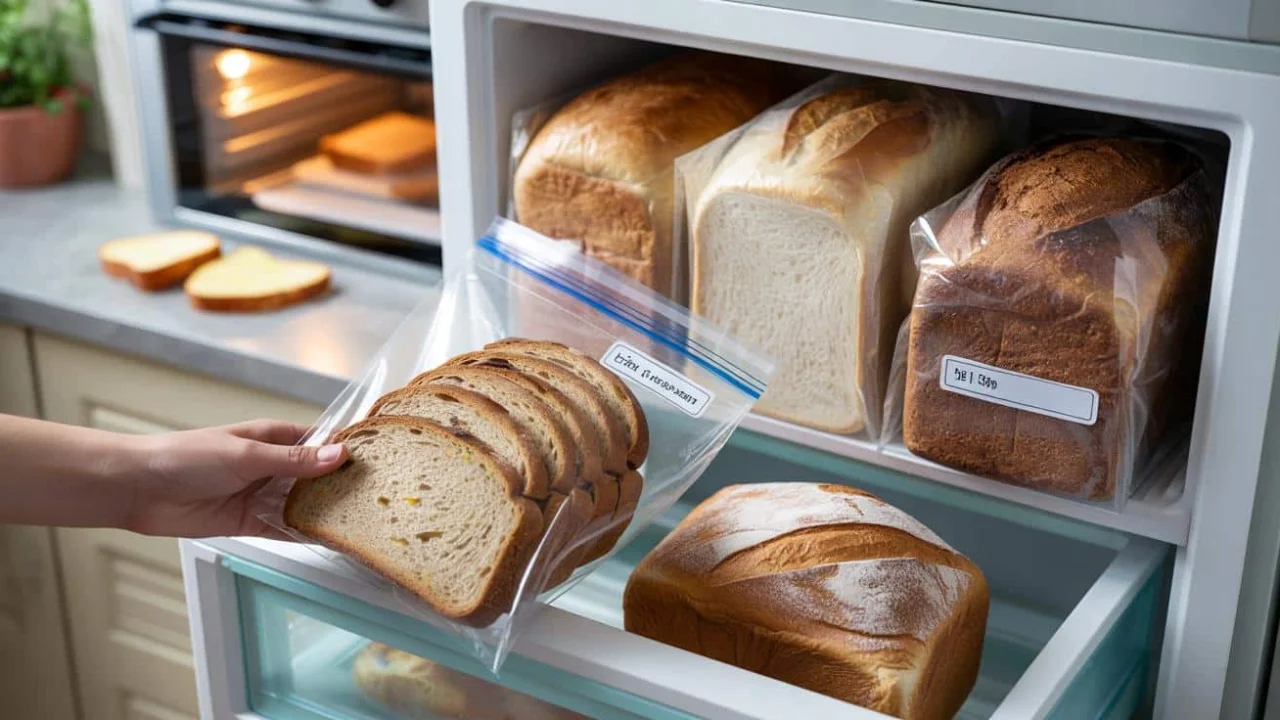
Sarah opened her freezer last Tuesday morning, searching for something quick to toast for breakfast. Buried behind frozen peas and ice cream, she spotted a loaf of sourdough she’d forgotten about weeks ago. The bread looked fine through the plastic wrap, so she grabbed two slices and popped them in the toaster. What came out was a disappointing mess—chalky, rubbery, and oddly tasteless despite being her favorite bakery brand.
Sound familiar? You’re not alone. Millions of households now freeze bread to save money and reduce waste, but many are unknowingly making frozen bread mistakes that turn perfectly good loaves into cardboard-like disappointments.
That innocent-looking bread in your freezer might be silently deteriorating, and the way you’re storing and thawing it could be sabotaging your breakfast routine without you realizing it.
The Science Behind Frozen Bread Gone Wrong
Freezing bread seems foolproof, but it’s actually a delicate process that can go sideways quickly. When you freeze bread incorrectly, water molecules inside the crumb slowly form ice crystals that grow larger over time. These crystals act like tiny daggers, piercing through the bread’s internal structure and creating a network of microscopic damage.
“Most people think frozen bread lasts forever, but the texture starts degrading after just a few weeks,” explains food scientist Dr. Maria Chen. “Those ice crystals are literally tearing apart what makes bread enjoyable to eat.”
The gluten proteins that give bread its springy, satisfying texture also change during extended freezing. Instead of maintaining their elastic network, these proteins break down and reorganize in ways that leave your bread feeling like foam or causing it to crumble at the slightest touch.
Even more surprising is what happens to the starch. When bread goes through the freeze-thaw-reheat cycle, its starch structure transforms in ways that can slightly alter how your body processes it. This matters especially if you’re managing diabetes or watching blood sugar levels.
Common Frozen Bread Mistakes You’re Probably Making
The biggest frozen bread mistakes happen before the loaf even hits the freezer. Most people grab whatever packaging the bread came in and toss it straight into the freezer compartment. This approach practically guarantees disappointment.
Here are the most common errors that ruin frozen bread:
- Using original packaging only: Store bags aren’t designed for long-term freezing
- Freezing whole loaves: Takes forever to thaw and creates uneven results
- Skipping the double-wrap: Air exposure causes freezer burn faster than you think
- Ignoring freezer placement: Door compartments have temperature fluctuations
- Thawing at room temperature: Creates soggy bottoms and uneven texture
- Forgetting to date packages: Leads to mystery bread that’s been frozen too long
“The wrapper that bread comes in is designed for a few days on the shelf, not months in the freezer,” notes bakery owner Tom Rodriguez. “You need to think of freezing as food preservation, not just cold storage.”
| Bread Type | Maximum Freezer Time | Best Thawing Method |
|---|---|---|
| White/French bread | 1 month | Direct to toaster or oven |
| Sourdough/artisan loaves | 1-2 months | Counter thaw, then warm in oven |
| Whole grain/dense breads | 2 months | Counter thaw or direct heating |
| Commercial sliced bread | 2-3 months | Direct to toaster from frozen |
The type of bread matters enormously. Crusty artisan loaves with open crumb structures suffer more damage than dense, commercial breads with preservatives. Those additives in store-bought bread actually help maintain texture during freezing, even if they’re less appealing from a health standpoint.
What Happens When You Get It Right
Properly frozen bread can taste nearly as good as fresh, but only if you follow the right techniques. The key is preventing air exposure and ice crystal formation while maintaining the bread’s natural moisture balance.
Smart freezing starts with slicing before freezing. This lets you grab exactly what you need without thawing entire loaves. Wrap individual portions or the whole sliced loaf tightly in plastic wrap, then place in a freezer bag with air pressed out.
“When customers follow proper freezing techniques, they’re amazed at how good their bread tastes weeks later,” says nutritionist Lisa Park. “It’s like having a fresh bakery in your freezer.”
The thawing process matters just as much as the freezing. Crusty breads often taste better when heated directly from frozen—the quick temperature change helps restore the crust’s crispiness. Softer breads benefit from gradual thawing followed by a brief warm-up in the oven.
People who master frozen bread storage report saving hundreds of dollars annually on groceries while dramatically reducing food waste. They can take advantage of bakery sales, buy artisan bread in bulk, and always have quality bread available without daily shopping trips.
For households managing dietary restrictions, proper bread freezing becomes even more valuable. Specialty gluten-free or low-carb breads often cost significantly more, making waste particularly painful. Learning to freeze these products correctly extends their usability and maximizes the investment.
The Hidden Health Impact
Beyond texture and taste, frozen bread mistakes can affect nutrition in subtle ways. Repeated temperature fluctuations break down certain vitamins, particularly some B vitamins that are naturally present in enriched breads.
More intriguingly, the starch modification that occurs during freezing and reheating can create resistant starch—a type that behaves more like fiber in your digestive system. This might actually be beneficial for blood sugar management, though the effect is modest.
“The nutritional changes from proper freezing are generally neutral or slightly positive,” explains registered dietitian Mark Stevens. “The bigger health win is reducing food waste and having convenient access to whole grain options.”
However, bread that’s been frozen too long and develops off-flavors might tempt you to add more butter, jam, or other caloric toppings to mask the poor taste. This indirect effect could impact your overall nutrition more than any changes to the bread itself.
FAQs
Can you refreeze bread that’s already been thawed?
It’s safe but not recommended, as the texture degrades significantly with each freeze-thaw cycle.
How can you tell if frozen bread has gone bad?
Look for ice crystals inside the packaging, white/chalky appearance, or any off-smells when thawed.
Should you slice bread before or after freezing?
Slice before freezing for convenience, but wrap tightly to prevent the cut surfaces from drying out.
Does frozen bread lose nutritional value?
Most nutrients remain intact, though some B vitamins may decrease slightly with very long storage.
Can you freeze bread with seeds or nuts?
Yes, but these additions may become soggy during thawing, so expect some texture changes.
What’s the best way to refresh day-old frozen bread?
Lightly mist with water and warm in a 350°F oven for 5-10 minutes to restore crust crispiness.