
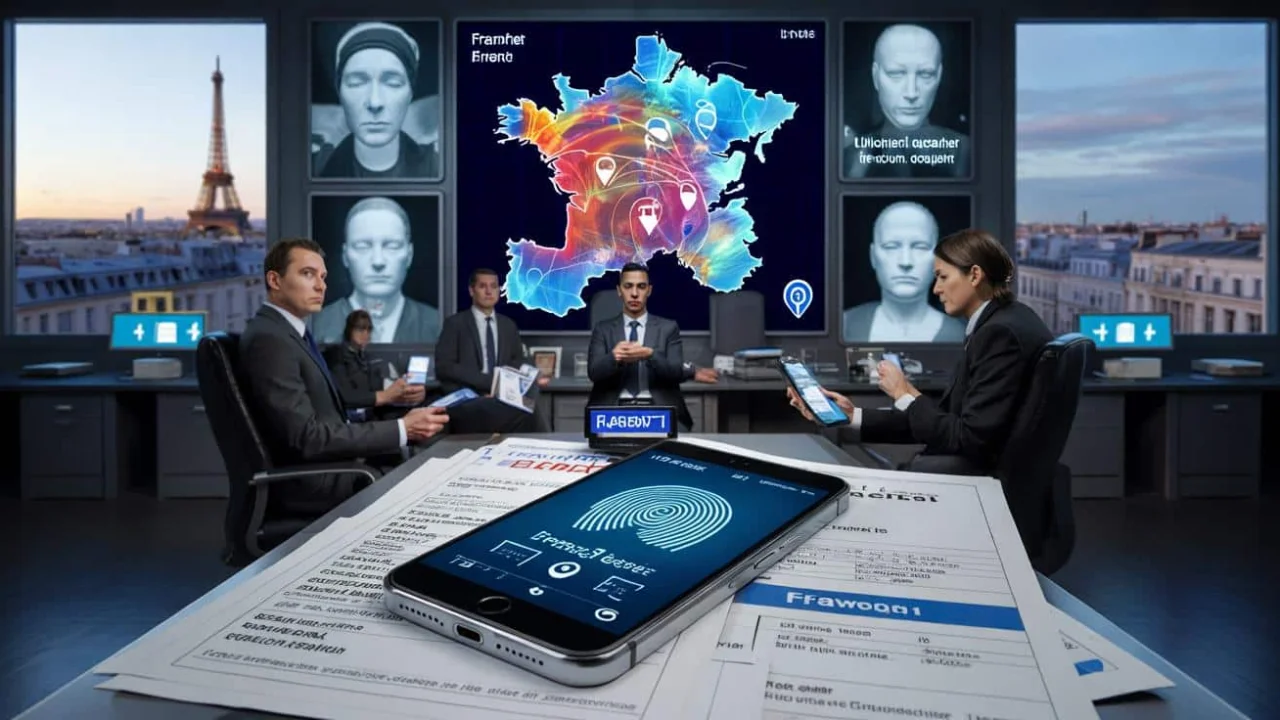
Marie had been collecting unemployment benefits in Lyon for eight months when her phone started buzzing with missed calls from France Travail. She’d been visiting her elderly mother in Morocco for three weeks, helping after a fall. What she didn’t know was that her phone’s connection to foreign cell towers had triggered an automated fraud alert.
Within days, her unemployment payments were frozen. The letter she received was cold and direct: suspected benefits fraud based on mobile phone data analysis. Marie’s story isn’t fiction—it’s exactly the kind of scenario that could become routine across France as the government rolls out unprecedented surveillance tools to combat welfare abuse.
This isn’t just about catching fraudsters anymore. France is fundamentally changing how it monitors people who depend on state support, using technology that feels more like something from a spy thriller than social services.
France Declares War on €14 Billion Benefits Fraud Problem
The numbers behind France’s crackdown are staggering. Government officials estimate that benefits fraud and related welfare abuse costs the state around €14 billion annually—money that could fund hospitals, schools, or infrastructure projects.
Labour Minister Jean-Pierre Farandou hasn’t minced words about the situation. “This level of fraud is simply intolerable when we’re asking citizens to make sacrifices,” he said during recent parliamentary debates. The message is clear: the era of looking the other way is over.
The draft law, which sailed through the Senate in November, is now heading to the National Assembly for final approval between February 24-27. If passed, France Travail—the country’s employment agency—will gain powers that would make privacy advocates in most democracies break into a cold sweat.
But here’s what makes this different from typical government promises to “get tough” on fraud: the government wants to recover €1 billion this year alone, with €3 billion targeted over the medium term. Those aren’t just campaign promises—they’re concrete financial targets that require serious enforcement tools.
How Phone Surveillance Would Actually Work
The centerpiece of France’s new approach involves something called “relevés téléphoniques”—essentially logs showing which cell towers connect to your phone. Think of it as a digital breadcrumb trail that follows you everywhere.
Here’s how the system would work in practice:
- France Travail investigators could request phone data for unemployment claimants
- They’d analyze which cell towers the phone connects to over weeks or months
- If someone claims to live in France but their phone consistently hits foreign towers, red flags go up
- Benefits could be suspended immediately based on this “digital evidence”
The technology isn’t new—police and intelligence agencies already use similar methods. What’s revolutionary is applying it to welfare cases on a mass scale.
| Fraud Type | Detection Method | Estimated Annual Cost |
|---|---|---|
| Living abroad while claiming benefits | Mobile phone tower data | €2.1 billion |
| Undeclared work by companies | Cross-database checks | €7 billion |
| Fraudulent training schemes | Document verification | €3.2 billion |
| Other welfare misuse | Various methods | €1.7 billion |
Privacy experts are raising serious concerns about this approach. “We’re talking about tracking the daily movements of vulnerable people who depend on state support,” explains Dr. Claire Fontaine, a digital rights researcher at the Sorbonne. “The potential for abuse is enormous.”
Who Gets Caught in the Digital Net
The new surveillance powers won’t affect everyone equally. People most likely to face scrutiny include:
- Long-term unemployment claimants with family connections abroad
- Seasonal workers who might travel frequently
- People from immigrant communities with strong ties to their home countries
- Anyone whose lifestyle involves regular cross-border movement
But the system could also catch genuine cases where people have legitimate reasons for being abroad temporarily. Medical emergencies, family crises, or even work-related travel could trigger fraud investigations.
“The problem is that algorithms don’t understand context,” says Antoine Dubois, a welfare rights advocate in Marseille. “Someone caring for a dying relative abroad looks exactly the same as someone living a double life to the surveillance system.”
The implications extend beyond individual cases. Entire communities could find themselves under heightened scrutiny, particularly those with strong cultural or family ties to countries outside France.
Privacy Versus Public Finances: Where Democracy Draws the Line
France isn’t the first country to use technology against benefits fraud, but the scale and invasiveness of the proposed system breaks new ground. Other European nations typically require court orders or substantial evidence before accessing personal communications data.
The French approach would allow France Travail to request phone records based on suspicion alone—no court approval required for the initial data pull.
Civil liberties groups are already preparing legal challenges. “This crosses a line that democratic societies shouldn’t cross lightly,” warns Isabelle Martin from the French Digital Rights Foundation. “Today it’s unemployment benefits, tomorrow it could be any interaction with the state.”
Government supporters argue that traditional welfare fraud investigation methods simply can’t keep up with modern schemes. “Fraudsters use technology to steal from taxpayers,” says Deputy Minister for Social Affairs Laurent Rousseau. “We need to use the same tools to stop them.”
The debate touches on a fundamental question facing all developed nations: how much privacy are citizens willing to sacrifice for efficient public services and fraud prevention?
Early polling suggests French public opinion is split, with rural and older voters more supportive of the surveillance measures, while urban and younger demographics express stronger privacy concerns.
Implementation could begin as early as April if the National Assembly approves the legislation. France Travail has already begun training staff on the new procedures and building the technical infrastructure needed to process phone data requests.
For millions of French workers, the message is becoming clear: your phone isn’t just a communication device anymore—it’s potentially a witness that could determine whether you keep receiving the benefits you need to survive.
FAQs
Will France Travail be able to read my text messages or listen to my calls?
No, they would only access “metadata” showing which cell towers your phone connects to, not the content of communications.
What happens if I’m traveling abroad for legitimate reasons?
You should notify France Travail before traveling and provide documentation of your reasons for being abroad temporarily.
Can I refuse to provide my phone data?
Refusing could result in immediate suspension of benefits, as it might be interpreted as evidence of fraud.
How long would France Travail keep my phone location data?
The current proposal doesn’t specify retention periods, which privacy advocates say is a major concern.
Will this apply to all types of benefits or just unemployment?
Initially focused on unemployment benefits, but the law could potentially be expanded to other welfare programs.
What legal protections exist if I’m wrongly accused based on phone data?
You would have the right to appeal, but benefits could be suspended during the investigation process, which could take months.