
Maria Santos never thought much about military refueling tankers until her son deployed overseas. “He told me these big planes keep everyone else in the air,” she said, watching news coverage of Boeing’s latest financial troubles. “If they’re having problems, that affects real people doing dangerous jobs.”
Her concerns aren’t misplaced. When defense contractors struggle with major programs, it ripples through military readiness, taxpayer costs, and the lives of service members who depend on reliable equipment.
Boeing’s latest earnings report dropped another bombshell that has defense analysts and military families paying attention. The aerospace giant just announced a staggering $565 million loss on its KC-46 tanker program, adding to what’s already become one of the most expensive military aircraft disasters in recent history.
Another Half-Billion Down the Drain
The Boeing KC-46 loss represents far more than just corporate red ink. This latest financial hit brings the total program losses to over $8 billion since the contract was signed more than a decade ago. Think about that for a moment—$8 billion could fund entire school districts or infrastructure projects across multiple states.
- China’s sixth-generation fighters J-36 & J-50 could reshape global military power before America catches up
- Japan’s Secret Role in Germany’s Most Advanced F127 Frigate Radar System Surprises Defense Experts
- Japan’s F-2 fighters armed with anti-ship missiles in largest deployment ever recorded against China threats
- Top military leader delivers brutal reality check on Europe’s defence illusions
- Russia’s Iskander-1000 quietly enters service, completely reshaping Europe’s military calculations
- France sends massive helicopter carrier to Philippines Balikatan exercise in unprecedented show of force
“We’re looking at disappointing results again, but we’re seeing signs of stabilization,” CEO Kelly Ortberg told investors during the earnings call. His cautious optimism comes after years of technical problems, delivery delays, and cost overruns that have made the KC-46 a poster child for defense procurement gone wrong.
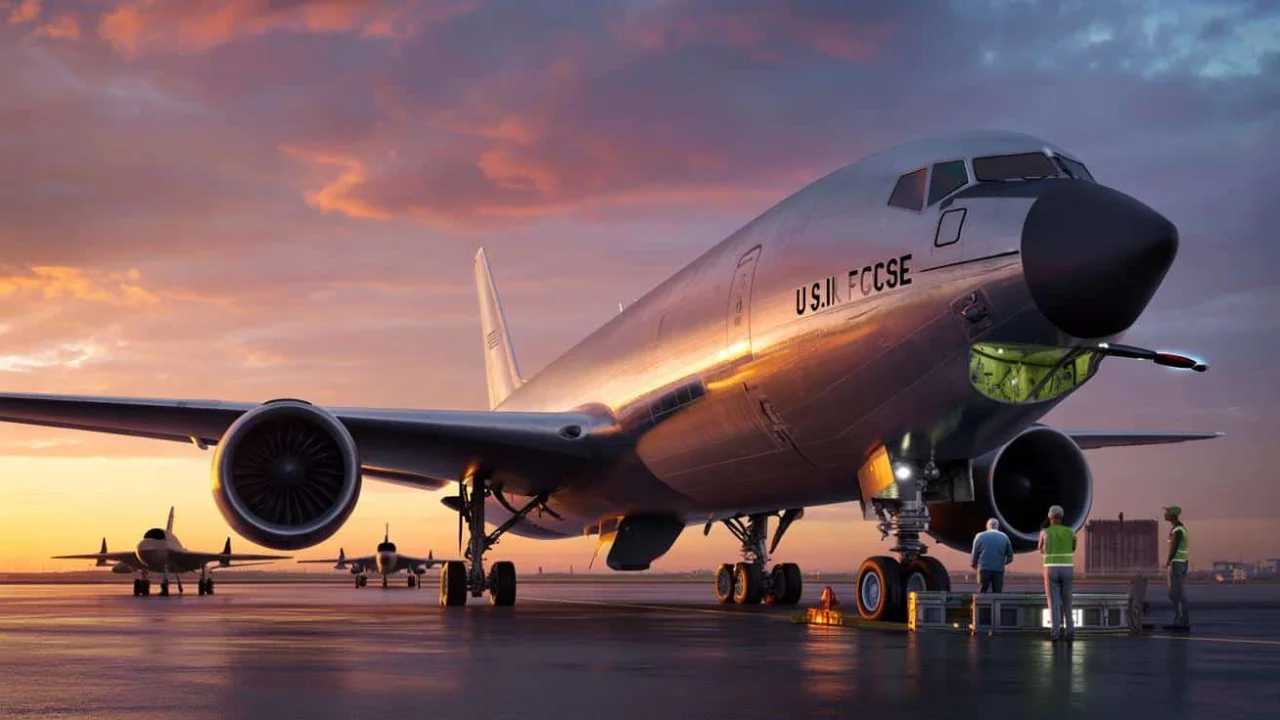
The KC-46 Pegasus, built on Boeing’s commercial 767 airframe, was supposed to be a straightforward adaptation. Instead, it became a nightmare of engineering challenges, from faulty boom systems to remote vision problems that made aerial refueling dangerous.
Boeing executives blame the latest $565 million charge on supply chain issues and extra production support at their Everett, Washington facility. Translation: parts cost more, labor costs more, and fixing problems costs way more than anyone expected.
What’s Really Behind These Massive Losses
The Boeing KC-46 loss story goes deeper than simple cost overruns. Here’s what’s driving these astronomical numbers:
- Fixed-price contract trap: Boeing agreed to deliver these planes at a set price, absorbing any cost increases
- Technical defects: Remote vision system problems required expensive redesigns and retrofits
- Supply chain inflation: Parts and materials now cost significantly more than in 2011
- Labor shortage impact: Skilled aerospace workers command higher wages in today’s tight job market
- Quality control issues: Extra inspections and rework add time and money to each aircraft
| Year | KC-46 Losses (Millions) | Aircraft Delivered |
|---|---|---|
| 2019 | $846 | 9 |
| 2020 | $1,200 | 16 |
| 2021 | $924 | 14 |
| 2022 | $1,100 | 15 |
| 2023 | $895 | 18 |
| 2024 | $756 | 19 |
| 2025 | $565 | Expected: 20 |
“The math is brutal when you’re locked into a bad contract,” explains defense industry analyst Sarah Chen. “Boeing is essentially paying the Air Force to take these planes at this point.”
Why the Air Force Keeps Ordering Despite the Problems
Here’s where the story gets interesting. Despite Boeing’s financial bloodbath, the U.S. Air Force continues placing orders for more KC-46 tankers. The military has few alternatives, and America’s aging KC-135 fleet desperately needs replacement.
The Air Force operates some KC-135s that are literally older than the grandparents of pilots flying them today. These aircraft have been refueling military planes since the Eisenhower administration. Mechanical failures and maintenance costs are skyrocketing.
“We can’t wait for the perfect tanker,” says retired Air Force Colonel Mike Rodriguez. “Our current fleet is held together with determination and prayer. The KC-46 has problems, but it’s still light-years ahead of what we’re flying now.”
Boeing hopes to negotiate better terms on future KC-46 contracts. Company executives argue they’ve learned expensive lessons and can now build these planes more efficiently. The question is whether the Air Force will agree to pay higher prices for future orders.
What This Means for Taxpayers and National Defense
The Boeing KC-46 loss affects more than just corporate balance sheets. Every dollar Boeing loses comes from somewhere, and that somewhere often includes higher prices on future military contracts. Taxpayers ultimately foot the bill for defense industry mistakes.
Military readiness also suffers when major programs struggle. The Air Force needs reliable tankers to project power globally and support allies. Delays and technical problems with the KC-46 mean older, less capable aircraft stay in service longer than planned.
Boeing’s defense division reported some positive signs alongside the KC-46 troubles. Other programs showed improvement, and the company claims production efficiency gains that could help future profitability. But the tanker program remains a massive drag on the entire division.
“Boeing is too big to fail in defense, but programs like this test everyone’s patience,” notes Pentagon budget analyst James Wright. “At some point, the losses become unsustainable even for a company this size.”
The real test comes with upcoming contract negotiations. Boeing wants the Air Force to agree to more favorable terms reflecting current costs and lessons learned. The military wants reliable aircraft delivered on time and on budget. Finding middle ground won’t be easy.
International customers are watching closely too. Several allied nations have expressed interest in the KC-46, but Boeing’s financial struggles raise questions about long-term support and program viability.
Looking Ahead: Can Boeing Turn This Around?
Boeing executives insist they see light at the end of the tunnel. Production rates are increasing, major technical issues are resolved, and operational feedback from Air Force units is improving. The company hopes to prove the KC-46 can be profitable under better contract terms.
“We’re finally delivering aircraft that meet all requirements without major modifications,” CEO Ortberg told analysts. “The question now is whether we can negotiate contracts that reflect the true cost of building these complex machines.”
The Boeing KC-46 loss story isn’t over. With dozens more aircraft on order and potential international sales on the horizon, the next few years will determine whether this program becomes a cautionary tale or an eventual success story.
For military families like Maria Santos’, the stakes are personal. Her son and thousands of other service members need reliable equipment to complete their missions and come home safely. Corporate financial statements matter less than operational reality when lives are on the line.
FAQs
How much money has Boeing lost on the KC-46 program?
Boeing has lost over $8 billion on the KC-46 program, with the latest $565 million loss bringing the total to historic levels for a military aircraft program.
Why does the Air Force keep buying KC-46s despite the problems?
The Air Force desperately needs to replace aging KC-135 tankers, some over 60 years old, and has limited alternatives to the KC-46 despite its technical and financial issues.
What caused the latest $565 million loss?
Boeing attributes the latest loss to higher supply chain costs, increased labor expenses, and additional production support needed at its Everett, Washington assembly facility.
Will Boeing renegotiate KC-46 contract terms?
Boeing hopes to negotiate better terms on future orders, arguing they’ve learned from expensive mistakes and can now build aircraft more efficiently.
How does this affect taxpayers?
While Boeing absorbs current losses due to fixed-price contracts, future military contracts may cost more to compensate, ultimately impacting taxpayer costs.
Are other countries interested in buying KC-46 tankers?
Several allied nations have expressed interest, but Boeing’s financial struggles and program delays may affect international sales prospects.