
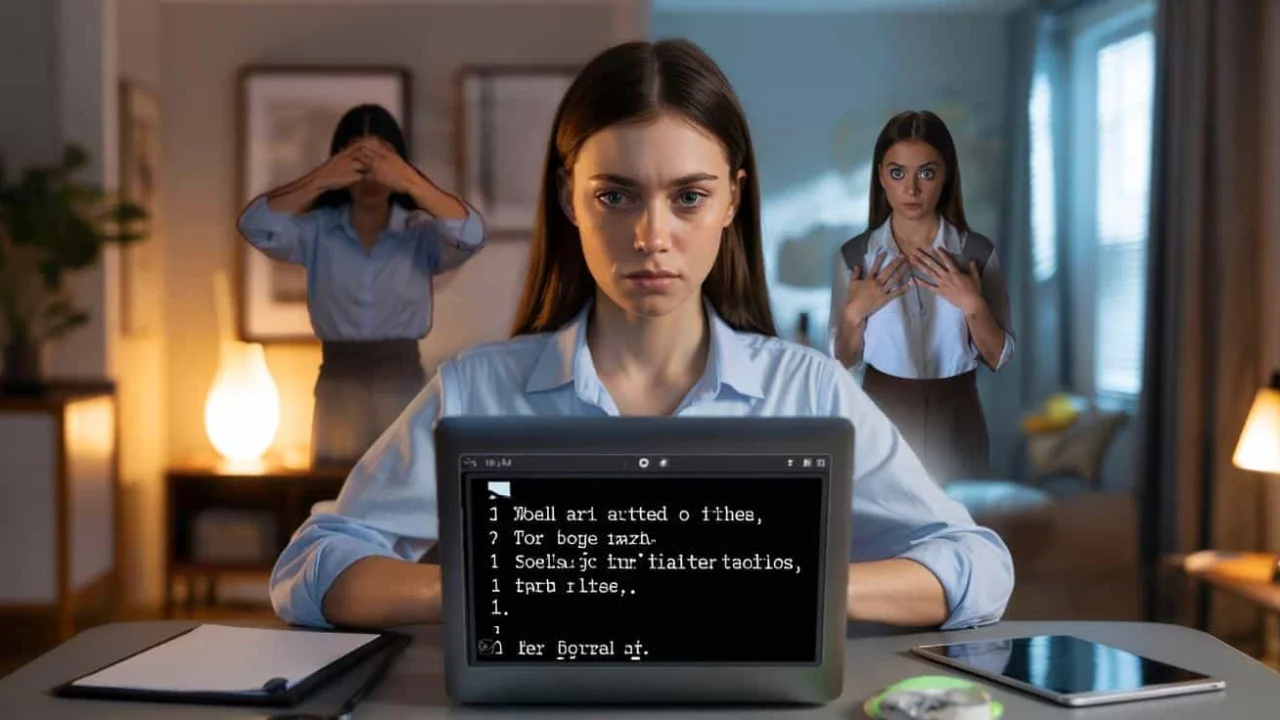
Maya noticed it first during a video call with her sister. She was talking about getting passed over for a promotion—something that genuinely stung—when she heard herself laugh. Not a bitter laugh or a sarcastic one. Just a light, breezy laugh, like she was sharing a funny story about someone else’s life.
Her sister paused. “Are you okay? You just laughed about something that must really hurt.”
Maya felt her stomach drop. She hadn’t even realized she was doing it. For years, whenever something bothered her deeply, she’d automatically minimize it with humor. Not because she wanted to, but because her brain had learned this was safer than sitting with the discomfort.
The invisible patterns that shape our emotional lives
Emotional habits operate below our conscious awareness, unlike the sharp sting of emotional pain that forces us to pay attention. While pain announces itself with physical symptoms—racing hearts, tight chests, sleepless nights—these ingrained patterns weave quietly into our daily interactions.
“When someone experiences acute emotional distress, they know something is wrong,” explains Dr. Rachel Martinez, a clinical psychologist specializing in behavioral patterns. “But emotional habits feel like personality traits. People say ‘I’m just someone who avoids conflict’ rather than recognizing it as a learned response.”
These automatic responses develop as protective mechanisms. Your brain learns that certain behaviors help you navigate difficult emotions, then repeats them until they become second nature. The problem? What once protected you might now be limiting your relationships and personal growth.
Consider emotional habits as your mind’s attempt to maintain equilibrium. Unlike acute pain that motivates immediate change, these patterns provide just enough comfort to keep you functioning while slowly eroding your authentic connections.
Recognizing the subtle signs of ingrained emotional patterns
Spotting emotional habits requires detective work because they masquerade as normal behavior. Here are the key indicators that reveal when patterns have taken control:
- You consistently respond the same way in emotionally charged situations
- Friends or family comment on predictable reactions you have
- You feel disconnected from your authentic emotions during conflicts
- Your automatic responses don’t match the intensity of the situation
- You notice gaps between what you feel and what you express
- Relationships feel stuck in repetitive cycles despite your best intentions
The most common emotional habits include excessive apologizing, deflecting with humor, shutting down during arguments, people-pleasing, or immediately jumping to problem-solving mode when someone shares feelings.
| Emotional Habit | What It Looks Like | Hidden Impact |
|---|---|---|
| Excessive Apologizing | Saying “sorry” for normal requests or opinions | Erodes self-worth and confuses communication |
| Emotional Deflection | Making jokes when conversations get serious | Prevents genuine intimacy and connection |
| Conflict Avoidance | Changing subjects or leaving when tension rises | Issues remain unresolved, resentment builds |
| Automatic Fix-It Mode | Jumping to solutions instead of listening | Others feel unheard and invalidated |
“The tricky thing about emotional habits is they often worked at some point,” notes Dr. Kevin Thompson, a relationship therapist. “A child who learned to make jokes when parents fought might have successfully diffused tension. But using that same strategy in adult relationships can prevent real intimacy.”
Why our brains prefer familiar patterns over authentic responses
Your brain treats emotional habits like any other learned skill—the more you practice them, the more automatic they become. Neurologically, these patterns create efficient pathways that require less mental energy than consciously choosing how to respond in each situation.
This efficiency comes with a cost. When you’re running on emotional autopilot, you’re not fully present for your own experience or the people around you. You might go through the motions of communication without actually connecting.
Take Sarah, a 29-year-old teacher who realized she’d been saying “I don’t care” about decisions both big and small for most of her adult life. Not because she genuinely didn’t care, but because expressing preferences felt risky. She’d learned early that having opinions sometimes led to conflict with her volatile father.
Years later, her boyfriend felt frustrated trying to plan dates or make decisions together because Sarah’s automatic response was always “whatever you want.” She wasn’t being accommodating by choice—she was stuck in a protective pattern that no longer served her.
“Breaking emotional habits requires conscious effort because they’ve become neurologically embedded,” explains Dr. Lisa Chen, a cognitive behavioral therapist. “Unlike emotional pain that naturally motivates change, habits feel comfortable even when they’re causing problems.”
The ripple effects on relationships and personal growth
Emotional habits don’t just affect the person who has them—they shape entire relationship dynamics. Partners, friends, and family members unconsciously adapt to these patterns, creating predictable cycles that can feel impossible to break.
In romantic relationships, one partner’s emotional habits often trigger complementary responses in the other. If one person habitually shuts down during conflict, their partner might develop a pattern of pursuing or escalating to try to get a response. Neither person chooses this dance, but both get trapped in it.
The workplace isn’t immune either. Someone who automatically defers to others’ opinions might find themselves overlooked for leadership opportunities, while a person who deflects serious conversations with humor might struggle to build trust with colleagues.
Perhaps most importantly, emotional habits can disconnect you from your own inner wisdom. When you’re always responding from the same playbook, you miss opportunities to discover what you actually feel, want, or need in different situations.
The good news? Once you recognize these patterns, you can begin to change them. Unlike personality traits, emotional habits are learned behaviors that can be unlearned with patience and practice. The first step is simply noticing when you’re operating on autopilot instead of making conscious choices about how you want to show up.
FAQs
How can I tell if I have emotional habits that are problematic?
Pay attention to feedback from trusted friends or family about patterns they notice in your behavior. Also notice if you feel disconnected from your authentic emotions during important conversations.
Can emotional habits be changed, or are they permanent?
Emotional habits can definitely be changed with awareness and practice. Since they’re learned behaviors, they can be unlearned and replaced with more conscious responses.
Why don’t I notice my emotional habits if they’re affecting my relationships?
These patterns operate below conscious awareness and feel like “just how you are.” Your brain has made them automatic to save mental energy, which makes them invisible until someone points them out.
Is it normal to have emotional habits, or does it mean something is wrong with me?
Everyone develops emotional habits—they’re a normal part of how we learn to navigate relationships. The question is whether your patterns are helping or limiting your connections with others.
How long does it take to change an emotional habit?
Changing ingrained patterns typically takes several months of conscious practice. The timeline depends on how long you’ve had the habit and how motivated you are to change it.
Should I work on changing emotional habits by myself or get professional help?
While some people can identify and change patterns on their own, a therapist can help you spot habits you might not see and provide strategies for developing healthier responses.