
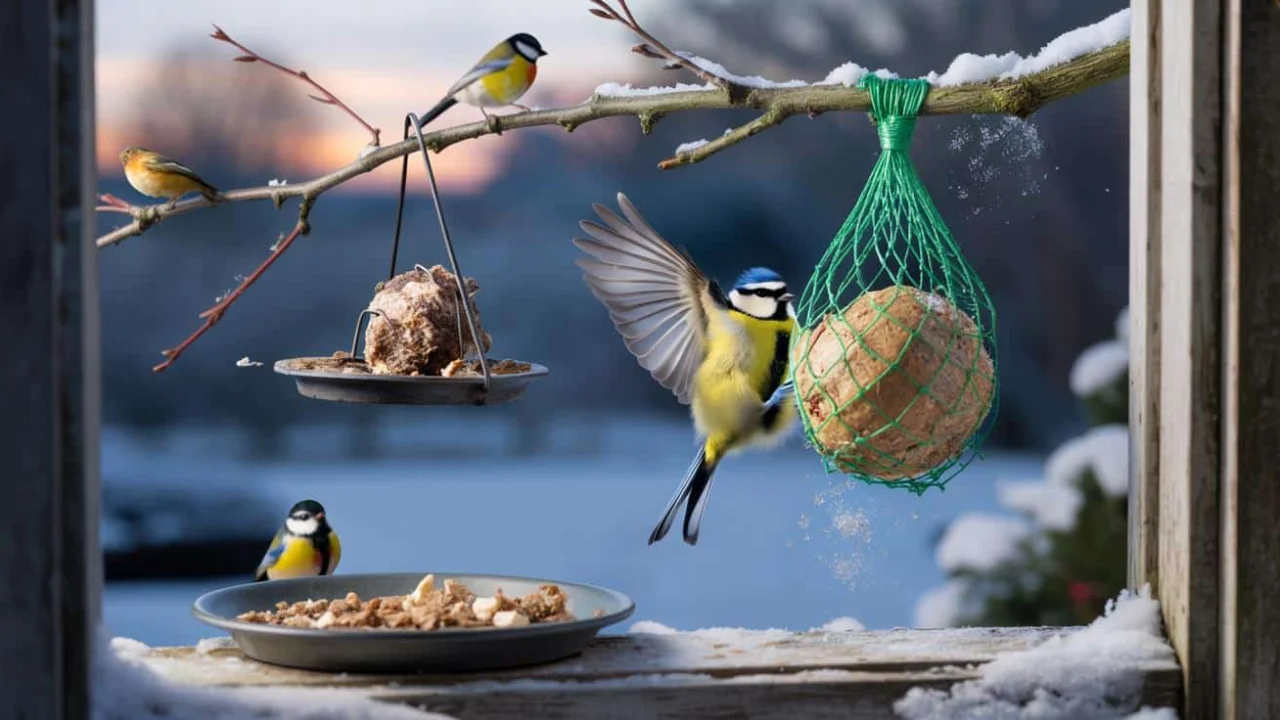
Sarah first noticed the robin on a Tuesday morning. It hung upside down from the fat ball she’d proudly mounted on her apple tree just days before, one tiny leg caught in the green plastic mesh. The bird’s wings fluttered weakly against the January frost, and Sarah realized with horror that her act of kindness had become a death trap.
She rushed outside with scissors, carefully cutting the mesh to free the exhausted robin. As she held the trembling bird in her hands, warming it before release, Sarah couldn’t stop thinking about how many other well-meaning bird lovers were making the same dangerous mistake.
That morning changed everything Sarah thought she knew about feeding winter birds safely.
The Hidden Danger in Every Garden Centre
Walk down any garden centre aisle in winter, and you’ll find towers of ready-to-hang fat balls for winter birds. These convenient mesh-wrapped spheres promise to deliver high-energy nutrition when natural food sources are scarce. The packaging shows happy birds feeding safely, and the price makes helping wildlife feel effortless.
But there’s a deadly detail hiding in plain sight. Those colorful plastic nets that hold the fat balls together aren’t designed for bird safety – they’re engineered for human convenience and shipping durability.
“We see injured birds from these nets almost weekly during winter months,” explains wildlife rehabilitator Dr. Emma Richardson. “The mesh holes are exactly the wrong size – big enough for claws to slip through, but too small for easy escape.”
The problem isn’t the fat balls themselves. Birds genuinely need the high-calorie boost during harsh weather. The issue lies entirely with the synthetic mesh wrapping that turns a helpful food source into an accidental snare.
How Plastic Mesh Becomes a Bird Trap
The mechanics of mesh entanglement are frighteningly simple. When birds land on netted fat balls, their sharp claws naturally grip the plastic strands for stability. As they maneuver to reach different parts of the food, one or more claws can slip through the mesh openings.
Here’s what typically happens when a bird gets caught:
- The bird’s claw penetrates a mesh hole during normal feeding behavior
- Natural movement causes the plastic to twist around the claw or leg
- Panic response makes the bird thrash, tightening the entanglement
- Exhaustion sets in as the bird cannot free itself
- Death often occurs from stress, injury, or exposure
Wildlife rescue centers report consistent patterns in mesh-related injuries. Small birds like blue tits and wrens are particularly vulnerable due to their delicate leg structure, but even larger species like starlings and blackbirds can become fatally trapped.
| Bird Species | Vulnerability Level | Common Injuries |
|---|---|---|
| Blue Tits | Very High | Leg breaks, claw loss |
| Robins | High | Twisted legs, exhaustion |
| Wrens | Very High | Severe entanglement |
| Starlings | Medium | Wing damage from struggling |
| Blackbirds | Medium | Foot injuries |
“The saddest cases are birds found hanging upside down after struggling for hours,” says Richardson. “Many could have been saved if discovered earlier, but winter weather makes regular garden checks difficult.”
Safe Alternatives That Actually Help Winter Birds
The good news is that feeding fat balls to winter birds remains beneficial when done safely. The solution involves removing or replacing the dangerous mesh entirely.
Here are the safest approaches for winter bird feeding:
- Remove the mesh immediately: Cut away all netting before hanging fat balls
- Use mesh-free feeders: Place unwrapped fat balls in proper bird feeders with perches
- Make your own: Create homemade fat balls using bird-safe suet and seeds
- Choose alternatives: Offer sunflower hearts, nyjer seeds, or mealworms instead
- Use cage feeders: Metal feeders with large bar spacing protect birds from predators without trapping claws
Many people worry that removing the mesh will make fat balls crumble apart. While some breakage does occur, birds actually prefer being able to access food from all angles. Scattered pieces on the ground also help species that prefer ground feeding.
“Birds don’t need the mesh to feed effectively,” notes ornithologist Dr. Michael Stevens. “In fact, they can access the nutrition more easily without plastic barriers in their way.”
The Real Cost of Convenience
The popularity of mesh-wrapped fat balls reflects our desire to help wildlife with minimal effort. Manufacturers capitalize on this by creating products that look bird-friendly while prioritizing shelf life and shipping convenience over animal safety.
Consumer awareness remains surprisingly low despite mounting evidence of mesh dangers. Most people simply don’t know that their helpful gesture could be harming the very creatures they want to protect.
Wildlife rehabilitation centers across the country are pushing for better labeling and design changes, but progress remains slow. Meanwhile, the winter feeding season continues claiming preventable casualties in gardens everywhere.
The extra five minutes needed to remove mesh netting could save countless bird lives. It’s a small price to pay for truly helpful winter feeding.
FAQs
Are all mesh-wrapped fat balls dangerous for birds?
Yes, any synthetic mesh poses entanglement risks regardless of color or mesh size. Natural string nets are slightly safer but still problematic.
What should I do if I find a bird trapped in mesh?
Carefully cut the mesh away using small scissors, working slowly to avoid further injury. Contact a wildlife rehabilitator if the bird appears injured.
Can I just cut larger holes in the existing mesh?
No, this doesn’t eliminate the risk and may create new hazards. Complete removal is the only safe option.
Will fat balls fall apart without the mesh?
Some crumbling is normal, but birds can still feed effectively. Place unwrapped fat balls in proper feeders or on feeding tables.
Are there any bird species that benefit from mesh-wrapped fat balls?
No bird species requires mesh for safe feeding. All birds feed more naturally and safely without synthetic netting barriers.
How can I tell if a fat ball brand is truly bird-safe?
Look for products specifically labeled as “mesh-free” or “net-free.” When in doubt, choose loose fat balls that you can place in your own feeders.