
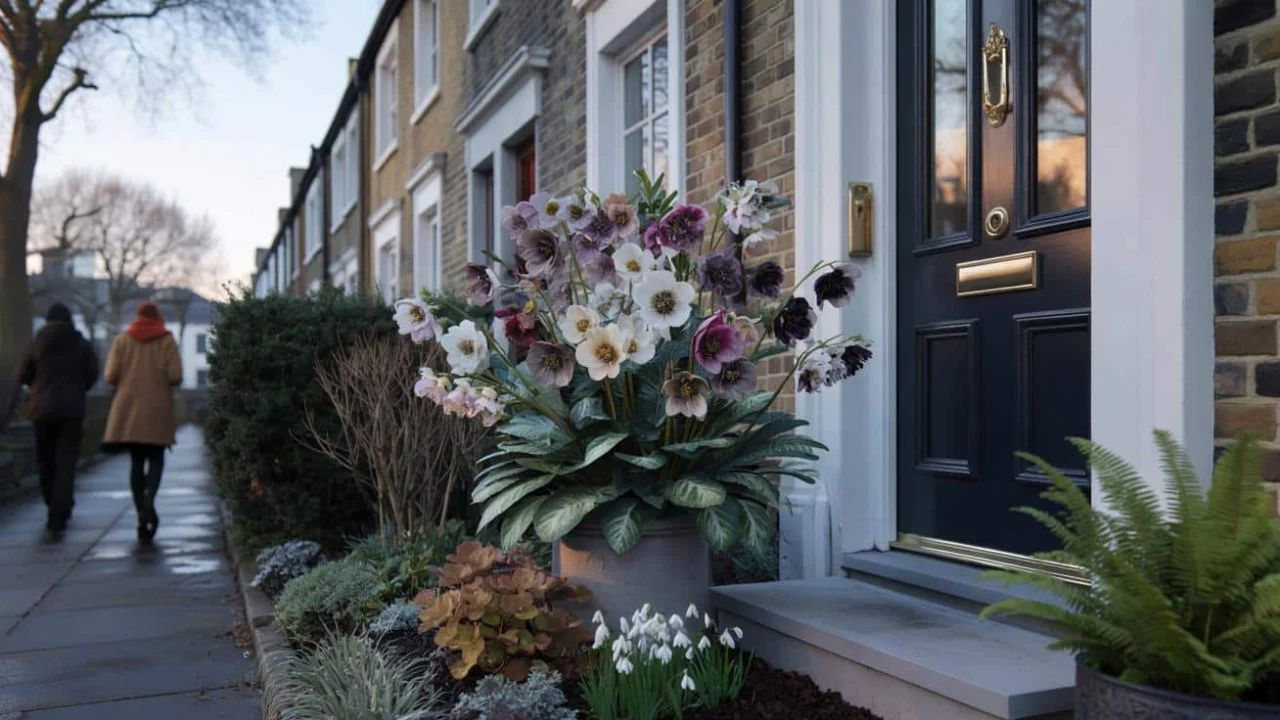
Last February, I stood at my kitchen window watching neighbours hurry past our street’s parade of dreary front doors. Mine included. The winter had stripped every entrance bare, leaving nothing but empty planters and the occasional wilted attempt at seasonal cheer. That’s when Mrs. Chen from three doors down stopped mid-stride, pulled out her phone, and actually photographed my front step.
I nearly dropped my coffee. What could possibly be worth capturing about my modest Victorian terrace entrance?
The answer was sitting in a simple terracotta pot beside my door: one hellebore plant that had quietly transformed my entrance from forgettable to photographable. This wasn’t some expensive landscaping project or elaborate display. It was one £12 plant that somehow made my front door the talk of the neighbourhood.
When One Plant Changes Everything About Your Entrance
Finding the right front door plants feels impossible during winter months. Most garden centres push pansies and cyclamen that barely survive the first frost. But hellebores, commonly called Lenten roses, operate on a completely different schedule than other flowering plants.
While the rest of the gardening world hibernates, hellebores bloom boldly from January through April. Their flowers come in sophisticated colours that photograph beautifully against winter’s neutral backdrop – deep purples, soft pinks, creamy whites, and even near-black varieties that look almost gothic.
“Hellebores are the ultimate front door plant because they perform when everything else has given up,” explains garden designer Sarah Matthews. “They give you proper flowers, not just surviving foliage, right when your entrance needs it most.”
The transformation happens almost immediately. Where other front door plants struggle to look alive, a single hellebore creates an intentional, curated look that suggests the homeowner actually knows what they’re doing with plants.
Why This Plant Outperforms Every Other Winter Option
Most front door plants are essentially seasonal decorations – temporary solutions that need replacing every few months. Hellebores work differently. They’re permanent residents that establish themselves and improve year after year.
Here’s what makes them uniquely suited for entrance displays:
- Bloom timing: Peak flowering happens January-April when nothing else performs
- Weather resistance: Flowers and foliage handle frost, snow, and winter wind
- Low maintenance: No deadheading, minimal watering, no special feeding
- Longevity: Individual flowers last 2-3 months, plants live for decades
- Self-improvement: Plants get bigger and more impressive each year
“I’ve seen hellebores still flowering beautifully with snow on their petals,” notes horticulturist James Wheeler. “Try that with bedding plants and you’ll have composted mush by morning.”
| Plant Type | Winter Performance | Lifespan | Maintenance Level |
|---|---|---|---|
| Hellebores | Peak flowering season | 20+ years | Minimal |
| Pansies | Struggles in frost | One season | Regular replacement |
| Cyclamen | Dies in hard frost | One season | Regular watering |
| Winter cabbage | Survives but doesn’t bloom | One season | Moderate |
The economics work out beautifully too. While seasonal bedding might cost £20-30 per display and need replacing twice yearly, one good hellebore costs £15-25 and performs for decades. You’re essentially buying a permanent landscape feature disguised as a potted plant.
How One Simple Choice Creates Lasting Curb Appeal
The real magic happens when neighbours start noticing. Unlike flashy summer displays that can feel overdone, winter-flowering hellebores create subtle drama that feels both unexpected and sophisticated.
My postman was the first to comment. Then the woman walking her dog started pausing to look. Within a month, three neighbours had asked where I’d found “that gorgeous winter plant.” Two have since added hellebores to their own front doors.
The visual impact works on multiple levels. The flowers provide colour when everything else is grey or brown. The evergreen foliage offers structure and substance year-round. Most importantly, they signal that someone is actively caring for their home’s appearance even during the dead months of winter.
“A flowering plant by the front door in February sends a powerful message,” explains landscape architect Emma Rodriguez. “It says the homeowners pay attention to details and care about making visitors feel welcome, even when gardening is supposedly impossible.”
Beyond the aesthetic benefits, hellebores solve practical problems that plague front door plants. They don’t need protection from wind or rain. They tolerate the reflected heat from south-facing walls and the deep shade of north-facing entrances equally well. They’re essentially foolproof.
Making Your Front Door the Street’s Best Feature
Choosing the right hellebore variety can amplify the impact significantly. Dark purple varieties like ‘Onyx Odyssey’ create dramatic contrast against light-coloured doors and stonework. Soft pink varieties like ‘Cotton Candy’ complement traditional brick and wooden entrances beautifully.
The key is thinking beyond temporary seasonal colour. You’re investing in a plant that will define your entrance’s character for decades. Consider your door colour, surrounding architecture, and the overall mood you want to create.
Placement matters more than you might expect. Position the pot where the flowers will be clearly visible from the street, usually slightly to one side of the door rather than centred directly in front. This creates a more natural, less formal appearance that feels welcoming rather than guarded.
“The best front door displays look like they happened naturally, not like someone planned them extensively,” notes garden writer Tom Harrison. “Hellebores have that effortless quality that makes even a single pot look like part of a larger design scheme.”
For maximum impact, choose a substantial container that won’t look overwhelmed when the plant reaches maturity. Hellebores can spread to 18 inches across, so a pot that looks perfectly sized for the initial plant might appear cramped after a few seasons of growth.
FAQs
Do hellebores need special soil or care for front door containers?
They’re remarkably adaptable and thrive in regular potting compost with decent drainage. Water occasionally during dry spells but avoid overwatering.
How long do hellebore flowers actually last?
Individual flowers persist for 8-12 weeks, often looking fresh well into spring when other plants are just starting to wake up.
Can I plant hellebores directly in the ground near my front door?
Absolutely, and they often perform even better in garden soil than containers. Just ensure good drainage and you’ll have a permanent entrance feature.
What’s the best time to buy hellebores for immediate impact?
Late winter when they’re in full flower, typically February through March. You’ll pay slightly more but get instant results.
Do hellebores attract any pests or cause problems near entrances?
They’re virtually pest-free and actually deer-resistant. The only consideration is that all parts of the plant are mildly toxic if eaten.
Will one plant really make a noticeable difference to my front door?
During winter months when everything else is dormant, a single flowering hellebore becomes an incredibly powerful focal point that transforms the entire entrance area.