
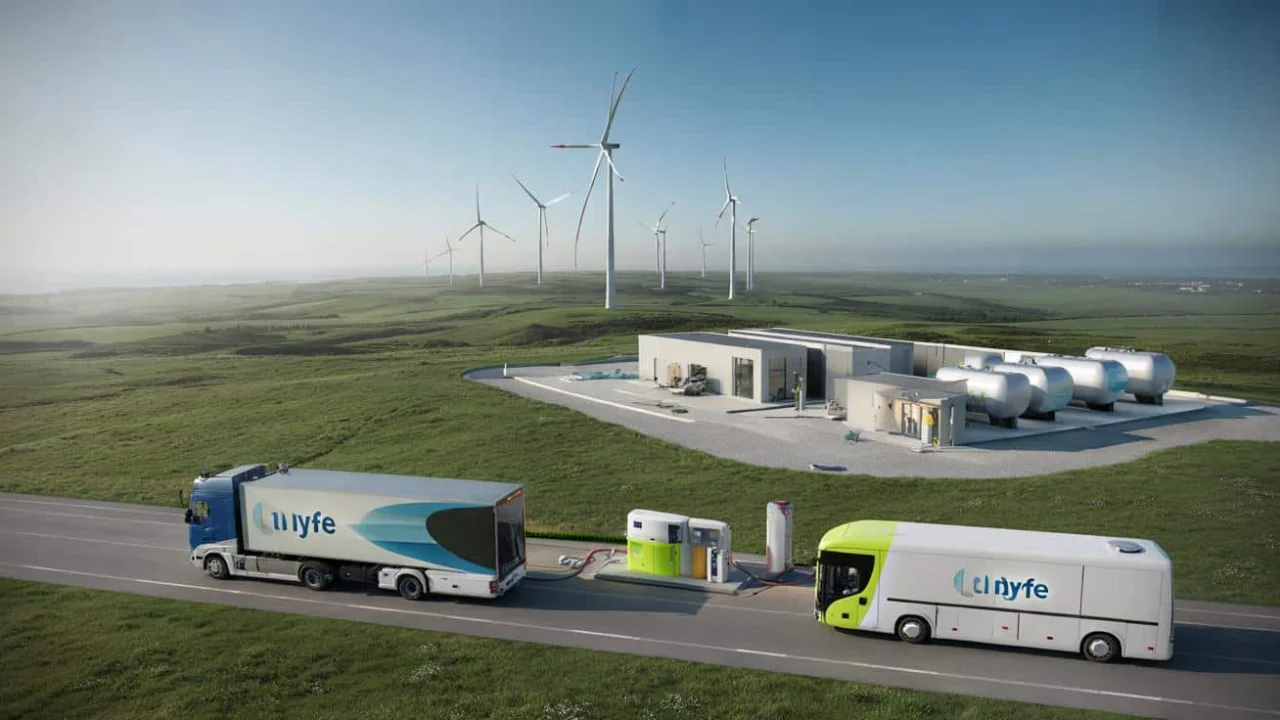
Marie-Claire Dubois still remembers the day her city bus broke down on her way to work last winter. As she waited in the freezing rain for a replacement, she couldn’t help but notice how quiet the backup vehicle was when it finally arrived. No diesel rumble, no black exhaust smoke—just a gentle hum.
“The driver told me it runs on hydrogen made from wind,” she recalls. “I thought he was joking, but then I started seeing these buses everywhere around our town.”
What Marie-Claire witnessed was the result of work by a French company most people have never heard of, yet one that’s quietly revolutionizing how we think about clean energy. While tech giants make headlines with ambitious promises, this modest firm has actually achieved something remarkable: producing green hydrogen directly from wind turbines at industrial scale.
Meet Lhyfe: The Unsung Pioneer of Wind-to-Hydrogen Technology
The company is called Lhyfe, and unless you work in the renewable energy sector, chances are you’ve never heard of them. But their breakthrough could change how we power everything from city buses to steel factories.
Green hydrogen is created by splitting water into hydrogen and oxygen using electricity from renewable sources like wind or solar power. Unlike traditional hydrogen production that relies on fossil fuels, this process produces zero carbon emissions. The resulting gas can power vehicles, heat buildings, and fuel industrial processes that batteries simply can’t handle.
“What makes Lhyfe different isn’t the technology itself,” explains energy analyst Dr. Thomas Schneider. “It’s their approach to deployment. Instead of building massive centralized plants, they’re putting smaller units right where the wind blows and right where customers need the hydrogen.”
This seemingly simple idea solves multiple problems at once. It eliminates costly infrastructure for transporting hydrogen over long distances, reduces energy losses from the electrical grid, and cuts through regulatory red tape that often slows down large projects.
The World’s First Autonomous Wind-to-Hydrogen Plant
Since 2021, Lhyfe has been operating what might look like an unremarkable industrial facility in Bouin, a small town on France’s Atlantic coast. But this modest site represents a global first: a fully autonomous system that produces green hydrogen directly from wind turbines.
The plant sits right next to towering wind turbines that catch the strong Atlantic winds. When the turbines spin, electricity flows directly into electrolysis equipment that splits seawater into hydrogen and oxygen. No middleman, no complex grid connections, no energy waste.
| Key Project Details | Specifications |
|---|---|
| Location | Bouin, Vendée region, France |
| Start Date | 2021 |
| Daily Production | Up to 300 kg of hydrogen |
| Power Source | Direct connection to wind turbines |
| Current Applications | Buses, trucks, industrial heating |
“We’re not running simulations or lab experiments,” says Lhyfe CEO Matthieu Guesné. “Our system deals with real-world conditions every day—salt spray from the ocean, fluctuating winds, equipment maintenance. That’s what makes this a true breakthrough.”
The Bouin facility produces up to 300 kilograms of hydrogen daily, enough to fuel several buses or delivery trucks. But more importantly, it’s proving that green hydrogen directly from wind turbines can work reliably at commercial scale.
Expanding Across Europe: From Buses to Steel Mills
Lhyfe isn’t stopping with their coastal pilot project. They’re rapidly expanding across Europe, with new facilities planned in locations where wind resources meet hydrogen demand.
Near Chambéry in southeastern France, they’re building a larger facility that will produce 400 kilograms of hydrogen daily starting in 2026. This plant will primarily serve the region’s growing fleet of hydrogen buses and delivery vehicles.
But the applications go far beyond transportation. Here’s how different industries are already using Lhyfe’s wind-generated hydrogen:
- Public Transportation: Hydrogen buses that can travel 400+ kilometers without refueling
- Heavy Industry: Steel production and chemical manufacturing processes
- Logistics: Long-haul trucks and delivery fleets
- Marine Applications: Coastal shipping and ferry services
- Energy Storage: Storing excess wind energy for later use
“The beauty of their model is its flexibility,” notes renewable energy consultant Sarah Martinez. “You can scale these systems up or down depending on local wind resources and demand. It’s like distributed manufacturing for clean energy.”
Why This Matters for Your Daily Life
The implications of successful wind-to-hydrogen technology extend far beyond industrial applications. As Lhyfe and similar companies scale up their operations, ordinary people will notice changes in their communities.
Your city’s bus fleet might become noticeably quieter and emit no exhaust fumes. Local delivery trucks could run silently through residential neighborhoods. Even your heating bills could drop as industries switch to cleaner hydrogen production methods, potentially reducing overall energy costs.
More importantly, regions with strong wind resources could become energy exporters rather than importers. Coastal communities that have watched manufacturing jobs disappear could see new industrial opportunities emerge around hydrogen production and processing.
“We’re seeing interest from municipalities across Europe,” Guesné explains. “They understand that hydrogen production could bring jobs and economic development to their regions while helping meet climate goals.”
The technology also addresses one of renewable energy’s biggest challenges: what to do when the wind blows but electricity demand is low. Instead of wasting that energy, wind-to-hydrogen systems can store it as fuel for later use.
The Road Ahead for Green Hydrogen
Despite their early success, Lhyfe faces significant challenges in scaling their technology. Hydrogen storage and transportation infrastructure remains limited in most regions. The cost of electrolysis equipment is still high, though falling rapidly as production scales up.
“The technology works, but we need supportive policies and infrastructure investment to make it mainstream,” says energy policy expert Dr. Elena Komninou. “Countries that move first on hydrogen infrastructure will have a major competitive advantage.”
Lhyfe is betting that their decentralized approach will overcome these hurdles faster than traditional large-scale projects. By building smaller facilities close to customers, they can grow their network incrementally without waiting for massive infrastructure investments.
The company already has plans for offshore hydrogen production, where wind resources are even stronger and more consistent. Their floating platform project could produce green hydrogen directly from wind turbines at sea, opening up vast new possibilities for clean energy production.
FAQs
What exactly is green hydrogen and how is it different from regular hydrogen?
Green hydrogen is produced using renewable electricity to split water into hydrogen and oxygen, creating zero carbon emissions. Regular hydrogen is typically made from natural gas, which produces significant CO2.
How much does green hydrogen cost compared to fossil fuels?
Currently green hydrogen costs more than fossil fuels, but prices are dropping rapidly as technology improves and production scales up. Many experts expect cost parity within the next decade.
Is it safe to use hydrogen as a fuel?
Yes, hydrogen has been used safely in industrial applications for decades. Modern hydrogen vehicles and equipment include multiple safety systems, and hydrogen is actually less dangerous than gasoline in many scenarios.
Can I buy a hydrogen car today?
Hydrogen cars are available in some markets, primarily in California, Europe, and parts of Asia. However, the refueling infrastructure is still limited compared to electric vehicle charging networks.
How long does it take to refuel a hydrogen vehicle?
Hydrogen refueling takes about 3-5 minutes, similar to filling up with gasoline, which is much faster than charging electric vehicles.
Will green hydrogen replace batteries in electric cars?
Probably not for most passenger cars, where batteries work well. Hydrogen will likely dominate in heavy trucks, buses, ships, and industrial applications where batteries are too heavy or impractical.