
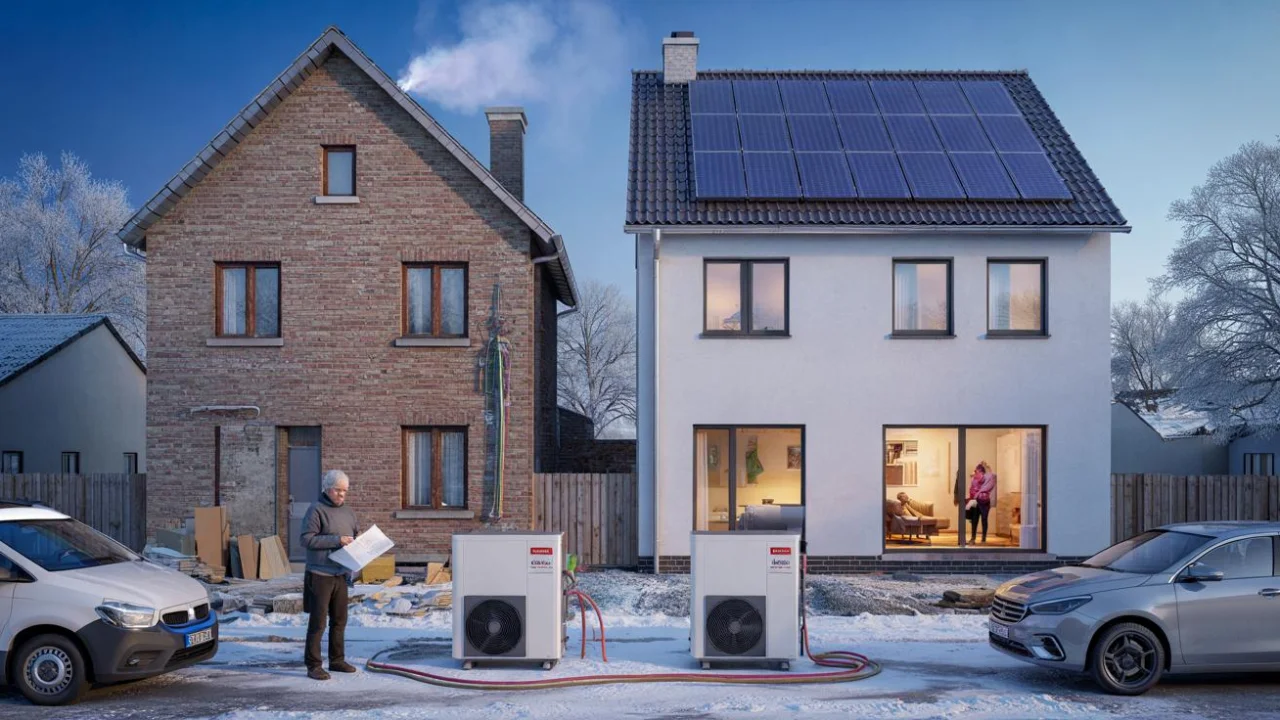
Sarah Jenkins stared at her electricity bill in disbelief. Three months after installing a £15,000 heat pump in her 1980s semi-detached home, her heating costs had actually gone up. The installer had promised dramatic savings and told her she’d be “future-proofing” her home. Instead, she was left with a system that struggled to keep her house warm and a monthly bill that made her question every decision.
She’s not alone. Across Britain and Europe, thousands of homeowners are discovering that heat pump costs can be far more complex than the glossy brochures suggest.
The promise seemed simple enough: swap your old gas boiler for a modern heat pump, slash your carbon footprint, and watch your bills tumble. Government incentives sweetened the deal, with grants of up to £7,500 in the UK making the technology appear within reach for ordinary families.
Why Heat Pump Costs Keep Shocking Homeowners
The sticker shock starts before you even switch the system on. Heat pump costs vary wildly, but the numbers are consistently eye-watering for most households.
Air source heat pumps, the most common type, typically cost between £8,000 and £18,000 fully installed. Ground source systems, which dig deep into your garden, can easily exceed £25,000. Compare that to a new gas boiler at £2,000-4,000, and you’ll understand why many families hesitate.
“The upfront investment is genuinely scary for most people,” says energy consultant Mark Thompson, who’s worked with over 200 households considering the switch. “Even with government grants, you’re looking at a significant chunk of money that many families simply don’t have lying around.”
But the real heat pump costs often extend far beyond the unit itself. Older homes frequently need extensive preparation work:
- New radiators or underfloor heating systems (£3,000-8,000)
- Upgraded electrical systems to handle higher power demands (£1,000-3,000)
- Additional insulation to prevent heat loss (£2,000-6,000)
- Hot water cylinder replacement for compatible models (£800-2,000)
These hidden extras can double the total project cost, turning what seemed like a £12,000 installation into a £25,000+ renovation. Many homeowners discover these requirements only after committing to the initial purchase.
The Performance Problem Nobody Talks About
Heat pumps work by extracting warmth from outside air or ground and concentrating it inside your home. It sounds like magic, and when conditions are right, the technology genuinely impresses.
The catch? “Right conditions” matter more than most people realize.
| Outside Temperature | Typical Efficiency (COP) | Real-World Performance |
|---|---|---|
| 15°C (mild day) | 4.5 | Excellent heating, low running costs |
| 7°C (cool day) | 3.2 | Good performance, reasonable costs |
| 0°C (freezing) | 2.1 | Adequate heating, higher electricity use |
| -5°C (very cold) | 1.8 | Struggles to heat, high running costs |
When temperatures drop below freezing, heat pumps work much harder to extract warmth from cold air. The system may need to run backup electric heating, which can push running costs higher than a traditional gas boiler.
“I installed mine in spring when it was performing beautifully,” explains homeowner David Chen from Manchester. “Come winter, it was running constantly and my electricity bills shot through the roof. Nobody warned me it would be so different in cold weather.”
House suitability creates another performance wildcard. Heat pumps deliver warm water at lower temperatures than gas boilers – typically 45-55°C compared to 60-80°C. In well-insulated modern homes, this works perfectly. In older properties with poor insulation and standard radiators, it often means rooms never quite feel warm enough.
The Reliability Reality Check
Maintenance schedules reveal another layer of heat pump costs that catches owners off-guard. Unlike gas boilers that might need annual servicing, heat pumps require more frequent attention.
The outdoor unit sits exposed to all weather conditions. Filters need cleaning every few months. Refrigerant levels require professional monitoring. Moving parts like fans and compressors face constant use throughout heating season.
“We’re seeing service call-outs increase significantly compared to traditional heating,” reports heating engineer Lisa Park. “These systems have more complex components, and when something goes wrong, repairs are usually more expensive than fixing a simple gas boiler.”
Common reliability issues include:
- Frozen outdoor units in winter requiring defrost cycles
- Refrigerant leaks needing specialist repairs (£500-1,500)
- Control system glitches affecting performance
- Fan motor failures in outdoor units (£400-800)
- Compressor problems requiring major repairs (£2,000-4,000)
Extended warranties help, but they add to overall heat pump costs and don’t cover everything. Many homeowners find themselves facing repair bills that would have covered several years of gas boiler maintenance.
Who Actually Benefits From Heat Pumps?
Despite the challenges, heat pumps work brilliantly for certain households. The technology isn’t inherently flawed – it’s just been oversold to unsuitable situations.
New-build homes represent the sweet spot. Modern insulation, underfloor heating, and proper system design create ideal conditions. These properties often achieve the promised efficiency levels and running cost savings.
Well-renovated older homes can also succeed, provided owners invest in proper insulation first. The key is treating the heat pump as part of a whole-house approach to energy efficiency, not a simple boiler replacement.
“When we get the conditions right, customers love their heat pumps,” says renewable energy installer Tom Mitchell. “The problem is too many installations happen in unsuitable homes where the technology was never going to work properly.”
Rural properties without gas connections often find heat pumps cost-effective compared to oil or LPG heating. The comparison economics work differently when you’re not competing against cheap mains gas.
The technology continues improving too. Newer models handle cold weather better, and prices are gradually declining as manufacturing scales up. But the fundamental mismatch between marketing promises and real-world requirements remains.
FAQs
How much do heat pumps really cost to run compared to gas heating?
This depends heavily on your home and local energy prices, but many households see running costs 20-50% higher than gas, especially in poorly insulated homes during cold weather.
Are heat pumps worth it for older homes?
Generally no, unless you’re planning major insulation upgrades first. Heat pumps work best in well-insulated properties with low-temperature heating systems.
How long do heat pumps last compared to gas boilers?
Heat pumps typically last 15-20 years compared to 10-15 years for gas boilers, but they often require more maintenance and repairs during that time.
What’s the biggest mistake people make with heat pumps?
Installing them as direct gas boiler replacements without considering whether the house is suitable. Proper assessment and preparation work is essential.
Will heat pump prices come down?
Prices are slowly declining as the market grows, but installation costs remain high due to the skilled labor required and necessary home modifications.
Can heat pumps really work in very cold climates?
Modern cold-climate heat pumps can work down to -15°C, but efficiency drops significantly and backup heating is often needed during the coldest periods.