
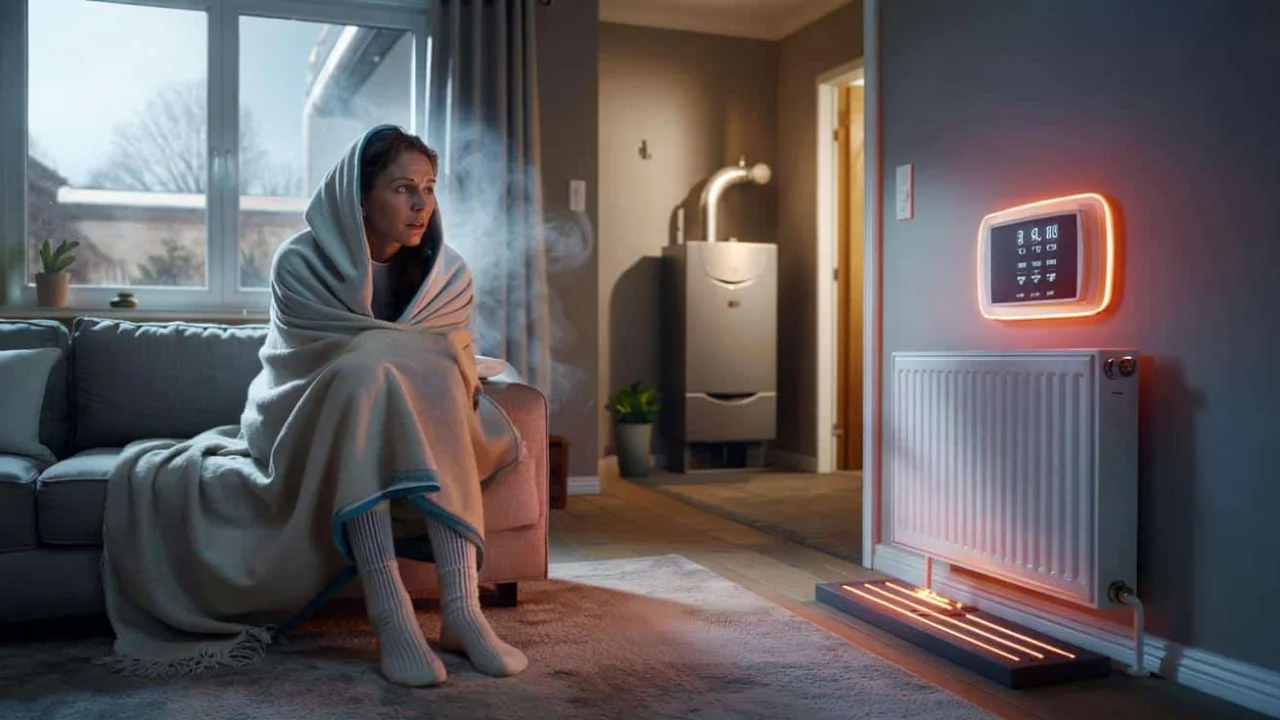
Sarah stared at her heating bill in disbelief. £340 for January alone. She’d been cranking up the thermostat daily, watching the numbers climb from 18°C to 20°C to 22°C, yet her Victorian terrace house still felt like an icebox. Every morning, she’d wrap herself in a dressing gown just to make coffee, and by evening, she was layering sweaters while working from her supposedly heated home office.
Her neighbors seemed fine. Their lights glowed warmly through winter evenings while Sarah sat shivering despite her radiators working overtime. Something wasn’t right, but she couldn’t put her finger on what.
Sound familiar? You’re not alone in this frustrating battle against home heating problems that seem to defy logic and drain your wallet.
The real reason your house won’t warm up properly
Millions of homeowners face this maddening situation every winter. Your heating system runs constantly, the thermostat shows reasonable temperatures, but you still feel cold. The problem isn’t always your boiler or radiators—often, it’s how your house holds and distributes heat.
“Most people think heating problems mean their system is broken,” explains Mark Henderson, a heating engineer with 15 years of experience. “But usually, the heat is escaping faster than the system can replace it.”
Your body doesn’t just feel air temperature. It responds to radiant temperature—the warmth or coldness coming from surrounding surfaces. If your walls, windows, and floors are cold, they’ll pull heat away from your body even when the air around you measures 20°C on the thermostat.
This creates a frustrating cycle. You turn up the heat, the air gets warmer, but cold surfaces continue stealing that warmth. Your heating bill skyrockets while comfort remains elusive.
Common culprits behind persistent cold homes
Several factors can turn your home into an energy-guzzling icebox. Here are the most frequent causes of home heating problems:
- Poor insulation – Heat escapes through walls, loft spaces, and gaps around windows
- Draft infiltration – Cold air seeps in through cracks, poorly sealed doors, and old windows
- Thermal bridging – Materials like metal or concrete create cold spots that conduct heat away
- Inadequate heating system – Your boiler or radiators may be undersized for your space
- Poor heat distribution – Radiators in wrong locations or blocked airflow paths
- Single-glazed windows – Massive heat loss through old, inefficient glazing
- Unheated rooms above or below – Cold spaces adjacent to living areas steal warmth
| Problem Area | Heat Loss Percentage | Quick Fix Cost |
|---|---|---|
| Roof/Loft | 25% | £300-800 |
| Walls | 35% | £500-2000 |
| Windows | 20% | £50-300 per window |
| Floors | 10% | £200-600 |
| Doors | 10% | £20-150 |
“The biggest shock for homeowners is learning that their heating system might be perfectly fine,” says thermal efficiency consultant Rachel Torres. “The house itself is often the problem.”
Why this affects more homes than you’d expect
Home heating problems plague properties across all age ranges, but certain types are particularly vulnerable. Victorian and Edwardian houses, built before modern insulation standards, can lose heat at shocking rates. Even homes built in the 1960s and 70s often lack adequate thermal protection by today’s standards.
The issue has worsened recently as energy costs soar. Homeowners who once heated their entire house now try to warm just essential rooms, creating temperature imbalances that make cold problems worse.
Emma’s story illustrates this perfectly. Her 1970s semi-detached house had cavity walls but no insulation filling them. The original single-glazed windows leaked heat like sieves. Her brand-new boiler worked perfectly—it just couldn’t keep up with heat escaping through the building fabric.
“We measured her heat loss at night and found the house was losing warmth three times faster than her heating system could replace it,” explains building surveyor James Mitchell. “No wonder she felt cold despite running the heating constantly.”
Simple solutions that actually work
Before calling expensive contractors, try these proven fixes that tackle the most common home heating problems:
Immediate wins (this weekend):
- Draft-proof around windows and doors using foam strips or brush seals
- Hang heavy curtains that reach the floor to create insulation barriers
- Move furniture away from radiators to improve heat circulation
- Close doors to unused rooms and turn down radiators in those spaces
- Place reflective foil behind radiators on external walls
Medium-term improvements (next month):
- Add secondary glazing to problem windows
- Insulate your loft to current standards (270mm depth minimum)
- Install door sweeps and threshold strips
- Bleed radiators to remove air bubbles affecting heat output
- Check and improve insulation around pipes in unheated areas
These changes can reduce heat loss by 30-50% in many homes, making your existing heating system far more effective.
“The best part is seeing homeowners’ faces when simple draft-proofing drops their heating bills by £40-60 per month,” notes energy advisor Lisa Chen. “Sometimes the cheapest fixes deliver the biggest comfort improvements.”
When to call in professionals
Some home heating problems require expert intervention. Call professionals if you notice radiators that won’t heat up properly, boilers that cycle on and off constantly, or heating bills that keep climbing despite your efficiency efforts.
A thermal imaging survey can reveal exactly where your house loses heat, providing a roadmap for targeted improvements. These surveys typically cost £200-400 but can save thousands in wasted heating costs over time.
For major upgrades like cavity wall insulation, external wall insulation, or heat pump installations, government grants may cover significant portions of the cost. Check current schemes before starting large projects.
FAQs
Why do my feet stay cold even when the room feels warm?
Cold floors conduct heat away from your body faster than warm air can replace it. Add rugs, carpeting, or underfloor heating to solve this.
Should I keep heating on low all day or use it only when needed?
For well-insulated homes, constant low heating often costs less. For poorly insulated properties, heating only when occupied usually saves money.
How can I tell if my radiators are working efficiently?
Feel along the radiator surface—it should be evenly warm. Cold spots indicate air bubbles or sludge buildup requiring attention.
What’s the ideal temperature setting to balance comfort and costs?
Most people feel comfortable at 18-21°C. Every degree higher increases heating costs by roughly 10%.
Why does my house feel colder in the morning even though heating ran all night?
Overnight heat loss often exceeds what your system can replace. Better insulation and draft-proofing will solve this.
Can smart thermostats help with heating problems?
Smart controls optimize timing and temperature but won’t fix underlying insulation or draft issues that cause heat loss.