
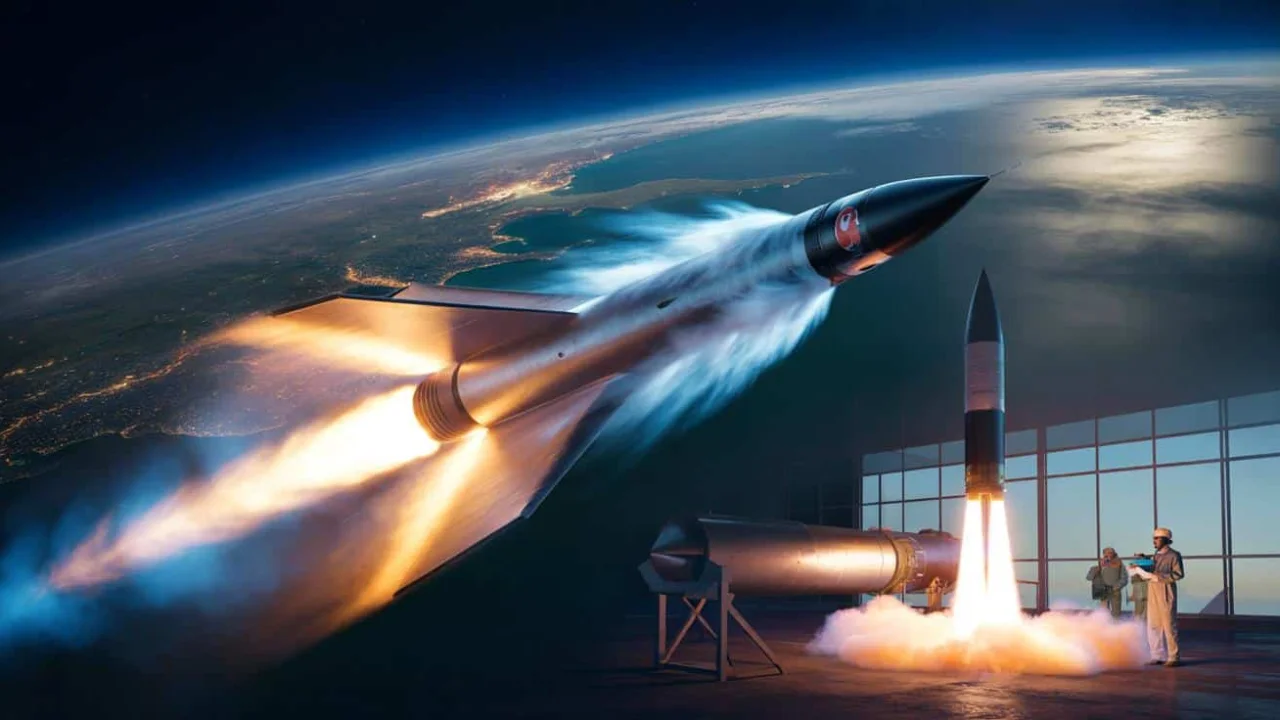
Picture this: you’re driving down a highway at 60 mph when a fighter jet screams overhead. That jet might be traveling at 600 mph—ten times faster than your car. Now imagine a missile moving at 3,000 mph, so fast it could cross an entire country in minutes. That’s the world of hypersonic weapons, and India just took a major step toward making them reality.
In a quiet laboratory in Hyderabad, engineers recently fired up an engine that could change the face of modern warfare. For over 12 minutes, they successfully tested a scramjet combustor—the beating heart of what could become India’s first operational hypersonic cruise missile.
This wasn’t just another routine test. It was a declaration that India intends to join an elite club of nations developing weapons that travel faster than five times the speed of sound.
Breaking Down India’s Hypersonic Breakthrough
The Defence Research & Development Laboratory (DRDL) in Hyderabad has achieved something that seemed impossible just decades ago. They’ve successfully tested an “Actively Cooled Scramjet Full-Scale Combustor” for more than 12 minutes—an eternity in the world of hypersonic testing.
- US Space Command Quietly Hands SpaceX America’s Most Critical Defense Contract
- Norway quietly doubles down on Type 212CD submarines – here’s what this means for Arctic security
- UK’s 270 km/h highspeed drone solution leaves security experts stunned by what it can actually catch
- Germany quietly spends $4.9 billion on 200 Puma IFVs while neighbors scramble to keep up
- Belgium holds key to unlocking billions in frozen Russian assets as Germany applies pressure
- Spain stealth drone shocks defense experts with one unexpected capability
“This 12-minute trial represents a quantum leap in India’s hypersonic missile program,” explains a defense analyst familiar with the project. “Most scramjet tests last seconds or minutes at most. Sustaining combustion for this long proves the technology is mature enough for real-world applications.”
The test took place at DRDL’s Scramjet Connect Pipe Test (SCPT) Facility, where engineers simulated the extreme conditions a hypersonic missile would face during flight. The combustor had to maintain stable operation while processing air moving at supersonic speeds—a challenge that has stumped engineers for generations.
What makes this achievement particularly significant is that both the hardware and testing facility were designed entirely in India, with support from domestic industry partners. This represents a strategic shift toward building indigenous hypersonic capabilities rather than relying on foreign technology.
The Science Behind the Speed
To understand why this test matters, you need to grasp what makes scramjet engines so revolutionary—and so difficult to build. Unlike conventional jet engines that slow incoming air to subsonic speeds before combustion, scramjets burn fuel in air that’s still moving faster than sound.
Imagine trying to light a match in a hurricane. Now multiply that hurricane by five and make it supersonic. That’s essentially what happens inside a scramjet combustor.
Here are the key technical challenges India’s engineers had to overcome:
- Fuel injection: Getting fuel and air to mix properly when both are moving at supersonic speeds
- Combustion stability: Maintaining steady burning without causing the engine to “unstart” or fail
- Thermal management: Preventing the engine from melting under extreme heat
- Materials science: Creating components that can withstand temperatures exceeding 2,000°F
The “actively cooled” aspect of India’s design is crucial. The combustor uses sophisticated cooling systems to prevent the engine from destroying itself during operation.
| Test Duration | 12+ minutes |
| Engine Type | Supersonic Combustion Ramjet (Scramjet) |
| Test Facility | Scramjet Connect Pipe Test (SCPT) |
| Location | DRDL, Hyderabad |
| Target Speed | Mach 5+ (3,800+ mph) |
Why This Changes Everything for Global Defense
Hypersonic missiles aren’t just faster versions of existing weapons—they represent a fundamental shift in military strategy. Traditional missile defense systems are designed to intercept threats following predictable ballistic trajectories. Hypersonic weapons can maneuver throughout their flight, making them nearly impossible to stop.
“Current missile defense systems simply weren’t built to handle threats moving at these speeds with this level of maneuverability,” notes a former missile defense specialist. “It’s like trying to swat a fly with a baseball bat while blindfolded.”
For India specifically, this technology addresses several strategic concerns:
- Regional deterrence: Hypersonic weapons provide rapid response capabilities against regional threats
- Defense penetration: The ability to overcome advanced missile defense systems
- Time-critical targets: Engaging mobile or temporary targets before they can relocate
- Strategic autonomy: Reducing dependence on foreign defense technology
The implications extend beyond military applications. The same scramjet technology could eventually power hypersonic passenger aircraft, reducing flight times from New York to Tokyo from 14 hours to just two hours.
Racing Against Time and Competition
India’s breakthrough comes at a critical moment in the global hypersonic arms race. Russia claims to have deployed operational hypersonic weapons like the Kinzhal and Zircon missiles. China has tested the DF-ZF hypersonic glide vehicle, while the United States is rapidly developing its own programs including the AGM-183 ARRW.
“India can’t afford to fall behind in this technology race,” explains a defense policy expert. “Hypersonic weapons are becoming the new standard for advanced military powers, and the gap between having them and not having them is enormous.”
The 12-minute test duration suggests India’s hypersonic missile program has moved beyond basic proof-of-concept to practical engineering validation. However, significant challenges remain before operational deployment.
Engineers still need to integrate the scramjet combustor with guidance systems, develop appropriate fuel systems, and conduct full-scale flight tests. The transition from ground testing to actual flight testing represents another major hurdle, as real-world conditions often reveal problems that don’t appear in laboratory settings.
What Comes Next for India’s Program
With the combustor test successfully completed, India’s hypersonic missile program will likely focus on several key areas in the coming years. Integration testing will combine the proven combustor with other missile components, while flight testing will validate the entire system under real operational conditions.
The DRDO has indicated that full-scale flight tests could begin within the next few years, though specific timelines remain classified. The organization is also working on developing the infrastructure needed to support hypersonic weapons, including specialized launch platforms and maintenance facilities.
“This test proves that India has mastered one of the most difficult aspects of hypersonic flight,” observes a propulsion engineer. “The next challenge is proving it works at altitude, under the stress of actual flight conditions.”
Beyond military applications, India’s scramjet research could contribute to civilian aerospace programs, potentially leading to revolutionary changes in commercial aviation and space launch systems.
FAQs
What exactly is a scramjet engine?
A scramjet (supersonic combustion ramjet) is an engine that burns fuel in air flowing at supersonic speeds, enabling aircraft or missiles to travel faster than five times the speed of sound.
How fast can hypersonic missiles travel?
Hypersonic missiles travel at speeds exceeding Mach 5, which is roughly 3,800 miles per hour or faster—fast enough to cross most countries in minutes.
Why are hypersonic weapons so difficult to defend against?
Unlike ballistic missiles that follow predictable arcs, hypersonic weapons can maneuver throughout their flight path and travel too fast for most current defense systems to intercept effectively.
When might India deploy operational hypersonic missiles?
While specific timelines are classified, successful ground testing suggests India could begin flight testing within the next few years, with operational deployment potentially following several years later.
Which other countries have hypersonic weapons?
Russia claims operational hypersonic missiles like Kinzhal and Zircon, China has tested the DF-ZF hypersonic glide vehicle, and the United States is developing several hypersonic programs.
Could scramjet technology be used for civilian purposes?
Yes, scramjet engines could eventually power hypersonic passenger aircraft, dramatically reducing flight times between distant cities, and could also improve space launch capabilities.