
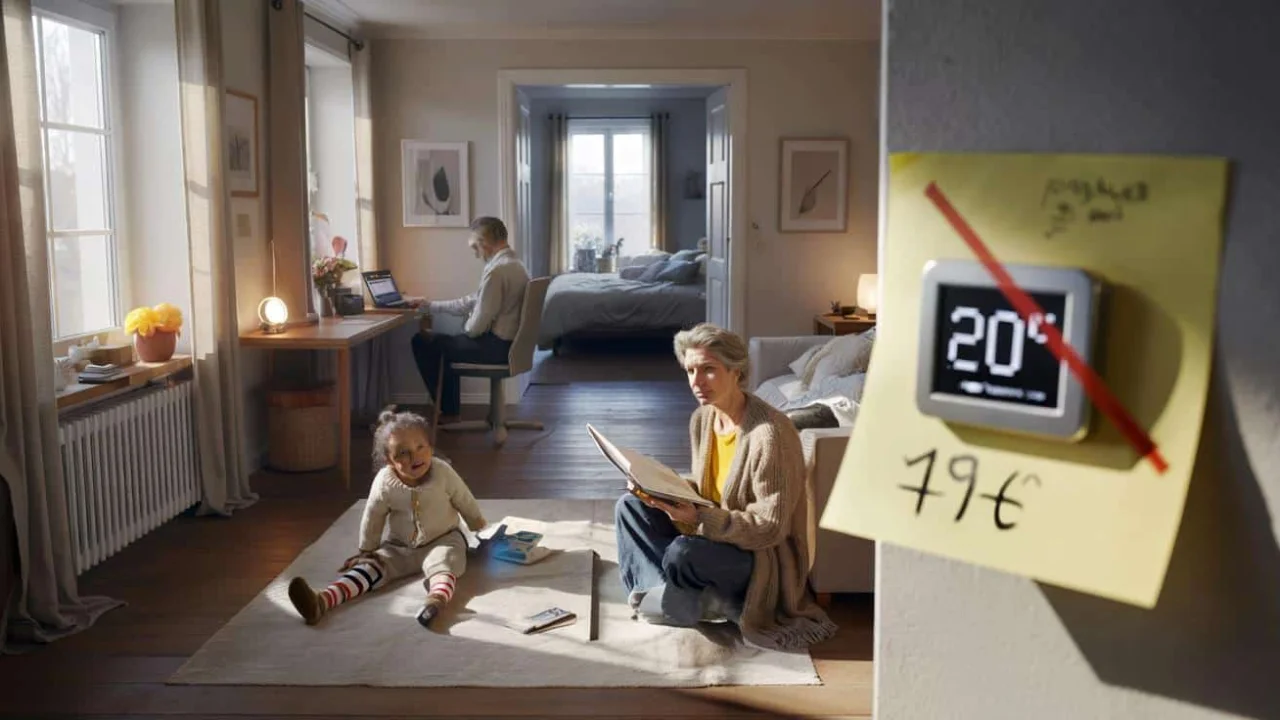
Sarah stared at her thermostat display showing exactly 19°C, just like her mother had taught her. Yet she sat wrapped in two blankets, feet freezing despite thick wool socks. Her energy bill remained stubbornly high, and she felt guilty every time she considered turning the heat up even one degree.
Sound familiar? You’re not alone. Millions of people have been conditioned to believe that 19°C represents some perfect balance of comfort and responsibility. But what if that magic number has been misleading us all along?
The truth is, your ideal comfort temperature depends on far more than a single setting your grandparents learned during an energy crisis fifty years ago.
The 19°C Myth: Born from Crisis, Not Science
The 19°C guideline emerged during the oil shocks of the 1970s as an emergency measure to reduce energy consumption. European governments needed a simple, memorable target that households could follow during a genuine crisis.
But here’s the problem: that emergency advice became permanent doctrine, passed down through generations like gospel truth.
“19°C was never meant to be a scientific benchmark for human comfort,” explains thermal comfort researcher Dr. Elena Martinez. “It was a political compromise designed for very different homes and lifestyles than we have today.”
Back then, homes were drafty, insulation was minimal, and central heating was simpler. The 19°C rule assumed you’d wear heavy clothing indoors and accept being slightly chilly as normal. Modern homes, modern lives, and modern expectations demand a more nuanced approach to finding your ideal comfort temperature.
Three major factors make the one-size-fits-all approach outdated:
- Building quality varies dramatically: A poorly insulated 1960s apartment loses heat so rapidly that 19°C on the thermostat feels like 16°C in your living room
- Regional climate differences: 19°C in humid coastal areas feels completely different from 19°C in dry, continental climates
- Lifestyle changes: Remote workers spending entire days at home desks need different temperatures than people who are constantly active
What Actually Determines Your Comfort Temperature
Your thermostat measures air temperature, but your body responds to much more complex factors. Understanding these can help you find your true ideal comfort temperature while potentially using less energy.
| Factor | Impact on Comfort | Practical Solution |
|---|---|---|
| Humidity levels | Dry winter air makes you feel 2-3°C colder | Add houseplants or a humidifier |
| Radiant temperature | Cold windows/walls steal body heat | Use thermal curtains, warm rugs |
| Air movement | Drafts create wind chill effect indoors | Seal gaps, use draft excluders |
| Activity level | Sedentary work needs +2°C vs. active tasks | Adjust by room use, not whole house |
| Clothing | Each clothing layer = ~1°C temperature adjustment | Layer appropriately before adjusting heat |
Energy consultant Mark Thompson puts it simply: “I’ve seen people comfortable at 17°C in well-insulated homes with good humidity control, and others shivering at 21°C in drafty spaces. The building matters more than the number.”
Your ideal comfort temperature might be anywhere from 16°C to 22°C depending on these factors. The key is understanding your specific situation rather than following a decades-old emergency guideline.
Finding Your Personal Sweet Spot
Rather than blindly following the 19°C rule, try this systematic approach to discover your actual ideal comfort temperature:
Week 1: Baseline assessment
Set your thermostat to 18°C and note how you feel at different times and activities. Pay attention to which rooms feel comfortable and which don’t.
Week 2: Zone testing
If possible, heat different areas to different temperatures. Living areas might need 20°C while bedrooms stay at 17°C.
Week 3: Factor optimization
Address drafts, add humidity, improve insulation in problem areas. You might find you need less overall heating.
“Most people discover their comfortable temperature is either 2°C lower or 2°C higher than 19°C once they optimize their home environment,” notes building physicist Dr. James Rodriguez. “The magic happens when you stop fighting your thermostat and start working with your space.”
The Real Cost of Temperature Obsession
Sticking rigidly to 19°C often backfires in unexpected ways. Many households actually use more energy by:
- Running electric heaters in specific rooms because the whole house feels cold
- Taking longer, hotter showers to warm up
- Using electric blankets and heating pads continuously
- Keeping heating on longer hours to compensate for poor comfort
Meanwhile, others underheat their homes to the point where humidity becomes problematic, potentially causing condensation and mold issues that cost far more than slightly higher heating bills.
The most efficient approach? Find your actual comfort zone and heat to that temperature for shorter periods, rather than maintaining uncomfortable conditions all day long.
Climate engineer Sarah Chen observes: “I’ve worked with families who reduced their energy consumption by 15% simply by heating to 21°C for 6 hours rather than 19°C for 12 hours. Comfort and efficiency aren’t opposites.”
Smart Strategies for Modern Comfort
Today’s technology offers much better tools than the blanket 19°C rule ever could:
- Smart thermostats learn your schedule and preferences automatically
- Zone heating lets you customize temperature by room use
- Programmable systems can deliver warmth exactly when and where needed
- Heat pumps operate more efficiently at consistent temperatures rather than constant adjustment
The goal isn’t to abandon energy consciousness, but to make it personal and practical rather than based on outdated emergency measures from five decades ago.
FAQs
Is it really okay to heat my home above 19°C?
Absolutely, if that’s your actual comfort temperature and you’re using energy efficiently. A comfortable home heated smartly often uses less energy than an uncomfortable one heated all day.
How much does each degree increase cost?
Generally, each degree adds 6-8% to heating costs, but this varies enormously based on insulation, heating system efficiency, and local energy prices.
What’s the healthiest indoor temperature?
Medical experts recommend 18-21°C for most healthy adults, with higher temperatures (20-23°C) for elderly people, babies, or anyone with circulation issues.
Should different rooms be different temperatures?
Yes! Bedrooms can be cooler (16-18°C), living areas warmer (19-21°C), and bathrooms warmest (22-24°C) for optimal comfort and efficiency.
How do I know if my thermostat reading is accurate?
Use a separate room thermometer away from heat sources and drafts. Many thermostats read 1-3°C differently from actual room temperature.
What if I can’t afford to heat above 19°C?
Focus on improving insulation, reducing drafts, adding humidity, and heating only the rooms you use. These changes can make 18°C feel as comfortable as 21°C in an unoptimized space.