
Maria Popescu remembers the day her grandmother cried while watching the news. It was 2022, and Russian missiles were falling on Ukrainian cities just across the border from their small village in eastern Moldova. “Bunica told me she felt like history was repeating itself,” Maria recalls. “She lived through Soviet occupation, then independence, and now she’s watching another war unfold right next to us. She asked me something that haunts me: ‘What if we’re next?'”
That fear isn’t just personal anymore—it’s driving an entire nation’s political conversation. Across Moldova, families are having difficult discussions about their country’s future, and one radical solution keeps surfacing: reunification with Romania.
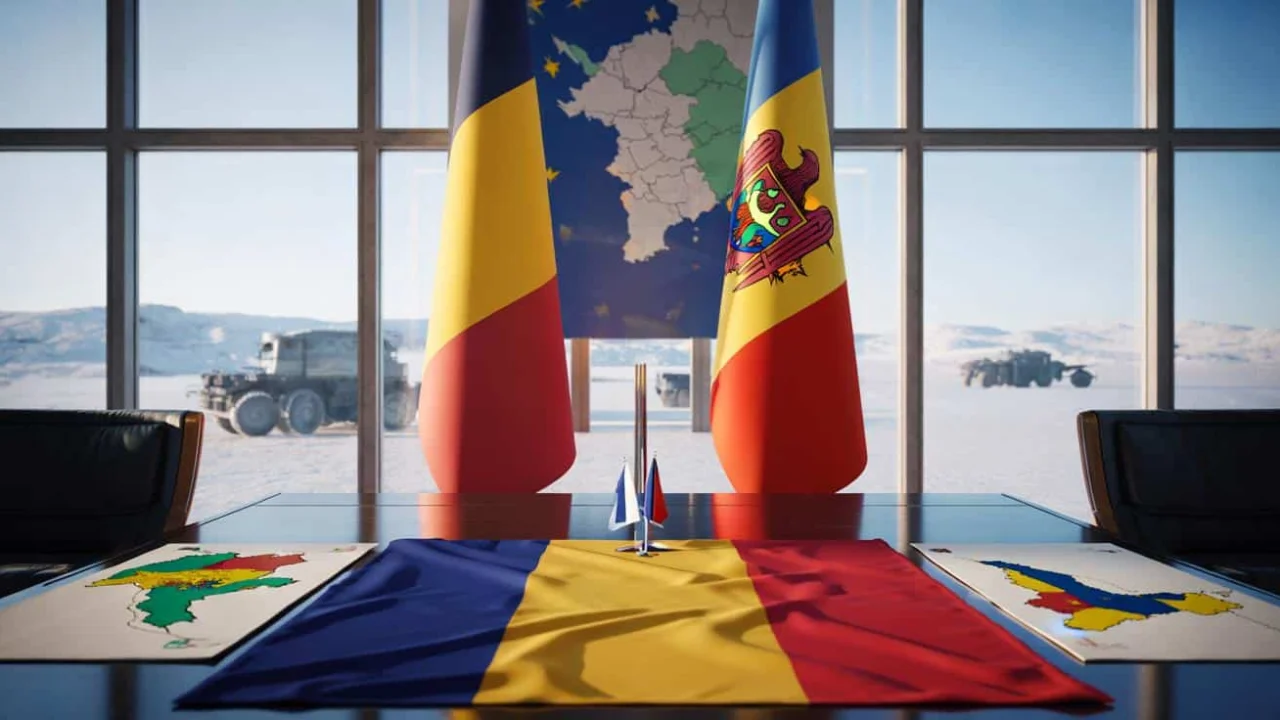
The Moldova Romania reunification debate has exploded from academic circles into mainstream politics, fueled by Russia’s war in Ukraine and mounting evidence of Moscow’s interference in Moldovan affairs. What once seemed impossible now feels increasingly inevitable to many observers.
When Geography Becomes Destiny
Moldova sits in one of Europe’s most precarious positions. Squeezed between Romania to the west and Ukraine to the north and east, this small nation of 2.6 million people has become a geopolitical pressure cooker.
The country’s location tells the story of its struggles. Russian troops occupy Transnistria, a breakaway region that declared independence in 1992 but remains unrecognized internationally. Meanwhile, Moldova’s capital, Chisinau, lies just 120 kilometers from the Romanian border—a distance you can drive in under two hours.
“Moldova is essentially caught between two worlds,” explains Dr. Elena Russu, a political analyst at the Institute for European Integration. “Every decision they make gets viewed through the lens of whether they’re moving toward Moscow or Brussels.”
The historical roots run deep. Before World War II, most of Moldova was part of Romania as the region of Bessarabia. Soviet annexation in 1940 changed everything, creating artificial divisions that persist today.
During Soviet rule, Moscow systematically worked to separate Moldovan identity from Romanian culture. They changed the alphabet from Latin to Cyrillic, imported Russian and Ukrainian settlers, and deported Romanian-speaking intellectuals to Siberian labor camps.
The Numbers Behind the Movement
Recent polling data reveals just how seriously Moldovans are considering reunification. The statistics paint a complex picture of a nation wrestling with its identity:
| Survey Question | Support % | Opposition % | Undecided % |
|---|---|---|---|
| Favor immediate reunification with Romania | 28% | 52% | 20% |
| Support reunification if EU membership guaranteed | 41% | 38% | 21% |
| Believe Moldova should remain independent | 47% | 35% | 18% |
| Fear Russian military intervention | 73% | 15% | 12% |
The generational divide is striking. Among Moldovans under 35, support for eventual reunification reaches 45%, while those over 65 show only 18% support. Language also matters—ethnic Romanians favor reunification at 52%, while Russian-speaking minorities oppose it at 78%.
Key factors driving the reunification movement include:
- Economic benefits: Romania’s GDP per capita is four times higher than Moldova’s
- EU membership: Automatic entry into the European Union through reunification
- Security concerns: Protection under NATO’s Article 5 collective defense
- Cultural ties: Shared language, traditions, and historical connections
- Demographic crisis: Moldova’s population has shrunk by 25% since 1991
“The war in Ukraine changed everything,” says Andrei Nastase, a prominent Moldovan politician. “People see what happens to countries in Russia’s sphere of influence. They want security, prosperity, and a European future.”
Russia’s Shadow Looms Large
Russian interference in Moldova has reached alarming levels. Intelligence services recently uncovered a massive influence operation ahead of the 2025 parliamentary elections.
The scope is staggering: approximately €350 million—roughly 2% of Moldova’s entire GDP—has been funneled through Russian networks to influence politics, fund pro-Moscow parties, and spread disinformation. For context, that’s equivalent to spending $500 billion on election interference in the United States.
Moscow’s tactics include:
- Massive social media disinformation campaigns
- Direct payments to voters through shell companies
- Energy blackmail using natural gas supplies
- Support for pro-Russian separatist movements
- Cyber attacks on government infrastructure
The 1,500 Russian troops stationed in Transnistria add military pressure to political manipulation. These forces, officially called “peacekeepers,” control about 12% of Moldovan territory and maintain a frozen conflict that prevents the country from moving decisively toward the West.
“Russia treats Moldova like a testing ground for hybrid warfare,” observes Dr. Marius Lazar, a security expert from Bucharest. “They’re perfecting techniques they later use elsewhere.”
What Reunification Would Actually Mean
The practical implications of Moldova Romania reunification extend far beyond symbolic unity. For ordinary citizens, the changes would be immediate and profound.
Economically, Moldovan workers would gain access to the EU’s single market overnight. The average salary would likely double within five years, based on patterns from previous EU enlargements. Romanian infrastructure investment could transform Moldova’s crumbling roads, hospitals, and schools.
Geopolitically, reunification would eliminate one of Europe’s last gray zones. NATO membership would provide security guarantees that Moldova desperately needs, while EU funds would accelerate development.
The challenges are equally significant. Transnistria would likely declare full independence rather than submit to Bucharest’s authority. Russia might respond with military escalation, potentially creating another Ukraine-style conflict.
Cultural integration poses additional hurdles. While most Moldovans speak Romanian, decades of separate development have created distinct identities. Many citizens value their independence, even if they acknowledge the benefits of reunification.
“It’s not just about joining Romania,” explains Ana Revenco, Moldova’s Deputy Prime Minister. “It’s about choosing our destiny before others choose it for us.”
The timing couldn’t be more critical. Russia’s war in Ukraine has exposed the costs of sitting on the fence between East and West. For Moldova, neutrality increasingly looks like vulnerability rather than wisdom.
European leaders are watching closely. Romania has already extended citizenship to over 800,000 Moldovans, creating legal pathways for eventual political integration. Brussels sees Moldovan EU membership—whether as an independent state or through reunification—as essential for regional stability.
The next two years will likely prove decisive. Moldova’s 2025 parliamentary elections could produce a government committed to reunification, especially if Russian interference continues to escalate. Alternatively, pro-Moscow forces might regain power and steer the country back toward Russia’s orbit.
For families like Maria Popescu’s, the abstract debate over Moldova Romania reunification has become intensely personal. They’re not just choosing between political systems—they’re deciding whether their children will grow up European or return to Russian influence.
“My grandmother survived Soviet occupation once,” Maria reflects. “She doesn’t want her great-grandchildren to face that choice again.”
FAQs
Would Moldova automatically join the EU if it reunified with Romania?
Yes, reunification would grant immediate EU membership since Romania is already a member state, though the process would require approval from both parliaments.
What would happen to Transnistria in a reunification scenario?
Transnistria would likely declare full independence with Russian support, potentially creating a frozen conflict similar to South Ossetia or Abkhazia in Georgia.
How many Moldovans already have Romanian citizenship?
Over 800,000 Moldovans have obtained Romanian citizenship since 1991, representing nearly one-third of Moldova’s current population.
Would NATO protect a reunified Romania-Moldova?
Yes, the reunified territory would fall under NATO’s Article 5 collective defense guarantee, providing security against Russian aggression.
When could reunification realistically happen?
Most analysts believe 2026-2030 represents the most likely timeframe, depending on the outcome of Moldova’s 2025 elections and regional security developments.
What do ordinary Romanians think about reunification?
Polls show 65% of Romanians support reunification with Moldova, though many worry about the economic costs of integrating a much poorer region.