
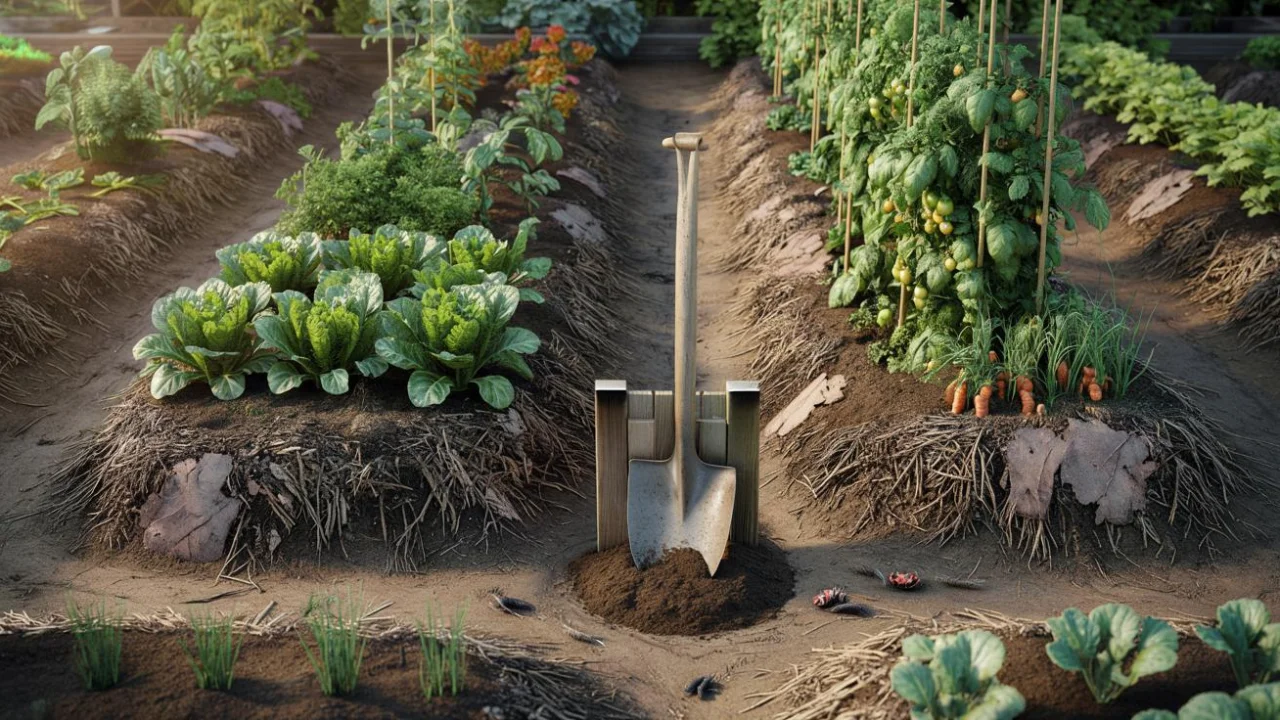
Sarah stared at her garden spade every March for twenty-three years, dreading what came next. The blisters on her palms from last spring’s marathon digging session had barely faded. This particular March morning, with rain drumming against the windows and her back already protesting from yesterday’s housework, she made a decision that would change everything. The spade stayed in the shed.
What started as procrastination turned into the best gardening experiment of her life. By summer’s end, her vegetable patch was thriving like never before, and she’d barely broken a sweat getting there.
Sarah had stumbled into what thousands of gardeners worldwide are discovering: no dig gardening works better than the traditional approach most of us grew up with.
The Revolution Hiding in Plain Sight
For generations, spring meant one thing for vegetable gardeners: grab your spade and start turning soil. Deep digging was gospel, passed down from parent to child like a sacred ritual. Break the earth, bury the weeds, create that perfect tilth.
But no dig gardening flips this wisdom on its head. Instead of disturbing the soil structure every year, you work with nature’s own systems. Seeds go into small holes or shallow furrows carved through a protective layer of organic matter. The soil beneath stays intact, undisturbed, alive.
“I used to think healthy soil meant soil I could crumble in my hands,” explains gardening consultant Mark Richardson. “Now I understand that healthy soil is soil I don’t need to touch at all.”
The method sounds almost too simple to work. You cover your beds with compost, leaf mold, or well-rotted manure each season. Plant directly through this mulch layer. That’s it. No turning, no breaking, no cursing at stubborn clay clods.
Why Your Vegetables Actually Prefer Undisturbed Soil
Think of soil as a bustling underground city. Fungi create highways connecting plant roots. Bacteria process nutrients into forms plants can actually use. Earthworms engineer drainage systems that put human plumbers to shame. Every spring dig demolishes this infrastructure, forcing these tiny workers to rebuild from scratch.
No dig gardening preserves this invisible network, and the results show up quickly in your harvest basket. Here’s what happens when you stop disrupting soil structure:
- Water penetrates deeper and stays available longer during dry spells
- Soil maintains better structure, staying workable even after heavy rain
- Buried weed seeds stay buried instead of being brought to light where they germinate
- Beneficial fungi form partnerships with plant roots, dramatically improving nutrient uptake
- Carbon stays locked in soil instead of being released into the atmosphere
| Traditional Digging | No Dig Method |
|---|---|
| Disrupts soil life annually | Preserves soil ecosystem |
| Brings weed seeds to surface | Keeps weeds buried |
| Requires 8-12 hours spring prep | Requires 2-3 hours mulch application |
| Heavy physical labor | Light maintenance work |
| Soil compaction from walking | Permanent raised beds, no walking on soil |
“The first year I stopped digging, I was nervous the whole season,” admits master gardener Jennifer Walsh. “By harvest time, I had more tomatoes than I knew what to do with, and my back felt twenty years younger.”
Real Gardens, Real Results
The proof lives in thousands of backyard plots across the country. Home gardeners report 30-50% less time spent on garden maintenance after switching to no dig methods. More importantly, many see improved yields within the first growing season.
Commercial growers are taking notice too. Small-scale farms using no dig techniques often outperform conventional operations on crop quality and soil health measures. The method works at any scale, from window boxes to acre plots.
The transition isn’t complicated, but it does require a mindset shift. Instead of preparing beds through muscle power, you prepare them through patience and organic matter. Instead of fighting the soil into submission each spring, you work as its partner year-round.
Water management becomes easier in no dig systems. The organic mulch layer acts like a sponge, absorbing rainfall and releasing it slowly to plant roots. During summer drought, no dig beds often stay green while traditionally managed plots turn brown.
Weed pressure drops dramatically after the first year. Annual weeds struggle to emerge through thick mulch layers. Perennial weeds gradually weaken when their energy stores can’t be replenished through photosynthesis.
Making the Switch: What Actually Changes
The physical transformation of switching to no dig gardening is immediate and obvious. Your shed suddenly has more room because you’re not storing multiple spades, forks, and cultivation tools. Your weekends in March and April become available for actually enjoying the garden instead of demolishing it.
But the deeper changes take a full season to appreciate. Soil that used to turn to concrete after rain stays workable. Plants that used to wilt at the first sign of summer heat keep producing through August. Harvest windows stretch longer because plants aren’t stressed from root disturbance.
“My grandmother would probably think I’m lazy,” laughs urban gardener Tom Chen. “But my vegetable output doubled when I stopped following her digging advice. Sometimes the old ways aren’t the best ways.”
The method demands more planning and less spontaneous weekend warrior sessions. You need to source organic matter regularly, think ahead about bed layout, and resist the urge to “fix” soil problems with a shovel. For many gardeners, this slower pace becomes part of the appeal.
Cost savings add up over time. Less fuel for power tools, fewer replacement tool handles, reduced water bills from improved soil moisture retention. Some families report saving hundreds of dollars annually on garden maintenance after making the switch.
FAQs
How long does it take to see results with no dig gardening?
Most gardeners notice less weeding and easier soil management within the first season, with maximum benefits appearing in year two or three.
What if I have heavy clay soil?
No dig methods actually work especially well with clay, as the organic matter gradually improves drainage without destroying soil structure through digging.
Do I need special tools for no dig gardening?
A basic hand trowel for planting and a garden fork for harvesting root vegetables are usually sufficient. Most digging tools become unnecessary.
How much organic matter do I need each year?
Plan on 2-4 inches of compost or other organic mulch applied annually, which typically costs less than the fuel and tool maintenance for traditional digging methods.
Can I start no dig gardening in an existing vegetable plot?
Yes, simply stop digging and start applying organic matter on top of your current soil. No special preparation needed.
Will no dig gardening work in my climate?
The method adapts to any climate where vegetables grow, from desert conditions to humid subtropical regions, though mulch choices may vary by location.