
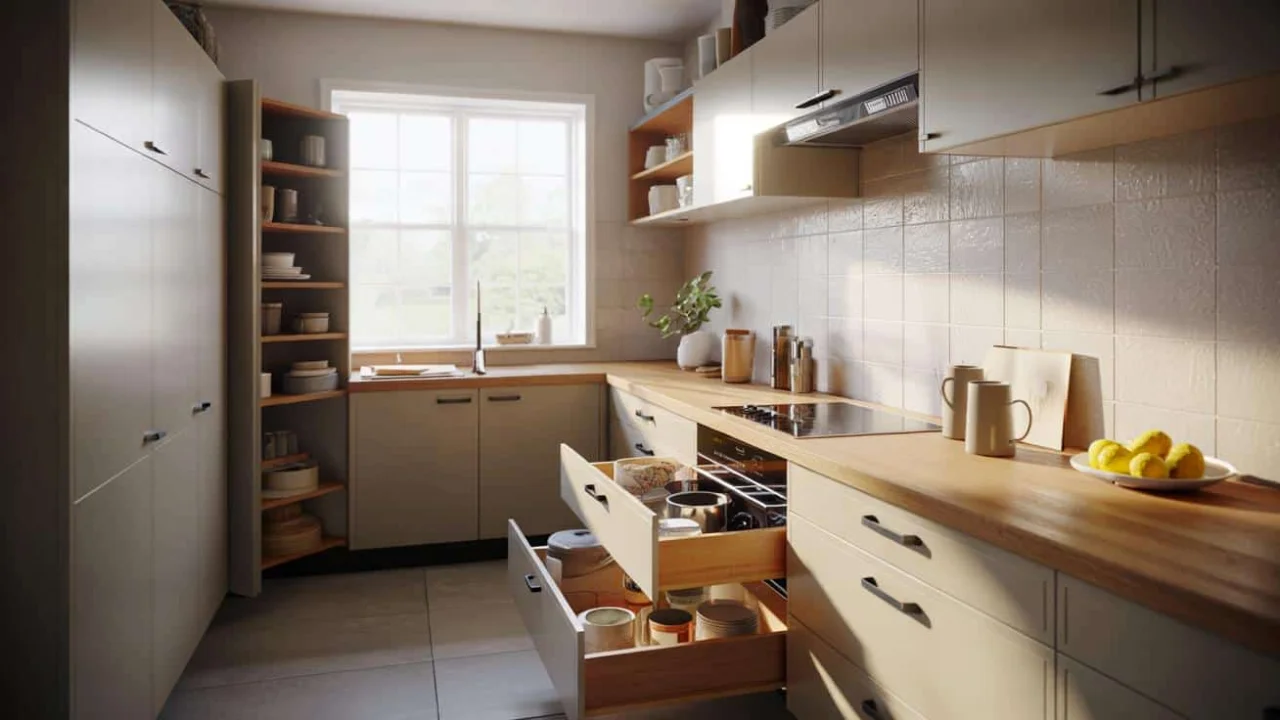
Sarah stared at her kitchen ceiling for the third time that week, watching a slow drip form where steam had warped the cabinet door above her stove. The chipboard had swollen so badly that the door wouldn’t close properly anymore, leaving a gap that collected grease and dust like a magnet.
“That’s it,” she muttered, grabbing a screwdriver. Two hours later, she’d removed every upper cabinet in her small London flat. What happened next surprised her completely.
The kitchen felt enormous. Light flooded in from the window she’d forgotten existed behind those bulky wall units. For the first time in years, she could actually see her beautiful brick wall and the vintage tiles she’d fallen in love with when she first moved in.
The Rise of Open Shelving Kitchen Design
Sarah isn’t alone in her cabinet rebellion. Across the UK and beyond, homeowners are quietly dismantling their upper kitchen storage and discovering something revolutionary: open shelving kitchen layouts that cost less, look better, and solve the age-old problems of warping and mould that plague traditional cabinets.
This trend represents more than just aesthetic preference. It’s a practical response to decades of dealing with cheap cabinet materials that can’t handle the reality of cooking life.
“We’re seeing a 40% increase in requests for open shelving kitchen designs over the past two years,” explains kitchen designer Mark Thompson from London-based Thompson Interiors. “People are tired of cabinet doors that warp from steam and develop that musty smell that never goes away.”
The movement started in high-end designer kitchens but has rapidly moved into everyday homes as people realize the benefits extend far beyond appearance.
Why Traditional Cabinets Are Falling Out of Favour
Traditional upper cabinets face several fundamental problems that open shelving kitchen designs elegantly sidestep:
- Moisture damage: Steam from cooking causes chipboard and MDF to swell and warp
- Mould growth: Dark, enclosed spaces with poor ventilation become breeding grounds
- Limited access: Items stored in upper cabinets are often forgotten or difficult to reach
- Visual weight: Wall-mounted cabinets make spaces feel smaller and darker
- Maintenance issues: Hinges break, doors sag, and hardware needs constant adjustment
- Cost: Quality upper cabinets are expensive, while cheap ones deteriorate quickly
“I spent three years dealing with cabinet doors that wouldn’t stay closed and shelves that sagged under the weight of dishes,” says Manchester resident James Chen. “The open shelving kitchen approach eliminated all those headaches in one go.”
| Aspect | Traditional Upper Cabinets | Open Shelving Kitchen |
|---|---|---|
| Initial Cost | £2,000-£8,000 | £300-£1,200 |
| Maintenance | High (hinges, doors, handles) | Low (dust shelves occasionally) |
| Moisture Resistance | Poor (warping, mould) | Excellent (no enclosed spaces) |
| Visual Space | Makes room feel smaller | Opens up the space |
| Access to Items | Limited, often forgotten | Everything visible and reachable |
Smart Storage Solutions That Actually Work
The key to successful open shelving kitchen design lies in reimagining where and how you store things. Rather than hiding everything behind cabinet doors, this approach uses strategic placement and beautiful storage containers.
Base cabinets with deep drawers become the workhorses of storage. Pull-out systems can hold everything from pots and pans to pantry items, often more efficiently than traditional shelving.
“The secret is vertical storage and smart containers,” explains organizing consultant Emma Wilson. “When you can see everything, you naturally keep things tidier and know exactly what you have.”
Popular open shelving kitchen storage solutions include:
- Floating shelves made from solid wood or metal brackets
- Glass containers for pantry items that look attractive on display
- Magnetic spice strips attached to walls or appliances
- Hanging rail systems for utensils and towels
- Open upper shelving combined with lower cabinets for maximum efficiency
The Financial Reality Behind the Trend
Beyond aesthetics, the economics of open shelving kitchen design make compelling sense. Quality upper cabinets can easily cost £3,000-£8,000 for an average kitchen, while achieving the same storage capacity with open shelving typically runs £300-£1,200.
The savings come from multiple sources. No cabinet boxes, no doors, no hinges, no handles. Installation is simpler and faster. Materials are straightforward: brackets and shelves rather than complex joinery.
“We saved nearly £5,000 by going with open shelving instead of upper cabinets,” reports Brighton homeowner Lisa Park. “That money went toward a better cooktop and gorgeous countertops instead.”
Even more importantly, open shelving kitchen layouts eliminate ongoing maintenance costs. No more replacing broken hinges, adjusting sagging doors, or dealing with warped cabinet faces.
Making the Transition Work in Real Life
The shift to open shelving kitchen design does require some lifestyle adjustments. Everything on display needs to look reasonably good, which means investing in matching storage containers and keeping things organized.
Some homeowners adopt a hybrid approach, keeping lower cabinets for items they don’t want visible while using open shelving for everyday dishes, glasses, and attractive kitchen tools.
“I kept one small upper cabinet for things like cleaning supplies, but everything else went open,” says Newcastle resident David Kumar. “It forced me to declutter, and now I actually enjoy looking at my kitchen.”
The trend works particularly well in smaller spaces where every inch of visual breathing room counts. Removing bulky upper cabinets can make a cramped galley kitchen feel twice as large.
FAQs
Does open shelving kitchen design work in small spaces?
Actually, it works better in small spaces because removing upper cabinets makes the room feel significantly larger and brighter.
How do you keep open shelves from looking messy?
Use matching containers for pantry items, limit the number of items displayed, and choose a consistent colour scheme for dishes and storage.
What about dust on open shelving?
Open shelves do collect more dust than closed cabinets, but a quick wipe-down once a week is usually sufficient, and many people find this easier than deep-cleaning cabinet interiors.
Is open shelving kitchen storage practical for families with kids?
Many families find it more practical because children can see and reach their dishes and cups, promoting independence while keeping breakables on higher shelves.
What materials work best for kitchen open shelving?
Solid wood, metal brackets with wood shelves, or floating shelves made from moisture-resistant materials work well. Avoid particle board or materials that might warp from kitchen humidity.
Can you mix open shelving with some upper cabinets?
Absolutely. Many people keep one or two upper cabinets for items they prefer hidden while using open shelving for everything else, creating a balanced and practical solution.