
Captain Roberto Martinez still remembers the silence that fell over the naval base in Mar del Plata on that November morning in 2017. The ARA San Juan had vanished somewhere in the South Atlantic, taking 44 sailors with her into the deep. As rescue ships searched empty waters, Martinez knew something fundamental had broken in Argentina’s naval soul.
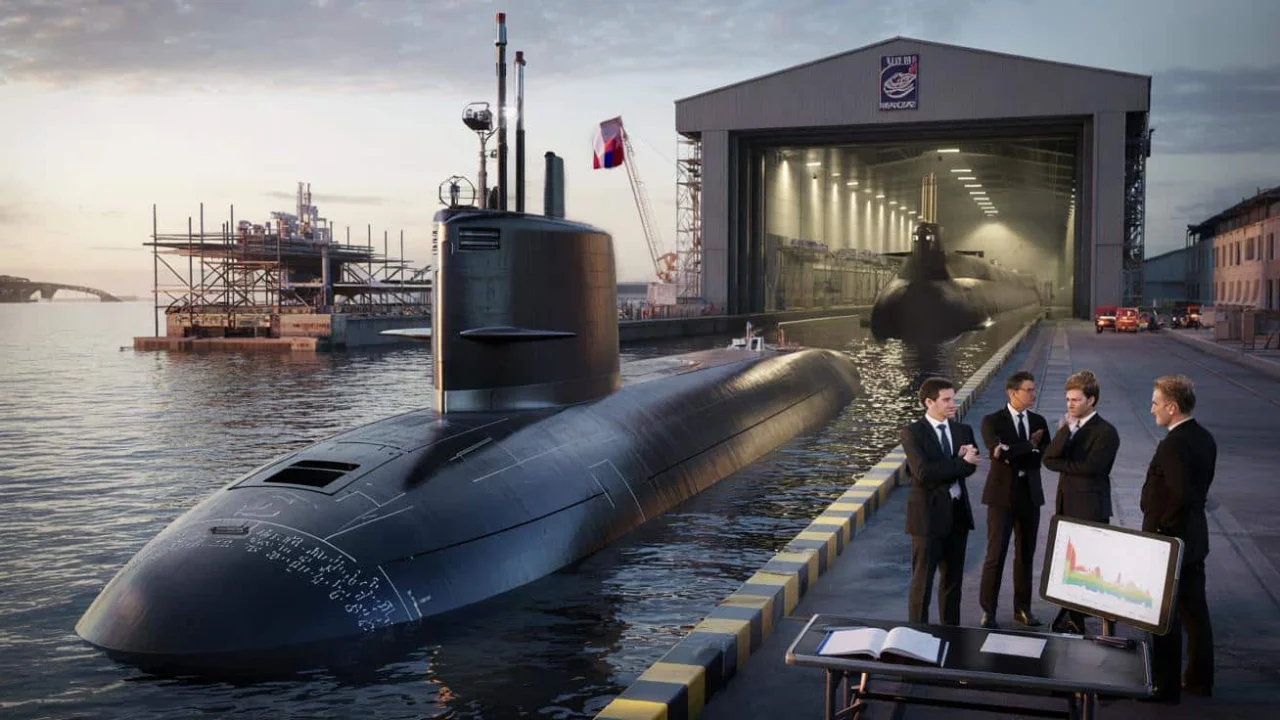
Today, nearly eight years later, that same base might soon echo with different sounds – the construction noise of a new submarine facility. Argentina is negotiating with France to acquire three cutting-edge Scorpene submarines, marking the country’s most ambitious naval modernization in decades.
But this isn’t just about replacing lost capability. For a nation that controls some of the world’s most strategic waters, from the Falklands to Antarctica, submarines represent the difference between being a coastal observer and an active guardian of national interests.
From Tragedy to Transformation
The ARA San Juan disaster left Argentina with essentially no operational submarine force. The aging ARA Salta, built in the 1970s, serves mainly as a training platform. Argentine submarine crews now travel to Peru just to maintain their basic skills – an expensive reminder of how far the country’s underwater capabilities have fallen.
- Ukrainian drone crashes in Lithuania as deadly HIV outbreak decimates Putin’s forces
- 93rd Mountain Artillery Regiment’s Veloce 330 munition test reveals game-changing remote control capabilities
- The surprising tech gap between Rafale vs Gripen that’s changing fighter jet purchases worldwide
- US Report Exposes China’s Secret Campaign Against Rafale Fighter Jets
- Netherlands quietly adds NH90 NFH helicopters as underwater threats multiply across Europe
- Fighter jets scrambled as Airbus A321 emergency landing in Barcelona reveals shocking onboard threat
“We went from having three operational submarines to having none that could effectively patrol our waters,” explains Admiral Carlos Fernandez, a former submarine commander. “The gap in our maritime defense became impossible to ignore.”
President Javier Milei’s administration has identified submarine capability as a strategic priority. The government is pursuing three French-built Scorpene submarines in an “Evolved” configuration, representing a significant technological leap from Argentina’s current fleet.
These aren’t your grandfather’s submarines. The Scorpene Evolved variant combines diesel-electric propulsion with air-independent propulsion systems, allowing underwater operations for weeks without surfacing. They’re designed for both coastal patrol and deep-ocean missions across the South Atlantic.
The French Connection and Financing Challenge
France’s Naval Group, the manufacturer of Scorpene submarines, has already proven the design’s capabilities. Brazil operates four Scorpene-class submarines, with the fifth under construction. India, Malaysia, and Chile also operate variants of these vessels, creating a global support network.
But Argentina faces a significant hurdle: money. The estimated cost for three Scorpene submarines runs between $2-3 billion, a substantial investment for a country still recovering from economic challenges.
The current negotiations center on a complex financing arrangement that would likely involve:
- French government-backed export credits
- Extended payment terms over 10-15 years
- Potential technology transfer agreements
- Local industrial participation requirements
- Possible involvement of international development banks
“The financing structure is almost as complex as the submarines themselves,” notes Maria Gonzalez, a defense industry analyst. “Both countries want this deal to work, but the economics have to make sense for Argentina’s budget constraints.”
| Specification | Scorpene Evolved | Current ARA Salta |
|---|---|---|
| Length | 71.6 meters | 66 meters |
| Crew | 31-36 | 31 |
| Submerged Endurance | 3+ weeks | 3-5 days |
| Maximum Speed | 20+ knots | 22 knots |
| Torpedo Tubes | 6 | 6 |
Strategic Implications for South America
Argentina’s submarine modernization sends ripples across South American military circles. Brazil already operates Scorpene submarines, while Chile acquired three variants in the 2000s. Peru and Colombia are also evaluating submarine acquisitions.
The submarines would enhance Argentina’s ability to patrol its 200-mile exclusive economic zone, protect fishing resources, and maintain a credible deterrent presence near disputed territories. The Falkland Islands, controlled by Britain but claimed by Argentina, remain a sensitive issue where submarine capability provides strategic leverage.
“Modern submarines change the strategic calculus in the South Atlantic,” explains Dr. Patricia Luna, a maritime security expert at Buenos Aires University. “They’re not just military assets – they’re diplomatic tools that signal serious intent about territorial waters.”
The timing also coincides with increased global interest in Antarctica and Southern Ocean resources. Argentina maintains several research bases on the continent and claims significant territorial rights. Submarines capable of extended operations in these waters would strengthen Argentina’s position in future Antarctic negotiations.
Technical Capabilities and Regional Impact
The Scorpene Evolved submarines would represent a generational leap in capability. Unlike conventional diesel submarines that must surface or snorkel frequently, these vessels can remain completely submerged for extended periods using fuel cell technology.
Key capabilities include:
- Advanced sonar systems for detection and navigation
- Modern torpedo and missile systems
- Sophisticated electronic warfare equipment
- Enhanced crew comfort for long missions
- Reduced acoustic signatures for stealth operations
The submarines would also boost Argentina’s defense industry. The deal likely includes technology transfer agreements and requirements for local manufacturing of components, potentially creating hundreds of high-skilled jobs in shipbuilding and electronics sectors.
“This isn’t just about buying submarines,” says Defense Minister Carlos Santos. “It’s about rebuilding our maritime industrial base and ensuring we can maintain these systems independently.”
Regional navies are watching closely. If Argentina successfully acquires modern submarines, it could trigger additional purchases by neighboring countries seeking to maintain strategic balance. Uruguay, Paraguay, and even landlocked Bolivia might reconsider their naval modernization plans.
Challenges and Timeline
Several obstacles remain before Argentina receives its first Scorpene submarine. The financing arrangement requires approval from both countries’ legislatures. French export credit agencies must assess Argentina’s creditworthiness, while Buenos Aires must demonstrate budget capacity for such a significant long-term commitment.
Technical considerations also matter. Argentina’s submarine facilities require substantial upgrades to support modern vessels. Port infrastructure, maintenance capabilities, and crew training programs all need development before the first submarine arrives.
If negotiations succeed, the first submarine wouldn’t arrive until 2028 at the earliest. Naval Group’s production schedule is already filled with orders from India, Brazil, and other customers. Argentina would join a queue that stretches several years into the future.
“Patience will be essential,” notes Admiral Fernandez. “But after eight years without proper submarine capability, a few more years to get the right boats seems acceptable.”
The submarines would serve for 30-40 years, making this decision crucial for Argentina’s long-term maritime strategy. Success could restore Argentina’s status as a significant naval power in South America. Failure might leave the country vulnerable in increasingly contested southern waters.
FAQs
How much will the Scorpene submarines cost Argentina?
The estimated cost ranges from $2-3 billion for three submarines, spread over 10-15 years through financing arrangements.
When would Argentina receive the first submarine?
If negotiations conclude successfully, the first Scorpene submarine could arrive around 2028-2029.
Why did Argentina choose French submarines over other options?
The Scorpene design has proven reliability with multiple international operators, and France offers favorable financing terms.
What happened to Argentina’s previous submarines?
The ARA San Juan was lost in 2017 with 44 crew members, while other submarines were retired due to age and maintenance issues.
Will Argentina build any submarine components locally?
The deal likely includes technology transfer and local manufacturing requirements, boosting Argentina’s defense industrial capabilities.
How do Scorpene submarines compare to other modern submarines?
Scorpene submarines offer advanced air-independent propulsion, extended underwater endurance, and proven operational reliability across multiple navies.