
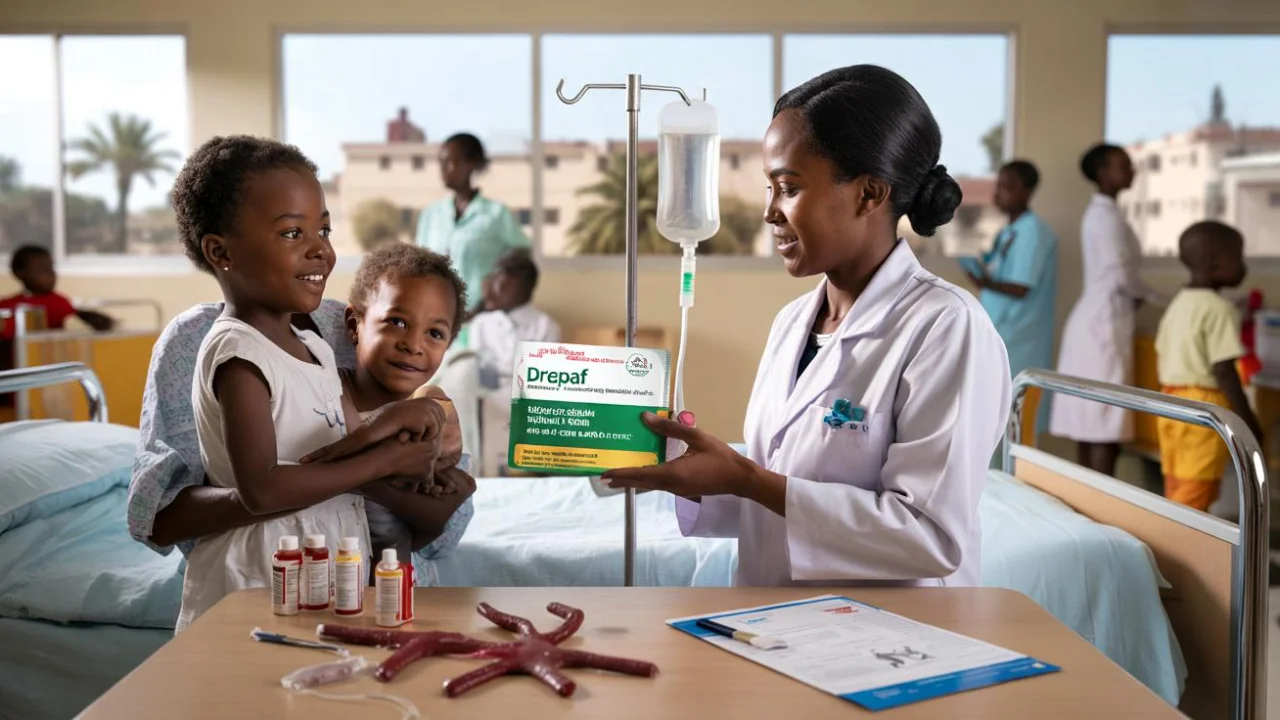
Aisha’s mother had watched her daughter suffer through 47 pain crises by the time she turned 12. Each episode meant sleepless nights, rushed trips to the hospital, and watching her child’s body contort in agony as sickled blood cells blocked her circulation. The family had sold their goats, borrowed money from relatives, and skipped meals to afford treatments that barely helped.
But last month, something changed. A new medication called Drepaf arrived at their local clinic in Dakar, Senegal. For the first time in years, Aisha’s mother allowed herself to hope.
This story is playing out across West Africa as a groundbreaking generic drug offers new possibilities for millions of families affected by sickle cell disease. The medication represents more than just another treatment option—it’s a symbol of Africa taking control of its own health challenges.
Africa’s Hidden Health Crisis Finally Gets Attention
Sickle cell disease affects more people worldwide than you might expect, yet it remains largely invisible in global health conversations. Every year, over 300,000 babies are born with this inherited blood disorder, and roughly 75% of them are born in sub-Saharan Africa.
- This Simple Winter Bird Feeding Trick Works Better Than Seeds—Birds Flock Back Instantly
- Renault and Dacia dominate this engine type before it disappears forever in 2030
- US Librarians Left Scrambling as Patrons Demand AI-Invented Books That Don’t Exist
- Morocco’s favourite car completely disappeared from European roads – here’s what took its place
- Ryanair CEO’s Bold Warning: How France Tourism Taxes Could Destroy the Travel Industry
- France orders first kamikaze drones while its army has none – delivery won’t arrive until 2027
The numbers tell a stark story. In many African countries, nearly half of children with sickle cell disease don’t live to see their fifth birthday. Compare that to the United States, where over 95% of children with the condition survive into adulthood thanks to early detection and comprehensive care.
“We’ve been fighting this battle with one hand tied behind our backs,” explains Dr. Ibrahima Diagne, a pediatric hematologist in Dakar. “Families watch their children suffer because the medications that could help them cost more than most people earn in a year.”
The condition occurs when both parents carry the sickle cell gene. Children who inherit two copies produce abnormal hemoglobin, causing their red blood cells to become rigid and C-shaped instead of flexible and round. These sickled cells can block blood flow, leading to excruciating pain episodes, organ damage, and life-threatening complications.
Drepaf: A Game-Changer Made in Africa
Enter Drepaf, a locally manufactured generic version of hydroxyurea, a medication that has been helping patients in wealthy countries for decades. Developed by Senegalese pharmaceutical company Laborex, this drug costs a fraction of imported alternatives while maintaining the same therapeutic benefits.
The breakthrough isn’t just about price—though that matters enormously. Here’s what makes Drepaf different:
- Affordability: Costs 60-80% less than imported hydroxyurea
- Accessibility: Available through local clinics and pharmacies
- Quality: Meets international pharmaceutical standards
- Supply chain: No dependence on foreign manufacturers or shipping delays
- Cultural adaptation: Packaging and instructions in local languages
The medication works by increasing the production of fetal hemoglobin, which doesn’t sickle like adult hemoglobin. This reduces the frequency of pain crises, prevents organ damage, and dramatically improves quality of life.
| Treatment Comparison | Imported Hydroxyurea | Drepaf (Generic) |
|---|---|---|
| Monthly Cost | $120-200 | $25-40 |
| Availability | Limited, major cities only | Widespread distribution |
| Supply Reliability | Often interrupted | Stable local production |
| Insurance Coverage | Rarely covered | Growing coverage |
“For the first time, we can offer families real hope without bankrupting them,” says Dr. Fatou Tall, who runs a sickle cell clinic in Thiès. “Children who were missing school every month are now attending regularly. Parents aren’t choosing between medicine and food anymore.”
Real Lives, Real Changes
The impact extends far beyond hospital walls. Mamadou, a 16-year-old student in Kaolack, used to spend weeks each semester in bed, unable to attend classes due to pain crises. Since starting Drepaf eight months ago, he’s missed only three school days.
His mother, Fatima, describes the transformation: “My son is playing football again. He’s laughing with his friends. I hadn’t seen him truly happy in years.”
The ripple effects touch entire communities. When children with sickle cell disease stay healthier, families don’t face the devastating financial burden of repeated hospitalizations. Parents can work consistently instead of taking time off for medical emergencies. Siblings get more attention and resources.
Healthcare systems benefit too. Emergency departments report fewer sickle cell-related visits. Hospital beds that were frequently occupied by children in crisis are now available for other patients. Medical staff can focus on preventive care rather than just managing emergencies.
But challenges remain. Many families still don’t know their children have sickle cell disease until a crisis occurs. Newborn screening programs exist in only a handful of African countries, meaning early intervention often isn’t possible.
“We’re solving one piece of the puzzle, but we need the whole picture to change,” explains Dr. Amadou Ba, a public health researcher in Senegal. “Affordable treatment is crucial, but so is early diagnosis, family education, and comprehensive care.”
Looking Beyond Borders
Senegal’s success with Drepaf has caught attention across the region. Ghana, Mali, and Burkina Faso are exploring partnerships with Laborex to bring the medication to their populations. Nigeria, home to the world’s largest number of people with sickle cell disease, is studying the Senegalese model.
The World Health Organization has endorsed the initiative, seeing it as a blueprint for addressing neglected diseases through local pharmaceutical production. International donors are beginning to fund distribution programs, recognizing that investing in treatment prevents more expensive emergency care later.
Some experts believe this could mark a turning point for sickle cell disease globally. When effective treatments become accessible in the regions most affected by a condition, awareness increases, research accelerates, and political prioritization follows.
For families like Aisha’s, the future looks brighter than it has in generations. Her last three doctor’s visits have been routine check-ups, not emergency interventions. She’s back in school, dreaming about becoming a nurse to help other children with sickle cell disease.
“My daughter has plans now,” her mother says, tears in her eyes. “For so long, we could only think about surviving each day. Now we can think about her future.”
FAQs
What exactly is sickle cell disease?
It’s an inherited blood disorder where red blood cells become rigid and C-shaped, blocking blood flow and causing pain, organ damage, and other serious complications.
How effective is Drepaf compared to expensive imported medications?
Studies show Drepaf has the same therapeutic effects as branded hydroxyurea, reducing pain crises by up to 50% and preventing organ damage when taken consistently.
Can adults with sickle cell disease benefit from this medication?
Yes, hydroxyurea helps patients of all ages, though it’s most effective when started in childhood before significant organ damage occurs.
How is Senegal ensuring the medication remains affordable?
Local production eliminates import costs and currency fluctuations, while government partnerships and insurance coverage help keep prices stable for families.
Are other African countries developing similar programs?
Several countries are exploring partnerships with Senegalese manufacturers or developing their own generic production capabilities for sickle cell treatments.
What still needs to happen to fully address sickle cell disease in Africa?
Experts emphasize the need for widespread newborn screening, better healthcare infrastructure, family education programs, and continued investment in local pharmaceutical manufacturing.