
Captain Jozef Novák still remembers the day his MiG-29 broke down mid-flight over the Tatra Mountains. The Soviet-era fighter jet, already decades old, started losing engine power at 15,000 feet. As warning lights flashed across his cockpit, the Slovak Air Force pilot had seconds to decide whether to eject or try an emergency landing. He made it down safely, but that terrifying moment crystallized what many in Slovakia’s military already knew: their aging fleet was becoming a deadly liability.
Now, just three years later, Slovakia is betting big on American-made fighters to secure its airspace. The small Central European nation is planning to expand its order of F-16 Viper jets, moving from 14 to 18 aircraft in what represents one of the most significant military modernizations in the country’s post-communist history.
This decision comes at a time when Slovakia finds itself caught between old loyalties and new realities, with the war in Ukraine reshaping how every NATO member thinks about air defense.
Why Slovakia’s F-16 Fighter Expansion Matters Now
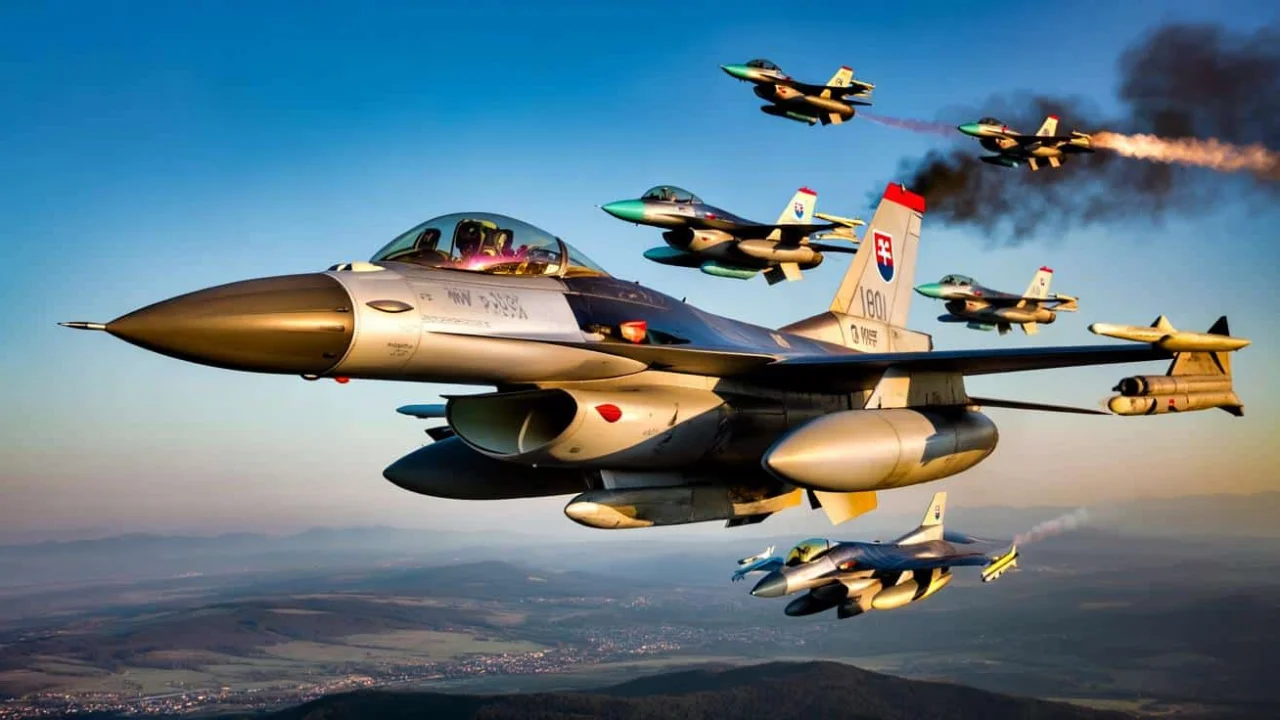
Slovakia’s journey with the F-16 began in 2018 when the government signed a €1.6 billion deal with Lockheed Martin for 14 F-16 Block 70/72 Viper fighters. These cutting-edge aircraft were meant to replace the country’s aging fleet of MiG-29 Fulcrums, relics from the Warsaw Pact era that had become increasingly unreliable and expensive to maintain.
- Argentina’s Scorpene submarines deal with France could reshape South American naval power forever
- Germany’s €15 Billion F-126 Frigate Programme Could Collapse as Defence Ministry Faces Major Crisis
- Netherlands quietly adds NH90 NFH helicopters as underwater threats multiply across Europe
- This military drone Game Boy is disturbing people in ways nobody expected
- This Chinese fighter jet just broke every rule the Navy thought it knew about carrier aviation
- Fighter jets scrambled as Airbus A321 emergency landing in Barcelona reveals shocking onboard threat
Prime Minister Robert Fico recently confirmed that his government is now in talks with the United States to add four more F-16 Vipers to the order, bringing Slovakia’s total planned fleet to 18 aircraft. The announcement marks a significant shift in the country’s defense strategy and represents a deeper commitment to Western military technology.
“Slovakia needs to be able to defend its own airspace without constantly relying on our NATO allies,” said a senior defense ministry official who requested anonymity. “These additional F-16s will give us that capability.”
The timing is particularly significant. Ten of the original 14 F-16s have already been delivered to the Slovak Air Force, with pilots completing their training in the United States. The aircraft have proven their worth during NATO air policing missions and joint exercises.
The Numbers Behind Slovakia’s Fighter Fleet Upgrade
Understanding Slovakia’s F-16 expansion requires looking at the concrete details of what the country is getting and what it’s replacing:
| Aircraft Type | Number Ordered | Status | Estimated Cost |
|---|---|---|---|
| Original F-16 Block 70/72 | 14 | 10 delivered, 4 pending | €1.6 billion |
| Additional F-16 Vipers | 4 (proposed) | In negotiation | €400-500 million estimated |
| Retired MiG-29s | 13 | Donated to Ukraine in 2023 | N/A |
The F-16 Block 70/72 represents the latest evolution of the Fighting Falcon family. These aircraft come equipped with:
- Advanced AESA radar systems for superior target detection
- Modern avionics and cockpit displays
- Enhanced electronic warfare capabilities
- Ability to carry precision-guided munitions
- Extended operational range and fuel efficiency
Slovakia’s F-16 fighters are configured specifically for the country’s needs, with software and hardware modifications that allow them to integrate seamlessly with NATO’s air defense network.
“The difference between our old MiGs and these F-16s is like comparing a horse and buggy to a Tesla,” explained retired Slovak Air Force Colonel Martin Tesař. “Everything from the radar to the weapons systems is generations ahead.”
Political Twists and Strategic Reality
What makes Slovakia’s F-16 expansion particularly interesting is the political context. Prime Minister Fico, who returned to power in 2023, has a complicated history with the country’s fighter jet program.
Just a year ago, while in opposition, Fico filed a legal complaint against the previous government for donating 13 retired MiG-29s to Ukraine. He argued the move left Slovakia defenseless and was done without proper parliamentary approval. Yet now, as Prime Minister, he’s pushing for more American fighters.
The apparent contradiction reflects the harsh realities facing Slovakia today. The war in Ukraine has fundamentally changed how Central European countries view security threats. Slovakia shares a border with Ukraine and has found itself on the front lines of NATO’s eastern defense.
“Politics aside, the security environment has changed dramatically,” noted defense analyst Jana Šubová from the Slovak Institute for International Studies. “No responsible government can ignore the need for credible air defense.”
Slovakia currently relies heavily on its NATO allies for air policing. Czech Republic, Poland, and Hungary regularly patrol Slovak airspace, a arrangement that works but leaves the country dependent on others for its most basic security needs.
What This Means for Slovakia and NATO
The expansion of Slovakia’s F-16 fleet will have several practical consequences. First, it will make the country more self-sufficient in air defense. Instead of relying on foreign aircraft for air policing missions, Slovakia will be able to scramble its own fighters to intercept unidentified aircraft or respond to airspace violations.
Second, the additional fighters will allow Slovakia to contribute more meaningfully to NATO missions. The country’s pilots are already participating in Baltic Air Policing missions, where NATO members take turns protecting the airspace of Estonia, Latvia, and Lithuania.
The economic impact is also significant. The F-16 program has created jobs in Slovakia’s aerospace sector and established long-term maintenance contracts with international suppliers. The additional aircraft will extend these benefits and potentially attract more aerospace investment to the country.
However, the expansion also represents a substantial financial commitment for a country with a defense budget of approximately €2.8 billion annually. The additional four F-16s could cost between €400-500 million, requiring careful budget planning and potentially increased defense spending.
“We’re talking about a 25% increase in our fighter fleet,” said a parliamentary defense committee member. “That’s not a decision any government takes lightly, especially given the costs involved.”
The move also signals Slovakia’s continued integration with Western defense systems. By standardizing on American aircraft and weapons, the country moves further away from its Soviet-era military heritage and closer to NATO standards.
Training requirements present another consideration. Slovak pilots and ground crews will need additional training on the expanded fleet, likely requiring more cooperation with the U.S. Air Force and other F-16 operators within NATO.
FAQs
Why does Slovakia need more F-16 fighters?
Slovakia currently has limited air defense capabilities and relies heavily on NATO allies for air policing, making additional fighters necessary for national sovereignty and security.
How much will the additional F-16s cost?
The four additional F-16 Viper fighters are estimated to cost between €400-500 million, based on the pricing of the original 14-aircraft deal.
What happened to Slovakia’s old MiG-29 fighters?
Slovakia donated 13 MiG-29 aircraft to Ukraine in 2023 to support the country’s defense against Russian invasion, leaving Slovakia temporarily dependent on allies for air defense.
When will the new F-16s be delivered?
While negotiations are ongoing, delivery timelines typically range from 24-36 months after contract signing, meaning the additional aircraft could arrive by 2027-2028.
Can Slovakia afford this military expansion?
The purchase represents a significant investment for Slovakia’s defense budget, but the country views it as essential for national security and NATO obligations.
How do F-16s compare to Slovakia’s old MiG-29s?
The F-16 Block 70/72 aircraft feature modern radar, avionics, and weapons systems that are generations ahead of the Soviet-era MiG-29s, offering superior capabilities and reliability.