
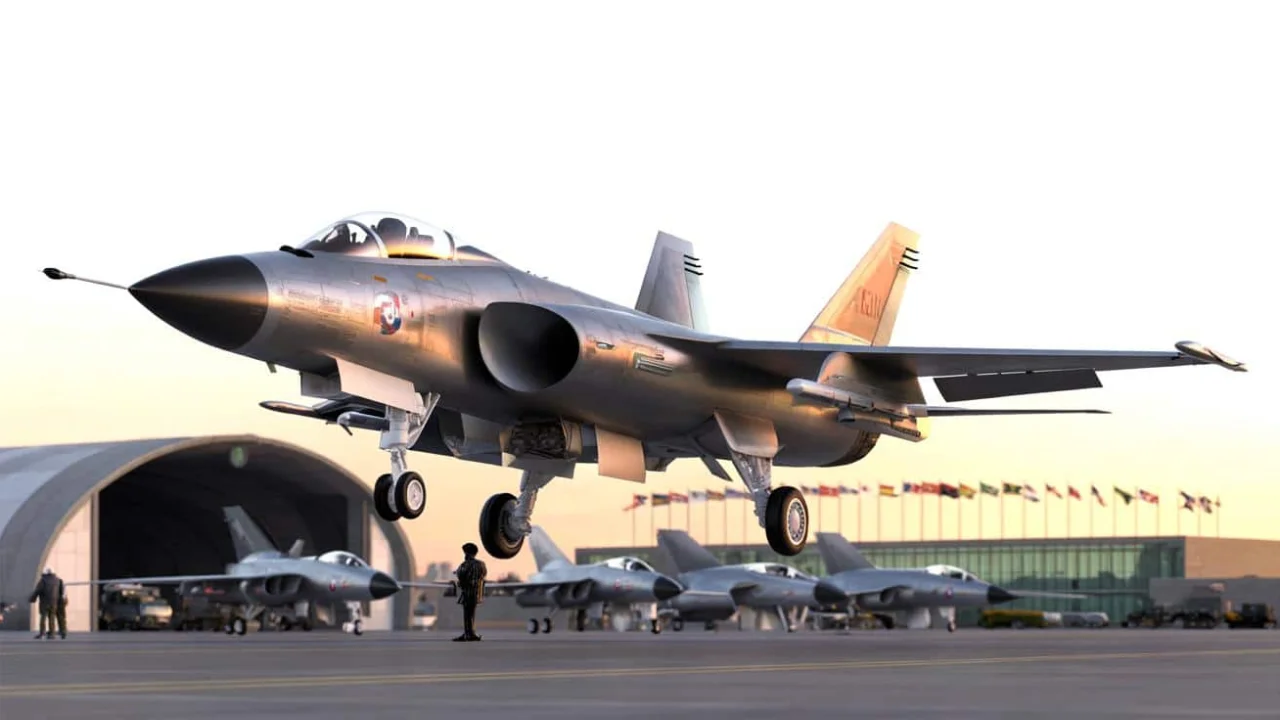
Captain Lee Jin-woo still remembers the moment he first saw the sleek fighter jet rolling out of the hangar in Sacheon. After 25 years flying imported aircraft, the veteran pilot couldn’t believe his eyes. “This one is ours,” he whispered to his wingman. “Built by Korean hands, for Korean skies.”
That aircraft was the KF-21 Boramae, and it represents far more than national pride. It’s South Korea’s ticket into one of the world’s most exclusive clubs: countries that can design, build, and sell their own fighter jets.
For decades, nations wanting modern air power had limited options. Buy American F-16s or F-35s. Consider European Eurofighters or Rafales. Maybe look at Russian or Chinese alternatives. But now there’s a new player in town, and it’s shaking up the entire global fighter market.
How South Korea Built Its Own Sky Warrior
The South Korea fighter jet program didn’t happen overnight. Back in 2010, Seoul faced a problem that many countries know well: aging aircraft and limited options for replacement.
- Japan quietly locks in 2035 timeline for revolutionary GCAP fighter aircraft that could reshape air warfare
- The $3.4 billion Pearl Harbor dock that has China worried about America’s next move
- China’s Fujian Aircraft Carrier Just Did Something No One Expected With Its New Electromagnetic System
- Washington’s Quiet Plan to Make America’s Factories the New Defense Frontline
- Navy Warships Get 11-Second Warning Before This Rolling Airframe Missile Strikes
- Indonesian Navy Rushes to Secure Ex-Italian Aircraft Carrier Before Critical October 5 Deadline
Their F-4 Phantoms were museum pieces still doing frontline duty. The F-5 Tigers were reliable but outclassed by modern threats. Buying foreign fighters meant depending on others for upgrades, spare parts, and technology transfers that might never come.
“We realized that true air power independence meant building our own capabilities,” explains Dr. Park Sung-ho, a defense analyst who has followed the program since its inception. “It wasn’t just about having modern jets. It was about controlling our own destiny.”
Korea Aerospace Industries took charge of the massive undertaking. Engineers worked alongside international partners, learning advanced manufacturing techniques while developing uniquely Korean solutions. The project consumed over $7 billion and employed thousands of specialists across multiple industries.
The first prototype rolled out in April 2021. Test flights began in July 2022, and since then, six prototypes have accumulated more than 2,000 flight hours. Each mission tested critical systems: radar performance, weapons integration, flight controls, and survivability features.
What Makes the KF-21 Special
The KF-21 Boramae isn’t trying to be everything to everyone. Instead, it fills a specific niche that many air forces desperately need: a capable, affordable fighter that doesn’t require decades-long purchase negotiations.
Here are the key specifications that have foreign buyers interested:
- Twin-engine design: Two General Electric F414 engines provide reliability and power
- Advanced radar: AESA radar system tracks multiple targets simultaneously
- Modern avionics: Glass cockpit with advanced mission systems
- Weapons flexibility: Compatible with both Korean and international munitions
- Stealth features: Reduced radar signature compared to older generation fighters
- Upgrade potential: Designed for future capability improvements
| Specification | KF-21 Boramae | Competitor Comparison |
|---|---|---|
| Max Speed | Mach 1.8 | Similar to F-16, Gripen |
| Combat Range | 2,900 km | Competitive with modern fighters |
| Payload | 7,700 kg | Matches F-16 capability |
| Unit Cost | $65-70 million | Less than F-35, Eurofighter |
“The KF-21 hits a sweet spot,” notes aerospace consultant Maria Rodriguez. “It’s modern enough for current threats but affordable enough for middle-power nations that can’t justify $100 million per aircraft.”
Global Markets Are Already Calling
Even before the first production aircraft rolls off the assembly line, international interest is building. Several countries have already expressed formal interest in the South Korea fighter jet program.
Indonesia has been involved from the beginning, contributing funding and expecting to receive its own aircraft. But other nations are also watching closely:
- Southeast Asian countries looking to modernize aging fleets
- Middle Eastern nations seeking alternatives to traditional suppliers
- Eastern European countries wanting NATO-compatible aircraft
- Latin American air forces needing affordable modern fighters
The timing couldn’t be better. Traditional suppliers are either overwhelmed with orders or restricted by political considerations. The F-35 has years-long waiting lists. European options come with complex industrial partnerships. Russian and Chinese aircraft face sanctions and trust issues.
“South Korea offers something different,” explains defense trade specialist James Thompson. “They’re a reliable democratic ally with advanced technology and competitive pricing. Plus, they understand what smaller air forces actually need.”
What This Means for You
You might wonder why a Korean fighter jet matters to your daily life. The answer lies in how defense industries drive broader technological innovation.
The KF-21 program has already created thousands of high-tech jobs in South Korea. Advanced manufacturing techniques developed for the fighter are now being applied to civilian aircraft, automotive components, and electronics manufacturing.
Export success could generate billions in revenue, funding further research and development. This creates a positive cycle: more investment leads to better technology, which attracts more customers, which funds the next generation of innovations.
For regional security, having another reliable fighter option reduces dependence on any single supplier. This creates more stable defense relationships and potentially lower costs through competition.
“When one country successfully develops advanced military technology, it raises the bar for everyone,” says security analyst Dr. Jennifer Liu. “Innovation spreads, capabilities improve, and ultimately, deterrence becomes stronger.”
The Road Ahead
South Korea plans to begin full-scale production in 2026, with the first operational squadrons forming by 2028. Initial production will focus on domestic requirements: replacing those aging F-4s and F-5s that started this whole journey.
But export marketing is already underway. Korean officials are attending air shows, briefing potential customers, and negotiating industrial cooperation agreements. The goal isn’t just to sell aircraft – it’s to build long-term relationships that sustain the program for decades.
The success of the South Korea fighter jet program could reshape global defense markets. If Seoul can establish itself as a reliable supplier of advanced military aircraft, it joins an elite group of nations with true aerospace independence.
Captain Lee Jin-woo, now helping to train the next generation of Boramae pilots, puts it simply: “We went from buying other people’s aircraft to building our own. Now we’re ready to help other nations do the same thing.”
FAQs
How much does the KF-21 Boramae cost compared to other fighters?
The KF-21 is expected to cost $65-70 million per aircraft, significantly less than the F-35 ($80-100 million) or European alternatives like the Eurofighter ($90+ million).
Which countries are interested in buying the South Korea fighter jet?
Indonesia is already a program partner, while several Southeast Asian, Middle Eastern, and Eastern European nations have expressed interest in potential purchases.
When will the KF-21 enter service with South Korea’s air force?
Full-scale production begins in 2026, with the first operational squadrons expected to form by 2028.
What makes the KF-21 different from other modern fighters?
The KF-21 balances modern capabilities with affordability, offering advanced radar and weapons systems at a lower cost than premium fighters like the F-35.
Can the KF-21 be upgraded with new technology?
Yes, the aircraft was designed with upgrade potential in mind, allowing for future improvements in avionics, weapons, and other systems.
How does this affect global defense markets?
South Korea’s entry as a fighter jet exporter adds competition to a market traditionally dominated by the US, Europe, Russia, and China, potentially leading to more options and better pricing for buyers.