
Marie Dupont still remembers the day her grandfather showed her the old mine shaft behind their family home in Moselle. “This fed our whole village for generations,” he told her, pointing to the remnants of France’s coal mining era. Today, as a geologist working on the REGALOR project, Marie finds herself returning to those same underground depths—but this time, hunting for something that could power not just villages, but entire nations.
What started as nostalgia has become the biggest energy story France hasn’t heard yet. Deep beneath the Grand Est region, where coal once ruled, scientists are drilling toward what could be the world’s largest white hydrogen reserves.
“We’re not just looking at France’s energy future,” says Dr. Philippe Mercier, lead researcher on the project. “We might be looking at Europe’s.”
The Accidental Discovery That Changed Everything
Nobody planned to find hydrogen in eastern France. Back in 2018, researchers were doing something completely different—chasing methane trapped in old coal seams as part of the REGALOR program.
The original goal was straightforward: verify whether the Lorraine mining basin held enough natural gas to matter. A 2012 study had suggested the area might contain 370 billion cubic meters of methane—enough to supply France for eight years.
But as teams sampled underground fluids and gases, something unexpected showed up in their data. Hydrogen traces. Natural hydrogen, formed deep in the earth’s crust without any human intervention.
“At first, we thought it was just background noise,” explains Dr. Mercier. “Then we realized the concentrations were getting stronger as we went deeper.”
That curiosity became the main event. Early measurements suggested France’s Lorraine basin could hold tens of millions of tonnes of naturally formed hydrogen, dissolved in deep underground water.
What Makes White Hydrogen So Special
Here’s what most people don’t understand about hydrogen: there are different colors, and they matter enormously.
Gray hydrogen comes from fossil fuels and produces carbon emissions. Blue hydrogen is cleaner but still requires natural gas. Green hydrogen uses renewable energy but costs a fortune to produce.
Then there’s white hydrogen—nature’s own production, created through geological processes deep underground. No emissions, no massive energy requirements, no industrial facilities needed.
| Hydrogen Type | Source | Carbon Footprint | Current Cost per kg |
|---|---|---|---|
| Gray | Fossil fuels | High | $2-3 |
| Blue | Natural gas + capture | Medium | $3-4 |
| Green | Renewable electricity | Zero | $5-8 |
| White | Natural geological processes | Zero | $1-2 (estimated) |
The economics are staggering. If France’s white hydrogen reserves prove as large as early data suggests, the country could produce clean hydrogen at costs that make every other method look expensive.
“This isn’t just about energy independence,” notes energy analyst Claire Rousseau. “This is about France potentially becoming the Saudi Arabia of clean hydrogen.”
The Deep Drill That Could Change Europe
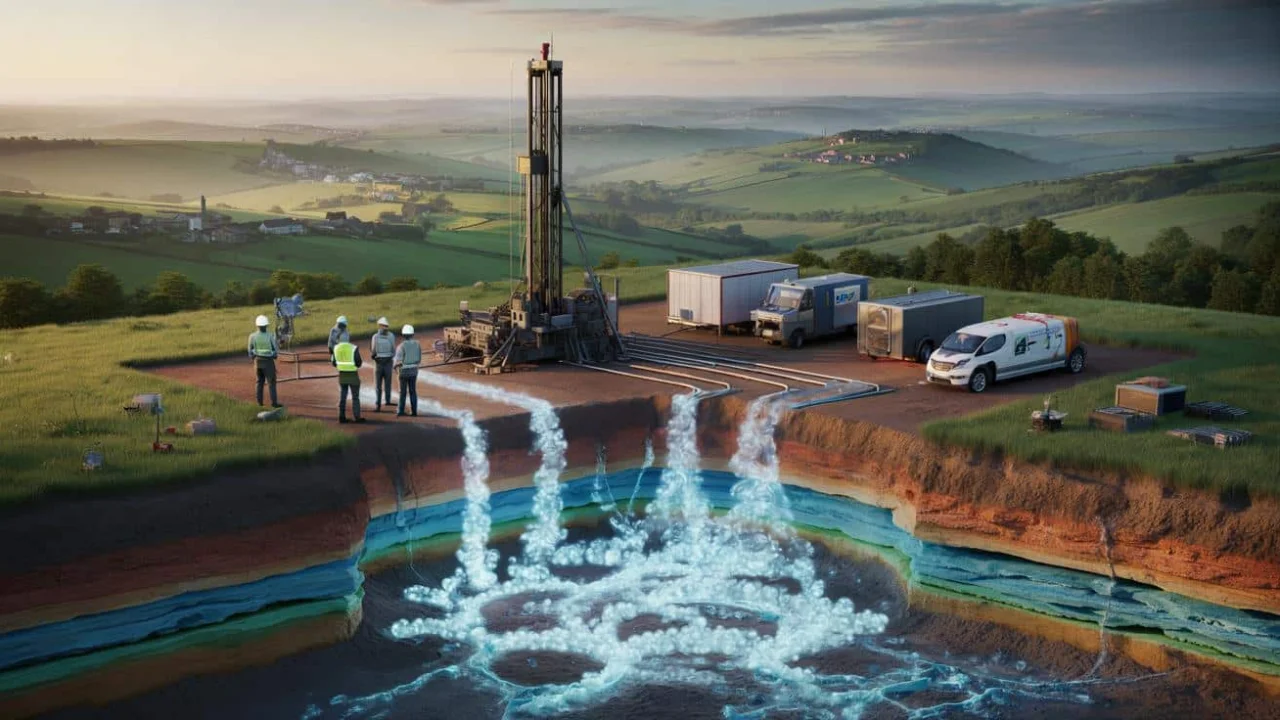
Right now, a 4,000-meter drill is boring through the earth near Pontpierre, cutting through rock layers and deep aquifers where hydrogen hides dissolved in hot, pressurized water.
This isn’t your typical gas well. Instead of hunting for sealed underground reservoirs, researchers are tracking hydrogen spread through permeable rocks and water-bearing layers—like finding gold dust mixed into river sand rather than nuggets in a mine.
The REGALOR II project, running from 2025 to 2028, has one focus: understanding exactly how much white hydrogen sits beneath the Grand Est region. Key objectives include:
- Measuring hydrogen concentrations at different depths
- Mapping the geological formations that contain the gas
- Testing extraction methods for dissolved hydrogen
- Calculating total reserve estimates
- Assessing commercial viability
“We’re essentially creating a 3D map of hydrogen distribution under eastern France,” explains project coordinator Dr. Antoine Lebrun. “Every meter we drill gives us more pieces of the puzzle.”
What This Means for Your Energy Bills
If France strikes hydrogen gold, the ripple effects will reach every corner of Europe—and your monthly utility bill.
Large-scale white hydrogen production could revolutionize several industries. Steel manufacturing, chemical production, and heavy transportation all desperately need clean alternatives to fossil fuels. Currently, these sectors have limited options that don’t break the bank.
For ordinary consumers, the changes might be subtler but equally important. Hydrogen can power fuel cells for cars, heat homes, and store renewable energy for when the wind isn’t blowing or sun isn’t shining.
“Imagine heating your home with hydrogen that costs less than natural gas but produces zero emissions,” says energy economist Dr. Jean-Marc Fontaine. “That’s the potential we’re looking at.”
The geopolitical implications are massive too. Europe currently imports enormous amounts of energy, sending billions to countries that don’t always share European values. White hydrogen reserves could flip that equation.
Germany, just across the border from the Grand Est region, has already committed to becoming a hydrogen economy by 2030. If France becomes a major hydrogen supplier, it changes the entire European energy landscape.
The Clock Is Ticking
Other countries aren’t waiting around. Australia, Chile, and several African nations are racing to develop their own natural hydrogen resources. The United States is investing billions in hydrogen infrastructure.
“This is like the early days of oil exploration,” notes Dr. Rousseau. “The first movers will have enormous advantages.”
France has until 2028 to complete its assessment. After that, decisions need to be made about commercial development, environmental protections, and infrastructure investment.
The drilling continues, and with each meter, France moves closer to answering whether it sits on Europe’s energy future—or just another expensive hole in the ground.
“Every day, we’re getting closer to the answer,” says Dr. Mercier. “And honestly, the early signs are making all of us very excited about what we might find.”
FAQs
What exactly is white hydrogen?
White hydrogen is naturally occurring hydrogen gas created by geological processes deep underground, requiring no industrial production or carbon emissions.
How much hydrogen could France have?
Early estimates suggest tens of millions of tonnes could be trapped in the Grand Est region’s underground water systems, but final numbers won’t be available until 2028.
Why is this discovery significant for Europe?
If confirmed, France could become a major supplier of clean hydrogen to neighboring countries, reducing Europe’s dependence on energy imports and accelerating the shift away from fossil fuels.
When will we know the final results?
The REGALOR II project runs until 2028, with the 4,000-meter exploratory well at Pontpierre providing crucial data over the next few years.
Could this affect energy prices?
Yes, large-scale white hydrogen production could significantly reduce clean energy costs, potentially making hydrogen cheaper than natural gas while producing zero emissions.
What happens if the reserves are as large as hoped?
France would likely become a major player in the global hydrogen economy, with significant implications for European energy independence and climate goals.