
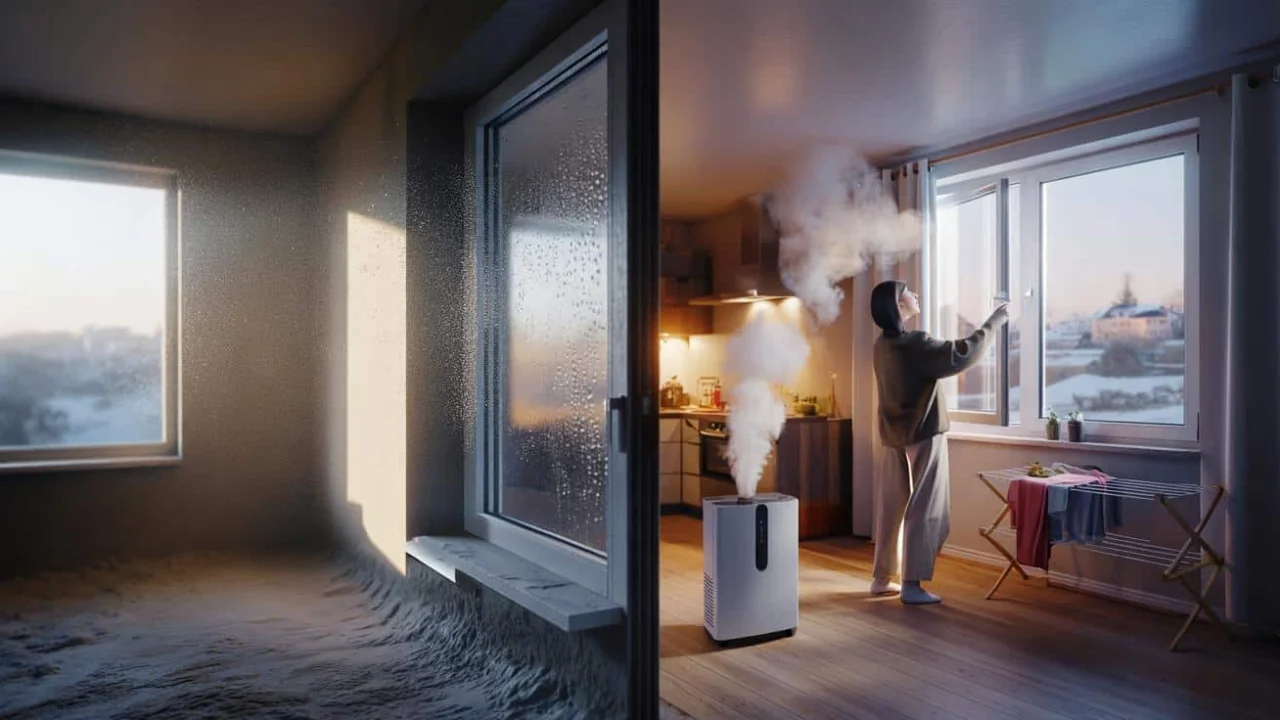
Sarah stared at her kitchen window on a chilly Tuesday morning, watching water droplets race down the glass like tears. What started as a few foggy patches had become a daily flood, leaving puddles on her windowsill and dark spots creeping along the frame. Her three-year-old daughter had developed a persistent cough, and Sarah couldn’t shake the feeling that something in their home wasn’t right.
She wasn’t alone. Millions of homeowners wake up to the same sight every winter, dismissing those wet windows as just another seasonal annoyance. But window condensation isn’t just about wiping down glass – it’s a warning sign that could be affecting your family’s health in ways you never imagined.
The moisture collecting on your windows each morning tells a story about the air you’re breathing, the mold that might be growing unseen, and the energy you’re wasting. Once you understand what’s really happening behind that misty glass, you’ll never look at condensation the same way again.
The Hidden Science Behind Those Wet Windows
Window condensation happens when warm, moisture-laden indoor air collides with cold glass surfaces. Think of it like your breath fogging up on a cold day – except this is happening inside your home, every single day.
Your daily activities pump surprising amounts of water vapor into the air. A hot shower releases about half a gallon of moisture. Cooking dinner adds another quart. Even sleeping releases moisture through breathing – up to a pint per person per night.
“When your windows sweat consistently, it means your home has too much humidity and not enough fresh air circulation,” explains building science researcher Dr. Michael Torres. “That excess moisture has to go somewhere, and unfortunately, it often ends up feeding mold growth in places you can’t see.”
The temperature difference between your warm indoor air and cold window glass creates the perfect conditions for condensation. When humid air hits that cold surface, it can’t hold all its moisture anymore, so water droplets form and trickle down.
But here’s what most people don’t realize: those visible droplets on your windows are just the tip of the iceberg. The same process is happening on cold walls, in corners, and behind furniture where mold can flourish undetected.
Your Complete Battle Plan Against Window Condensation
Fighting condensation effectively requires a multi-pronged approach that addresses both moisture sources and ventilation. Here are the most effective strategies, ranked by impact:
| Solution | Effectiveness | Cost | Time to Results |
|---|---|---|---|
| Cross-ventilation (10-15 min daily) | High | Free | Immediate |
| Bathroom/kitchen exhaust fans | High | Low-Medium | 1-2 days |
| Dehumidifier in problem areas | Medium-High | Medium | 1-3 days |
| Improved window insulation | Medium | Medium-High | 1-2 weeks |
| Whole-house ventilation system | Very High | High | Immediate |
The 15-Minute Solution
Open windows on opposite sides of your home for 10-15 minutes each morning and evening. This creates cross-ventilation that flushes out humid air and replaces it with drier outdoor air. Even in winter, this method works without significantly cooling your home.
Target Moisture Sources
Install and actually use exhaust fans in bathrooms and kitchens. Run them during and 30 minutes after showers or cooking. If you don’t have exhaust fans, crack a window in these high-moisture areas.
- Cover pots while cooking to reduce steam
- Dry laundry outside or in a well-ventilated room
- Fix any plumbing leaks immediately
- Keep firewood outside until ready to burn
- Maintain indoor humidity between 30-50%
“Most people think leaving a window cracked open all day helps, but short bursts of wide-open ventilation are far more effective,” notes HVAC specialist Jennifer Chen. “You get maximum air exchange without losing heat.”
When Window Moisture Becomes a Health Emergency
Persistent condensation creates the perfect breeding ground for mold, dust mites, and bacteria. These microscopic invaders can trigger serious health problems, especially in children, elderly family members, and anyone with respiratory conditions.
The health impacts sneak up gradually. You might notice family members developing persistent coughs, more frequent asthma attacks, or recurring sinus infections. Children are particularly vulnerable because they breathe faster and spend more time close to floor level where mold spores concentrate.
Warning Signs to Watch For:
- Black spots appearing around window frames
- Musty odors that won’t go away
- Peeling paint or wallpaper near windows
- Family members experiencing unexplained respiratory symptoms
- Condensation that returns within hours of wiping it away
Beyond health concerns, chronic moisture problems damage your home’s structure and dramatically increase heating costs. Moist air feels colder, forcing you to crank up the thermostat. Meanwhile, water damage slowly destroys window frames, drywall, and insulation.
“I’ve seen families spend thousands on medical bills treating asthma symptoms, never realizing the root cause was hiding in plain sight on their windows every morning,” says indoor air quality consultant Dr. Amanda Rodriguez.
The financial impact extends beyond health costs. Homes with moisture problems can lose 10-15% of their value, and insurance claims for mold damage often aren’t covered under standard policies.
Long-Term Solutions That Actually Work
While daily ventilation provides immediate relief, some homes need more comprehensive solutions to permanently solve condensation problems.
Upgrade Your Windows
Double or triple-pane windows with low-E coatings stay warmer on the inside, reducing the temperature differential that causes condensation. While expensive upfront, they pay for themselves through energy savings.
Install a Heat Recovery Ventilator (HRV)
These systems continuously exchange indoor and outdoor air while recovering heat from the outgoing air stream. They’re particularly effective in tightly sealed, energy-efficient homes.
Strategic Dehumidification
Place dehumidifiers in basements, laundry rooms, and other moisture-prone areas. Look for units with built-in humidistats that automatically maintain optimal humidity levels.
“The key is treating your entire home as a system,” explains building performance analyst Mark Thompson. “Fixing condensation in one room often requires addressing air circulation throughout the house.”
Smart home technology can help too. Automated exhaust fans, humidity sensors, and programmable ventilation systems take the guesswork out of moisture control.
FAQs
Is it normal to have some condensation on windows in winter?
A little condensation during extremely cold weather is normal, but daily moisture that requires wiping down indicates a ventilation or humidity problem.
Will opening windows in winter make my heating bill skyrocket?
Short bursts of ventilation (10-15 minutes) won’t significantly impact energy costs, and the improved air circulation actually helps your heating system work more efficiently.
How do I know if window condensation has caused mold growth?
Look for black or dark green spots around window frames, musty odors, or family members developing unexplained respiratory symptoms.
Can I use a fan to blow condensation off windows?
Fans help circulate air but don’t address the root humidity problem. You need to remove moisture from the air, not just move it around.
What’s the ideal humidity level to prevent window condensation?
Keep indoor humidity between 30-50% year-round. Use a simple hygrometer to monitor levels in different rooms.
Should I wipe down condensation when I see it?
Yes, remove visible moisture immediately to prevent mold growth, but focus on solving the underlying ventilation problem for a permanent fix.