
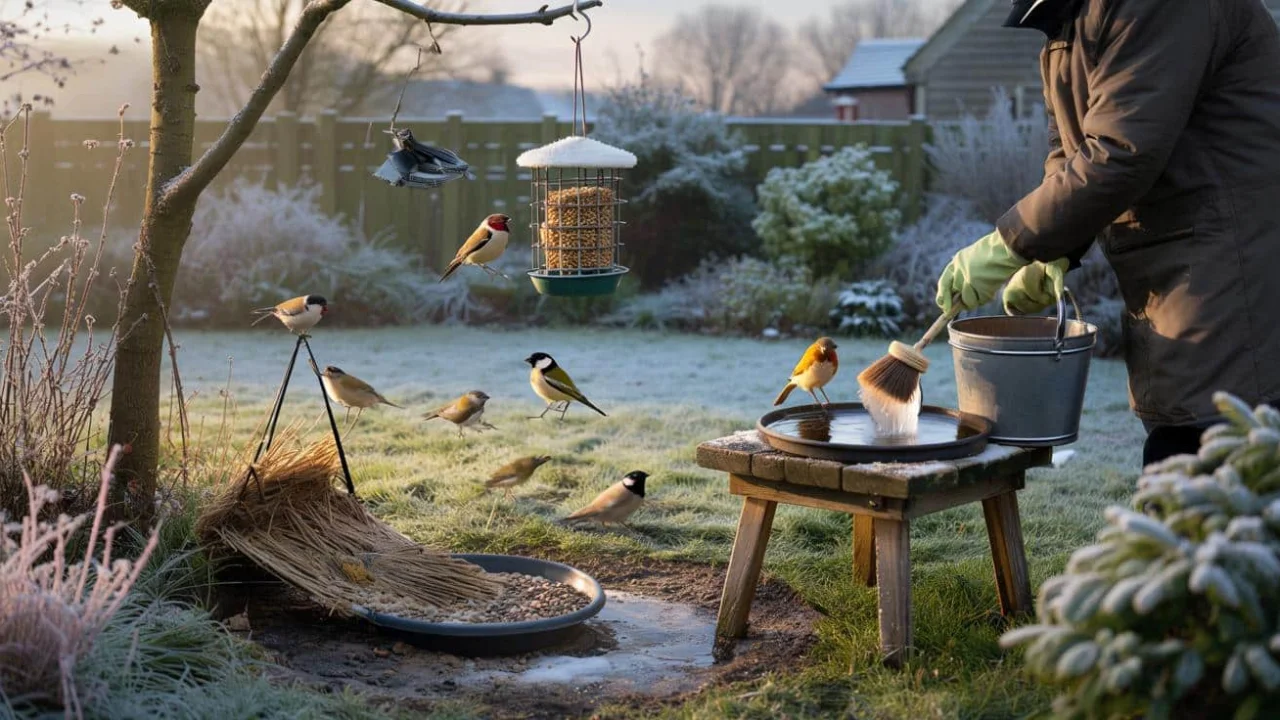
Sarah noticed something was wrong when she found three dead blue tits beneath her bird feeder on a February morning. She’d been so proud of her winter bird care routine, filling feeders religiously and watching dozens of birds visit daily. But as more lifeless bodies appeared over the following days, she realized her good intentions had created something deadly.
The local wildlife rescue confirmed her worst fears: disease had swept through her garden’s bird population, spread by contaminated feeders and stagnant water. What should have been a winter sanctuary had become a death trap.
Sarah’s story isn’t unique. Across neighborhoods everywhere, well-meaning bird lovers unknowingly harm the creatures they’re trying to help. Winter bird care goes far beyond simply filling feeders with seed.
The Hidden Dangers Lurking in Your Garden
When we picture winter bird feeding, we imagine a heartwarming scene: colorful birds gathering at clean feeders, gratefully accepting our offerings. The reality can be much grimmer.
Feeding stations concentrate birds in unnaturally small spaces. In the wild, these same species would spread across vast territories, rarely crowding together. Your feeder changes that completely.
“A single infected bird visiting a dirty feeder can contaminate the entire feeding area within hours,” explains Dr. Michael Chen, an avian veterinarian with over 20 years of experience treating wild birds.
The problems multiply quickly. Birds perch on the same spots, leaving saliva and droppings behind. They stand in contaminated areas beneath feeders, where rotting seed mixes with waste. Damp winter weather creates perfect breeding conditions for harmful bacteria and fungi.
Look beneath any busy feeder after a week of winter weather. You’ll likely find a soggy carpet of husks, droppings, and trampled seed. This mess isn’t just unsightly—it’s dangerous.
What Birds Actually Need This Winter
Proper winter bird care involves several essential tasks that most people overlook:
- Weekly feeder cleaning: Scrub feeders with a 10% bleach solution, rinse thoroughly, and let them dry completely
- Fresh water daily: Change water in bird baths every day, even if it looks clean
- Ground maintenance: Clear away old seed, husks, and droppings from beneath feeding areas
- Feeder rotation: Use multiple feeders and rotate them regularly to allow thorough cleaning
- Quality food storage: Keep seeds dry and replace any that show signs of mold or spoilage
- Strategic placement: Position feeders away from dense shrubs where predators might hide
The cleaning schedule matters more than the feeding schedule. “I see more bird deaths from dirty feeders than from lack of food,” notes wildlife rehabilitator Janet Morrison, who has treated thousands of garden birds over the past decade.
| Task | Frequency | Why It Matters |
|---|---|---|
| Feeder cleaning | Weekly | Prevents bacterial and fungal infections |
| Water refresh | Daily | Stops algae growth and contamination |
| Ground clearing | Every 3 days | Eliminates disease breeding grounds |
| Food inspection | Weekly | Prevents mold poisoning |
Winter bird care also means providing shelter options. Dense evergreen shrubs, brush piles, and roosting boxes give birds protection from harsh weather and predators. Many birds die from exposure, not hunger.
The Real-World Impact on Garden Wildlife
Poor winter bird care practices have consequences that extend far beyond individual gardens. Disease outbreaks can devastate local bird populations, affecting species already struggling with habitat loss and climate change.
Trichomonosis, a common infection spread through contaminated feeders, has killed millions of greenfinches across Europe in recent years. House finch eye disease, spread through dirty feeding stations, nearly wiped out eastern North American populations in the 1990s.
“When people start finding dead birds in their gardens, they often stop feeding altogether,” explains ornithologist Dr. Rebecca Hayes. “But the solution isn’t to stop helping birds—it’s to help them properly.”
The effects ripple through entire ecosystems. Fewer birds mean more insects, affecting garden health and plant pollination. Predator species that rely on small birds also suffer population declines.
But there’s hope. Gardens with proper winter bird care practices often see increased bird diversity and healthier populations. Clean feeding stations become genuine refuges, supporting birds through the harshest months.
Creating a Safe Winter Haven
Transform your garden into a true sanctuary by thinking beyond the bird table. Position multiple small feeders rather than one large one to reduce crowding. Use feeders with good drainage to prevent water accumulation.
Water sources need special attention in winter. Shallow dishes work better than deep bird baths, and adding a small heater prevents freezing. Change the water frequently, even when temperatures drop below freezing.
“The best bird gardens I see have owners who spend as much time cleaning as they do filling feeders,” observes wildlife photographer Tom Martinez, who documents garden birds year-round.
Consider the bigger picture too. Native plants provide natural food sources and shelter. Leave some areas of your garden “messy” with seed heads, fallen leaves, and brush piles. These natural spaces complement your feeding stations perfectly.
Monitor your birds’ behavior. Healthy birds are active and alert. Sick birds often appear fluffed up, lethargic, or have discharge around their eyes or beaks. If you notice unusual behavior or find dead birds, clean all feeders immediately and consider temporarily stopping feeding to break disease cycles.
FAQs
How often should I clean my bird feeders in winter?
Clean feeders weekly with a 10% bleach solution, rinse thoroughly, and dry completely before refilling.
What should I do if I find dead birds near my feeders?
Remove and dispose of dead birds safely, clean all feeders immediately, and stop feeding for two weeks to break potential disease cycles.
Can I use soap to clean bird feeders?
Use a mild detergent followed by thorough rinsing, but bleach solution is more effective at killing harmful microorganisms.
How do I know if my bird food has gone bad?
Look for mold, unusual odors, clumping, or insect infestations. Replace any questionable food immediately.
Should I keep feeding birds if I see sick ones?
Temporarily stop feeding if you notice sick birds, clean all equipment thoroughly, and resume feeding after 10-14 days.
What’s the best way to provide water in freezing weather?
Use shallow dishes with bird-safe heaters, change water daily, and position water sources away from high-traffic feeding areas.