
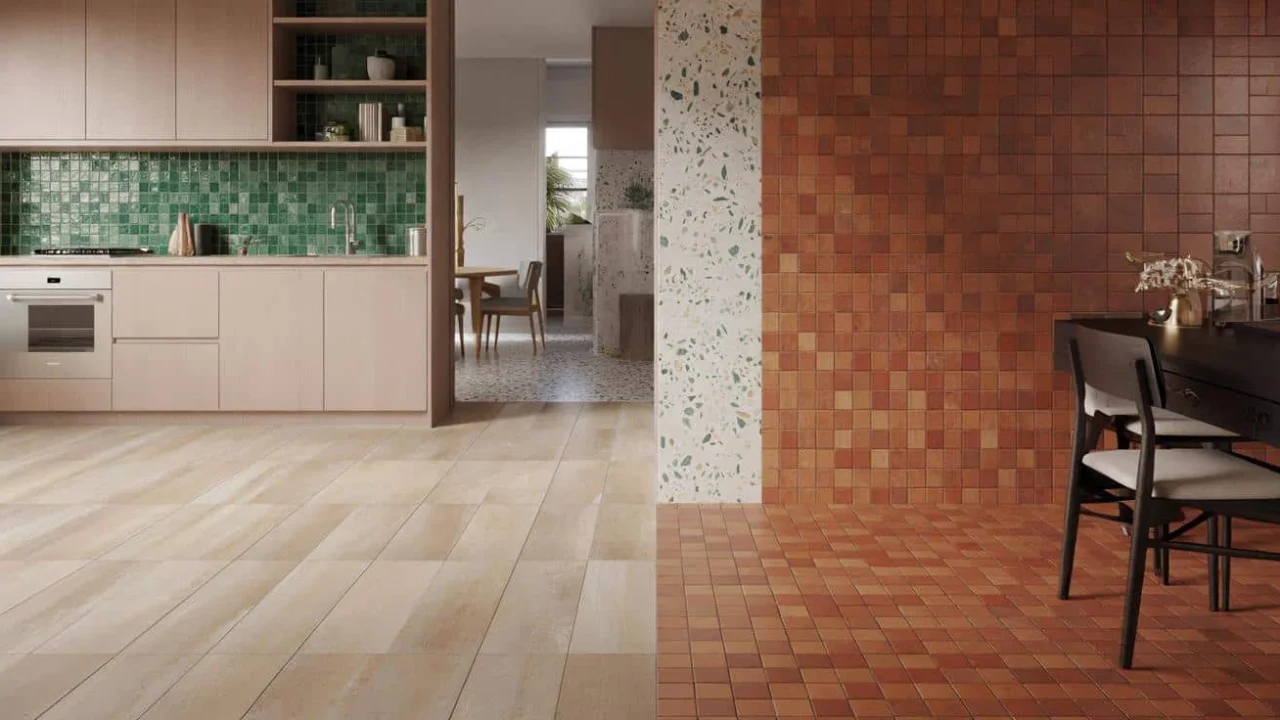
Sarah stared at her kitchen floor and sighed. Three years ago, those wood effect tiles had seemed like the perfect choice – all the warmth of hardwood with none of the maintenance hassles. Now, scrolling through design Instagram, she couldn’t help but notice how dated they looked compared to the rich terracotta and natural stone surfaces flooding her feed.
She wasn’t alone in this feeling. Across neighborhoods everywhere, homeowners who once felt proud of their practical wood-look porcelain are quietly questioning their choices. What felt like a smart compromise just a few years back now seems like sitting on the design fence – neither authentically natural nor boldly contemporary.
The shift happening in homes right now tells a bigger story about how we want to live and what surfaces we want to touch every day.
Why Wood Effect Tiles Are Losing Their Appeal
For over a decade, wood effect tiles dominated showrooms and new builds. They promised everything busy families wanted: the visual warmth of timber without the scratches, water stains, or refinishing costs. Property developers loved them because they appealed to almost everyone.
But that universal appeal has become their weakness. Design trends have swung toward authenticity and character, leaving wood effect tiles looking like the safe middle ground that excites no one.
“Consumers are moving away from imitation and towards finishes that embrace their own texture, color and origin,” explains interior designer Marcus Chen. “People want surfaces that tell a story, not ones that try to be something else.”
The technical quality of wood effect tiles has never been better. Modern printing technology can replicate wood grain with stunning accuracy. Yet that perfection feels artificial to today’s homeowners, who increasingly crave the irregularities and imperfections that make natural materials feel alive.
This doesn’t mean people are abandoning durability. The new favorites – natural stone, terracotta, and textured ceramics – still resist stains, water, and heavy foot traffic. The difference lies in their honest appearance and tactile appeal.
What’s Taking Over From Wood Effect Tiles
The materials replacing wood effect tiles share one key trait: they look and feel like exactly what they are. No pretense, no imitation – just authentic surfaces with character.
Natural stone leads this revolution, particularly travertine with its sandy tones and organic veining. Unlike the glossy marble that dominated luxury homes in the 2000s, today’s stone finishes are honed or lightly brushed, creating subtle texture underfoot.
“Stone and stone-look tiles bring an ‘honest’ imperfection that polished faux wood rarely manages,” notes tile specialist Elena Rodriguez. “Every piece has slight variations that make the floor feel handcrafted.”
Here’s what’s trending in flooring right now:
- Large-format travertine for open-plan living spaces
- Hexagonal terracotta tiles in kitchens and dining areas
- Textured ceramic with visible glaze variations
- Terrazzo making a comeback in powder rooms
- Clay tiles with hand-fired imperfections
| Material | Best For | Price Range | Maintenance |
|---|---|---|---|
| Travertine | Living areas, bathrooms | $8-15/sq ft | Moderate |
| Terracotta | Kitchens, entryways | $5-12/sq ft | Low |
| Textured ceramic | High-traffic areas | $3-8/sq ft | Very low |
| Terrazzo | Bathrooms, feature areas | $10-20/sq ft | Low |
The Terracotta Renaissance
Perhaps no material captures this shift better than terracotta. These fired-clay tiles disappeared from mainstream design for decades, dismissed as too rustic or old-fashioned. Now they’re having a major moment.
Modern terracotta applications avoid the heavy, themed look of past decades. Instead, designers pair warm clay tiles with sleek cabinetry and minimal hardware. The contrast creates spaces that feel both grounded and contemporary.
The colors available now go far beyond traditional brick red. Soft peachy tones, deep burnt oranges, and even charcoal-gray terracotta offer options for different design styles. Matt finishes prevent the tiles from looking too polished or commercial.
“Terracotta brings an immediate sense of warmth that wood effect tiles always promised but never quite delivered,” says renovation contractor Tom Martinez. “You feel the difference the moment you walk into the room.”
Real Impact on Homeowners and Property Values
This trend shift affects different groups in distinct ways. Homeowners who installed wood effect tiles in recent years face a dilemma: live with surfaces that suddenly feel dated, or invest in replacement sooner than planned.
New home buyers increasingly see wood effect tiles as a red flag – a sign that developers cut corners on character and authenticity. Properties with natural stone, terracotta, or distinctive ceramic floors command attention and often higher offers.
Renovation budgets are shifting too. Where families once allocated extra money for high-end wood-look planks, they’re now investing in genuine materials that age beautifully rather than looking frozen in time.
For rental properties, the change presents challenges. Wood effect tiles became popular partly because tenants rarely complained about them. Landlords now face balancing authentic design with practical durability and broad appeal.
“Property developers are scrambling to update their standard specifications,” explains real estate analyst Jennifer Kim. “Wood effect tiles have gone from safe choice to potential liability in just a few years.”
The good news for homeowners with existing wood effect tiles? They don’t need to rip everything up immediately. Strategic updates – adding natural stone accents, incorporating textured ceramics in smaller areas, or introducing terracotta elements – can refresh spaces without complete renovation.
This shift represents more than changing fashion. It reflects our deeper desire for authenticity in our homes – surfaces we want to touch, materials with stories, floors that improve with age rather than just endure it.
FAQs
Are wood effect tiles completely out of style now?
They’re not completely out, but they’re definitely losing popularity as homeowners favor more authentic materials with natural textures and imperfections.
What’s the most popular alternative to wood effect tiles?
Natural stone, especially travertine, leads the trend, followed by terracotta and textured ceramics that embrace their own authentic appearance.
Do these new trending materials cost more than wood effect tiles?
Prices vary widely, but many authentic alternatives like terracotta and textured ceramic can cost similar amounts while offering more character.
Are these trendy materials as durable as wood effect tiles?
Yes, most alternatives like natural stone and terracotta offer excellent durability while providing the authentic look that wood effect tiles lack.
Should I replace my wood effect tiles right away?
Not necessarily – you can update gradually by adding natural stone accents or incorporating authentic materials in smaller areas first.
Will this trend affect my home’s resale value?
Properties with authentic materials like natural stone and terracotta are increasingly preferred by buyers over homes with wood effect tiles.